Via Negativa


Buddhism is the way of negation.
This I am not, this is not me, this is not mine.
A millennium or more before the rise of via negativa theology in the Christian Church, Shakyamuni set out a path for the complete cessation of suffering that was subtle, hard to comprehend, and true. This path was neither esoteric nor did it rest on secretive lineages, mutterings, and utterances passed from guru to disciple. The Buddha's teachings are open, waiting to be experienced right now.
The Buddha reminded his disciples that he taught with an open hand, holding nothing back in secret doctrines and cryptic tantras. As a Buddha, he saw the current of time and the future course of his dhamma. He understood human nature all too well and knew that his teachings, aimed at eradicating suffering, would be misread, rejected, modified, distorted, and so on by later men claiming to be his disciples. Buddhas arise from time to time in response to the degeneration of an age, when dhamma is lost, and men dwell in darkness, little better than animals pursuing the satisfaction of brutish passions.
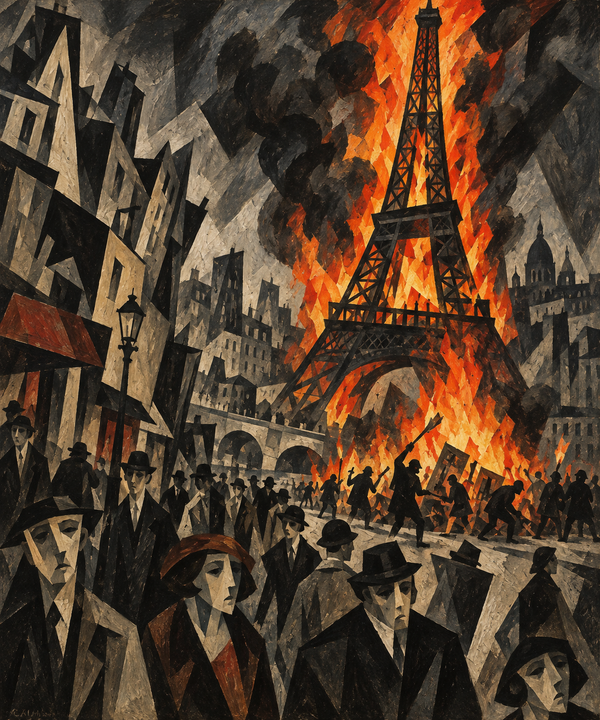
In the Yahwist schools of monotheism, history is linear, a fine black line rising up to meet the godhead at some final endpoint in the distance. Various progress markers along the path, helpfully pointed out by enthusiasts, tell us in different ways where we fall on the line at a given moment. These individuals read their time and correlate events to the basic divine blueprint laid out in their school's sacred texts. Yes, there are bumps, setbacks, and periods of despondency to be sure, but the overall trajectory is up, up, and away. The believers – and every Abrahamic school has its own list of martyrs and interpretations of what martyrdom looks like – are sacrificed for ends that only lead to the victory of God. Every defeat, every setback, is a tribulation or trial that burns away the chaff, confirms the faithful, and advances the divine plan toward the end of the present world.
Various apocalyptic movements have arisen, and these are invariably intertwined with a messiah, a figure who, depending on the school, will set everything aright, restore justice, and bring godly rule at last to a renewed earth. Signs tell the believers about the progress of history towards its final end, strengthening them in their convictions. For Jews, it's cattle being slaughtered by men named Cohen in a restored temple in Jerusalem. Christians look to the arrival of the Antichrist, the world leader who musters most of the human race in a final act of rebellion against Yahweh. For Muslims, there is the appearance of a legendary religious scholar who mends the rifts in the Ummah before fighting the last battle with the enemies of Allah.
Christians and Muslims see a future where the essence of their faith is lost to sin and human weakness. Sound doctrine is lost, and the visible institutions become ornate, empty tombs which the living shun in favor of chasing worldly delights.
I contrast two visions of the progress of religion here: the Buddha saw his teaching and its community disintegrating over time because impermanence applies to everything. He compared the dhamma in the early texts to a raft that, having transported one across the vast ocean to the final shore of the Blessed Isle, can be cast aside. It is not an eternal thing: it is not the Logos, the Torah, or the Qur'an, whose adherents claim to be everlasting emanations from Yahweh, having neither beginning nor end. The Vedas hold a similar status in Hinduism as a co-eternal wisdom which lives inside of the godhead.
Dhamma is said in many ways and, in a Buddhist context, usually refers to the formal teachings given by the Buddha and collected in the Pali Nikayas from monastic oral tradition. Dhamma can also refer to reality, the way things are. Life is like this: It's filled with positive, negative, and neutral things experienced by creatures who live, age, get sick, suffer, and die. Dhamma is reality as experienced by the delusional denizens of a vast ocean which seems eternal.
Of all the world religions, Buddhism stands out for any number of reasons. To me, the claim that his dhamma was subject to dissolution has fascinated me. Here was a path that not only claimed followers could figure out that the Self they take for granted isn't real, but also that there is no creator god (and you can find this out for yourself with a few minutes or a few decades of reflection), and that personal suffering can be ended right now. No man ever spoke like this.
Laid out here is an elementary form of Theravada Buddhism.
The gradual entropy of buddhadhamma among humans is accepted and even embraced in Theravada. There haven't been bhikkhunis in Thailand in about 900 years, since the last one died. At some point, Theravada thought the gates to the deathless were closed, and so meditation, jhana, and the vinaya suffered from inattention and laxity in practice. Imagine ordaining in a religion where the heads of the same religion don't really believe that the primary goal is attainable and that the tools laid out by its founder were of any use.