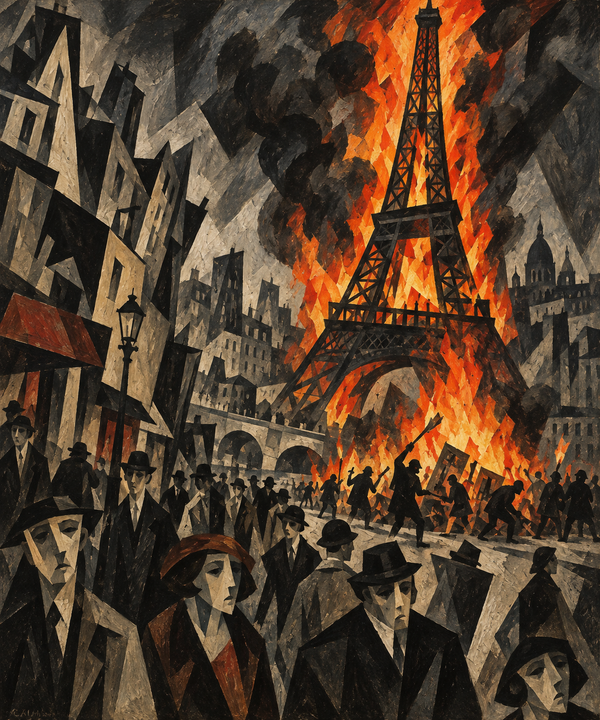
The Left Hand of Darkness


Ursula K. Le Guin appeared in an eighth-grade literature textbook. In the early 1980s, America's public education system was still solid but not perfect. The selections were varied and interesting. Our teacher would let us read quietly to ourselves in class for 30 minutes a few times per week. We would then talk about what we read, the plot, and the characters. No smartphones or other devices distracted us. I try to think back to that world where computers were big and bulky; there were no laptops or tablet computers to carry around either. Our version of texting was passing notes surreptitiously.
A selection from Le Guin's A Wizard of Earthsea was included, and it was so enjoyable that I got the book and read it. The literature textbook was a springboard for discovering new authors.
Decades later, I don't remember much about Earthsea, only a very fond feeling of getting lost in Le Guin's world just as puberty was underway. The 8th grade was a twilight period between childhood and adulthood, and reading was, for me, a time of quiet concentration in which the outside world ceased to exist. Completely.
It's a regret that I have about my early life. I was so well equipped to enter absorption in introspective activities, but I never found meditation. Reading was the closest I got to deep concentration. In high school, my teachers gave me a lot of leeway to open a book in the middle of class and start reading while they lectured. One history teacher would stop by before class, pick up whatever book I was reading, look at it, then smile and hand it back. If I wanted to tune out and read for the whole period while she lectured, I could. Other teachers had the same policy.
When I got absorbed, the whole classroom went away, and I could be hard to reach. Le Guin was one of those authors who made going to the other side effortless.
I recently read her 1969 novel The Left Hand of Darkness, the first novel by a woman to win the Hugo and the Nebula. This is a book for adults, but a high schooler with a reading habit could easily follow it. As a middle-aged adult, I found her writing just as easy to engage with. The characters and world aren't bogged down in techno-babble; the technology serves the characters and storyline.
The story involves an envoy, Genly Ai, sent by a consortium of human worlds known as the Ekumen to the planet Gethen (also known as Winter) to establish first contact with the planet's humans, who may have been engineered by the mysterious Hainish in the distant past. The book is about the challenges of connecting with a human species whose political systems are primitive and shaped by a hostile planet wrapped in perpetual winter.
The humans on Winter are distinct from Terrans, Hainish, and the other subspecies of the Ekumen in that they have an estrus cycle – a "heat" period, the kemmer – in which they become very amorous. It's like the Vulcan pon farr but happens every 26 days.
More striking, however, is that the Gethenians are ambisexual, able to metamorphose into either male or female form during their kemmer, a mating cycle lasting 2-5 days. For the remainder of the 26-day month outside of kemmer, they are in somer, a state marked by the absence of sexual interest. As ambisexuals, it is possible for a Gethenian to both sire and carry children during their lifetime.
Sex is for them a part of life, and allowances are made for its exercise inside and outside of marriage (kemmering), with no stigma attached. Gethenians are neither male nor female during somer, and based on stimulation during their kemmer, they flip to one of the standard human binaries.
Had I read this book in junior high, I would have "missed" the deeper LGBTQ issues because they don't exist. I learned from the foreword and afterword to my edition that Left Hand was published the same year as Stonewall in New York, so some people see this as exploring homosexuality in the safe context of a sci-fi thought experiment.
A few points: LGBTQ people have had time to reinvent the book somewhat, tying it into their own agendas. I don't find the readings especially compelling, but literature invites discussion and reflection on the human condition. Good literature raises the right questions, invites exploration, but never lays down "the truth." There are truths shared as contingent insights. Science fiction and fantasy are not about objective truth since they deal in imaginary worlds where anything can happen. As the Greeks remind us, rhetoric is an art, an invitation to discovery; philosophy is a science.
Gethenians are androgynous, neither definitively male nor female for most of their lives. This is a world where a woman's touch just doesn't exist, and the default world is vaguely masculine, a point Le Guin both admitted (and regretted) years later when she talked about its shortcomings. I think she opened a can of worms, and her introduction to my edition sounds like a disclaimer; or a wise writer saying, as she does, "We go sometimes into places we don't consciously intend..."
The pronoun "he" applies to all Gethenians, whether or not they have shifted into male form. Permanent kemmer – what Genly Ai experiences as a non-Gethenian human – leads people to call him the Pervert. He goes years without having sex with anyone; during his trek across the ice with Estraven, who would've entered kemmer three times in the 81-day travel window, there is one incident where it was impulsively considered with Estraven and quickly dismissed. The section notes that such a union would likely have been sterile. Celibacy is an optional lifestyle, with some spiritual practitioners, such as the Foretellers, observing it along with other sexual practices as part of their development.
Le Guin was upset with her handling of Gethenians, from the default "he" to the absence of women as a regular part of life. I think the homosexualists whose commentary shows up in my copy miss some more important things that locate the book in the 1960s milieu. The book isn't about homosexuality at all, and is in fact much more interesting because it asks questions about the psychology and sociology of a mainly androgynous world, where humans have developed a very different physiognomy.
Gethenian society is insipid, and to me, this is a testament to Le Guin's abilities since she makes it interesting. Biology is destiny, and there are perverts and normal people who act on their sexuality during kemmer to reproduce in a world where life is very harsh, and survival is based on human muscle power and the conservation of energy. The Envoy's forerunner, Ong Tot Oppong, noted, "Their ambisexuality has little or no adaptive value." Winter is roughly an early-20th-century society with no TV and no ugly totalitarian states of Soviet Union proportions. It's existed statically for millennia.
Winter's grayness, its missing sexual dimorphism, and its lack of social dynamism are what happens when women who practice feminism win their struggle against patriarchy. Feminism implicitly accepts that man is the measure of all things. There can be no "male spaces" since this gives men an unfair advantage; women cannot be treated differently, or they will lose economic competitiveness in the workplace. In a setting where everyone's default is simply "human," we would expect a happier planet founded on enlightened principles of freedom, agency, and responsibility. Winter is not that world.
Le Guin was a self-identified feminist, and my interpretation here might read as an anti-feminist take. That's not my position, only that Le Guin's ideology never limited her ability to narrate from different perspectives convincingly. I doubt she had a hidden ideological agenda and, if she did, her later reflections show it was not met.
Ong, a woman of the "peaceful Chiffewar" and frontier scout of the Ekumen, warns that the absence of sexual duality and the attendant sub-dualities that flow from it present a challenge to investigators; she calls this absence "appalling," in fact. For bisexual humans, Winter is a realized version of MLK's "content of one's character" goal, except Winter has little character to work with.
A man wants his virility regarded, a woman wants her femininity appreciated, however indirect and subtle the indications of regard and appreciation. On Winter they will not exist. One is respected and judged only as a human being. It is an appalling experience.
The picture is a little more nuanced, as her report shows. Gethenians are female for the 8.4 months it takes to gestate a child and then for another 6-8 months of breastfeeding:
If the individual was in the female role and was impregnated, hormonal activity of course continues, and for the 8.4-month gestation period and the 6- to 8-month lactation period this individual remains female.
In this light, Gethenians are androgynous for most of their lives, with the female role taking second place and the male, last. A Gethenian who bears 2-3 children will have spent substantially more time outside kemmer as a biological woman than a man. Years, in fact, more. Given these numbers, Winter still ends up with Le Guin's "somewhat" masculine tint.
Gethen's Karhide and Orgoreyn societies are flat. Their architecture is nondescript; the people lack anything like initiative or inventiveness. Neither of these is a complex society comparable to the United States in 2026. War is unknown to Gethenians, so a major reason for a powerful central state is missing. Orgoreyn comes closest to a 20th-century-style Terran autocratic government; it boasts a socialist bureaucracy and a secret police force that disappears dissenters (who are never really dissenters) into forced-labor camps, but, lacking true sexual dimorphism, it never really reaches the status of a nation. The semblance to the Soviet Union is there, but the author shows that, in the absence of bisexuality, even totalitarianism is muted. Winter might be thought of as the middling society that emerges whenever sexuality is absent for most of a human's life. Boredom and indifference replace active cruelty in the prison scene.
Genly observes that Gethen is unique for never having developed real nation-states capable of fielding armies and waging war. The prisoners never reveal what they did to earn a trip to Orgoreyn's version of Siberian prison camps. I couldn't help but think of stories about petty thieves – hungry people who stole a bag of flour in England – who ended up in Australia when it was still a penal colony.
Le Guin does something interesting with food, and it's easy to miss. Winter's culinary arts are rather limited, with most dishes plain yet filling. On an ice-locked planet, this can be explained as a side effect of the climate, but I think she is saying, rather dryly, that the loss of true biological dimorphism leads to blandness in other areas of life. An androgynous form consumes non-descript, mushy dishes lacking savor in a climate with a single dominant season. Oatmeal and boiled fish would not be part of Terran courtship/dating rituals.
A Gethenian is an indictment of what feminism leads to: a generic "man" as the measure of all things, the loss of actual sexual dimorphism, the extinguishing of the sexual tension which makes Terran societies more interesting and colorful. Gethenians are primitive, lacking initiative or curiosity. The natural development for the androgynous society that emerged post-feminism in the real world is the use of neo-pronouns or the abuse of existing ones. "They/them" is widely favored by people who may or may not have read The Left Hand, who aren't familiar with the dull planet of androgyny, where climate, food, clothing, and culture present a bleak sameness. It's a medieval Europe with radios and simple motorized engines.
To put it more plainly: Winter is the closest thing to an egalitarian model one can get, and it's drab. Ong's report shows the mistake of identifying any Gethenian as being more male or female; the removal of dualities common in bisexual societies. More strikingly, Winter is void of war, possibly because of the environmental conditions or the androgynous makeup of the people living there. War may be a side effect of displaced masculine energy, as Ong suggests in her survey. As the earlier quote indicates, Gethenians want to be measured simply as human, not as mother/father, brother/sister, etc. They are none of these dualities, but something entirely different within the human family. This echoes the desire of First Wave feminists and civil rights leaders, who wanted to be seen first as humans who just happened to be male/female, white/black, straight/gay. Being human was the primary ontology, and everything downstream mattered less.
Estraven, Genly's primary native influential point of contact, is removed from office as prime minister and exiled by Karhide (a feudal monarchy ruled by mad King Argaven) for trying to rush first contact with Genly's Ekumen. Of all Gethenians, he stands out most for his willingness to sacrifice himself for a greater cause. The rest of the planet cannot think in terms of higher causes; hence the absence of a military and the foot-dragging in organizing a response to the Ekumen's overture. The political outcast is probably the model of what a Gethenian should be: chief expositor of shifgrethor, a statesman, a holder of the Handdara lineage, willing to break convention when the situation demands it.
Genly's mission would have failed without Estraven, the Gethenian least reflective of his race's actual character. Estraven is a theoretical possibility seldom attained, an understated analog to the Dune universe's Kwisatz Haderach. Both see the future clearly and avert disaster by completely changing the direction of their respective civilizations, defying established conventions. For Paul, the future timeline included a Harkonnen monopoly on spice production; for Estraven, it was Karhide and Orgoreyn drifting toward warfare.
Sexual identitarians reading back see Left Hand as, in some ways, cutting edge. The book, however, presents a monoculture caused by the unhappy absence of biological sexual complementarity. Homosexuality is not mentioned, and Ong makes clear that kemmer involves sexual dualities intensely aimed at maintaining the species on a very harsh ice planet. Sex is ordered to reproduction. The irony is that Gethenians default to indeterminacy in somer, but the absence of a permanent female cohort makes them, in the eyes of Genly, effeminate and, as a rule, not very adventurous. Genly's mission lags for years as he tries to meet with decision-makers to pitch his case for the Ekumen. Actual humans on the real planet Earth thrum at the possibility of gray aliens landing on the White House lawn. No such enthusiasm exists among Estraven's people, only mild skepticism or indifference.
Estraven realizes that the Ekumen invitation is needed if Winter is ever to leave its rigid stasis and become part of something much bigger. In contrast to the perverts of the Ekumen worlds, the Gethenians have broader access to the human sexual continuum and variety, but it's left them paralyzed culturally and individually. Madness consumes Argaven, paranoia and petty infighting occupy the rulers of Orgoreyn.
We see things from Genly's point of view, but the prisoners act in a distinctly non-masculine way as they are transported to Pulefen Camp. They don't even bother to introduce themselves, but are jammed together in the freezing temperatures, naked, starving, and dehydrated. Two of them die on the way there, and they quite passively bear it all without so much as a self-introduction or a murmur against their handlers. This dull passivity makes technological advancement and nation-building unworkable. At the camp, the prisoners are placed on drugs that prevent kemmer, locking them into sexual indeterminacy. Sexual tension and arousal during kemmer would make them harder to control; permanent, chemically induced androgyny turns them into pliant workers.
The Orgota culture is heavily invested in conformity, social rigidity, and petty bureaucracy. Is the prisoners' inertness then a side effect of their social organization, or does social organization emerge as a secondary characteristic of personal biology? If Winter were to undergo a rapid warming period, would their individual characteristics change along with their culture as new vistas opened up, or would their default asexual state keep them flat? Ong places the weight of the harsh environment on the evolution of the Gethenian character.
Winter's leaders are petty politicians and bureaucrats focused on preserving the status quo. In other words, they embody negative stereotypes of femininity. Gethenians do not develop the hard edges that define men and women on a biological and continuous psychosexual basis despite Le Guin's remark that Geth was vaguely masculine in character. Something gray, blubbery, and ill-defined always lingers about them because, physically, they can mutate into another form once every 26 days. During their travels across the great icy north, Genly describes Estraven's physical features in unflattering terms: indeterminate and odd. For Terrans, sex and sexual awareness are constants which shape human life, providing it with a steady current of excitement. Old men long past their sexual prime still admire attractive women.
My understanding of the Yin-Yang that inspires Le Guin is that, when healthy, dualities reinforce each other, bringing out the best qualities of each in a feedback loop that preserves boundaries while honoring the seed of inevitable change. In corruption, the balance is lost, borders blur and fade, and the gray, blubbery ooze appears, blotting out the fine lines of form and beauty. The only Gethenians who become memorable are Estraven the Outcast, or the religious elders who retreat from society to practice divination and meditation. Le Guin suggests that spirituality, or the perfection of given forms and traditions (Estraven), is the only real outlet for excellence.
The traditional Yin-Yang symbol depicts dualities; each has a dot juxtaposed with its counterpart. One is light; one is black. They exist in tension as opposites, but balance and alternate in their roles. Gray is undifferentiated chaos, where distinction is absent, and formlessness never resolves into a stable tension of dualities. Gethenians spend most of their lives as the same neutral gender, and their society reflects the same flatness scaled up.
Critics of modernity point out that technology produces androgyny through a market-based blunting of sexual dimorphism. Women take on men's aggression, becoming "girl bosses." Traditional sex roles like wife and mother are abandoned; men also give up the jobs of provider and protector. He/she, him/her, fall out of favor as the amorphous they/them spreads, perhaps a recognition that many have psychologically turned into Gethenians in a drugged-up permanent somer. They are like the prisoners held in the work camp, confined to a harmless asexuality.
Le Guin herself struggled with the pronouns for Gethenians and took up the question in the 70s and 80s, handling it in different ways. I don't think it's worth dwelling on pronouns, and had she rewritten it to use the ones she flirted with later, it would've produced a literary mess. A society that becomes obsessed with them has already lost its collective and individual identity and is stuck on an 800-mile ice sheet at the end of nowhere, looking at the same harsh, uninspired environment. The Gethenians have dozens of words for snow, but everyone is a "he."
One might be forgiven for thinking that there is, here in The Left Hand, a blueprint that global capitalism followed after 1969. Drug people with stimulation and consumption (Aldous Huxley), create a permanent distracted social order whose sexual energy is absorbed in pointless amusement.
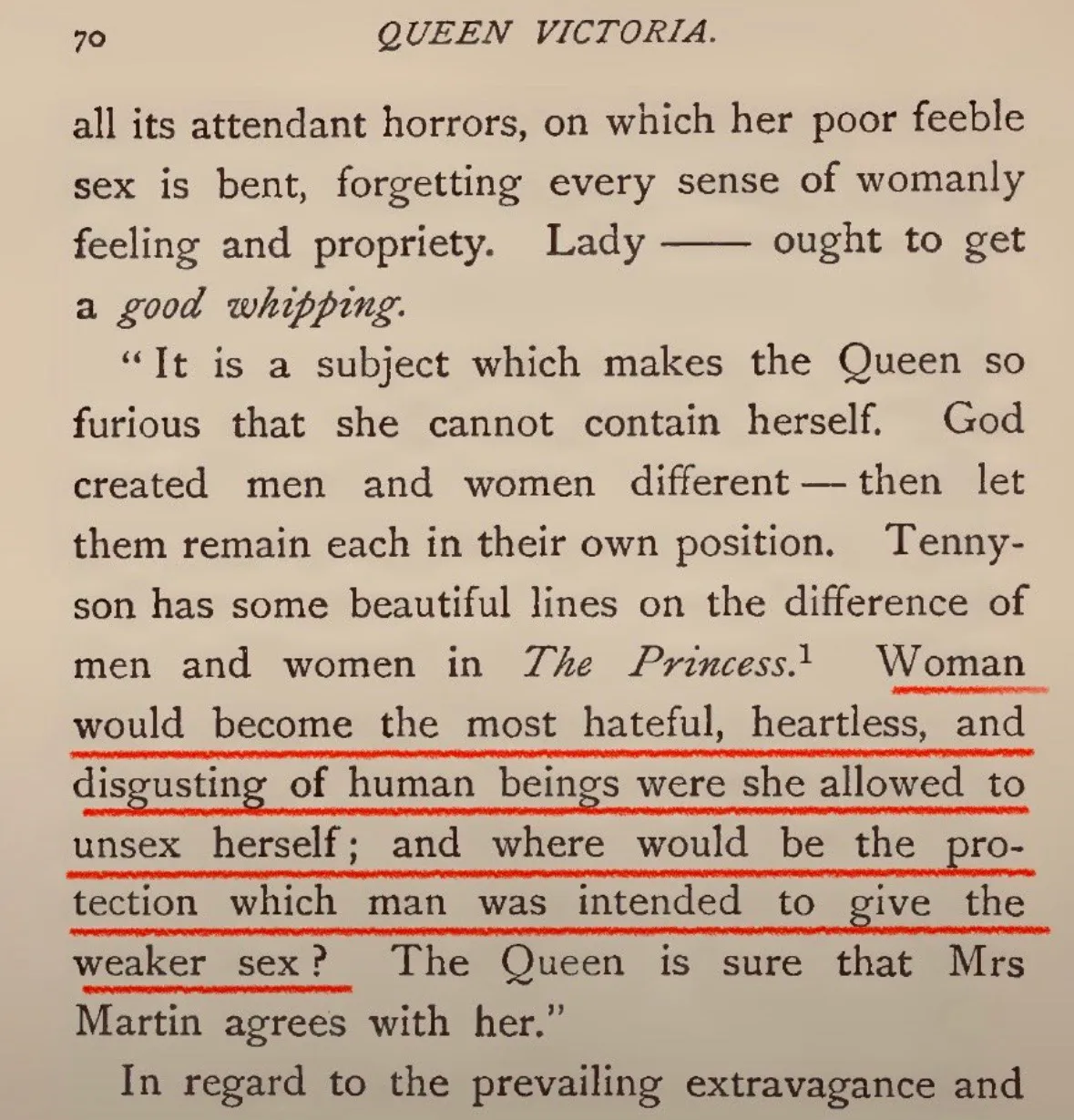
Women and men now have lost the edges that made sexual dimorphism a shared lived experience even as late as 1969. Women, once the guardians of manners, have become as uncouth and foul-tempered as the men; Karens are a vestigial sign, a shadow of the older, more developed idea of womanhood. Queen Victoria saw what was coming in 1870.
Estraven asks rhetorically mid-journey: "Duality is an essential, isn’t it? So long as there is myself and the other." He states a clinical "myself and the other," but misses that life's richness cannot contain the flow of dualities.
From a Buddhist perspective, these dualities become an endless snare of becoming that neither aversion nor clinging can resolve. Both of these attempt to overcome samsaric duality through reactive delusion. Buddhists understand that they have been mothers and fathers, wives and husbands in previous lives and that these afforded no rest from the always becoming.
There I was so named, of such a clan, with such an appearance, such was my nutriment, such my experience of pleasure and pain, such my life-term; and passing away from there, I reappeared elsewhere; and there too I was so named, of such a clan, with such an appearance, such was my nutriment, such my experience of pleasure and pain, such my life-term; and passing away from there, I reappeared here.
— MN 36.38, Bhikkhu Bodhi (translator)
Drag queens present absurd renditions of female archetypes (Marilyn Monroe especially), wearing dresses and sporting big hair, the very things few actual women do today. They ludicrously ape perceived feminine traits in a period where women very seldom wear dresses or spend hours a day getting made up, convinced that they "feel" like women despite having DNA saying otherwise. Biological women now are not like the women of Le Guin's 1969 America. Flip-flops, shorts, baseball caps and T-shirts are as true for women as for men now. Sexual activity has declined among the young; the Gethenians can't imagine Ekumen worlds filled with perverts who live in a constant state of sexual arousal, but here we are – sexless and androgynous.
Estraven is the one successful outcome of the Hainish breeding experiment: the Kwisatz Haderach of Winter, who carries the fullness of male and female, with a spiritual depth that lets him see past overwhelming threats. (I take Ong's hypothesis of this breeding project as the actual case.) Winter, as a whole, is a failure that can only be saved through contact with the other branches of the human family. Estraven is the "great man" who appears at a pivotal moment and sacrifices everything to push his species to the next level.
In chapter one, Genly describes Estraven as womanly, but by the end of the book, after sharing a long, difficult journey over treacherous, icy terrain, he realizes Estraven is also a man. He is, in fact, both fully. One member of the species attains the man/woman Yin-Yang balance at a critical juncture; Winter is on the verge of its first war and possible self-destruction just as the Envoy of the Ekumen arrives. The original ancient Hainish colonizers remind one of the Bene Gesserit of Frank Herbert's Dune. They may have foreseen that unity between Gethen and the other human worlds could occur only if an exemplar appeared in the right place at the right time.
In my reading, Estraven's life has been the cultivation of the best parts of Gethen society, its spiritual and cultural practices, to a level that he reaches the Yin-Yang balance. He is trained in dothe, untrance, and later mindspeech; he is far-sighted, able to see beyond the obstacles his people lay in his path, and spiritually adept. He dies at the hands of his own people, owning nothing and faced on all sides by enemies, an exile still.