The Atman Always Wins: Or the Case for Protestant Buddhism

I've been reluctant to delve deeply into modern lineages and their teachings, but it's unavoidable for a Westerner seeking clarity on questions about dhamma, practice, and final ends. Practice has its own rewards, here and now, and you can skip big-picture goals and objectives, but mind being mind, it will still wonder about the final end of life. Why are we here, why do we suffer, what causes suffering? – these questions make no sense if there is no reference to the unconditioned, the blessed isle, the far shore in the answer.
The Buddha taught people from the position that they were agents capable of doing the work: A little work, some work, or all of it.
Today, a Westerner is usually not part of a living community of traditional practitioners. We do not have the voice of another at our side, in earshot, to guide us along the path. Our community is YouTube, texts, and the Internet. The problem is that people are increasingly divided by various and sundry streams of thought. The ability to hear dhamma is a blessing in this soup of information, but it's also a drag. The buffet of raw data has to be shaped by our own lights, and there are ever more dhammas to sort and rank.
Several years ago, I began a project to read the core early texts for myself. I was pleasantly surprised by how wrong my understanding of the message was, and how deeply the West had shaped it with talks about gods, goddesses, secret esoteric lineages, and whatnot. The Buddha I met in the translated Pali texts was someone altogether different. He spoke in a way no man had ever spoken, not in the language of mythologies, genealogies, miracles, and strictures about "believing" this or that tale. He was not like the Yahwist schools which have shaped and defined the West along with my own personal psychology.
In the West, the Yahwist has to believe in the Exodus as an historical fact. It cannot be read as an allegory or a purely spiritual message, since doing so would mean that Jesus links himself to something that never happened. The punishment for doubting the whole edifice of the Exodus and the theological structure it upholds via the Christian dispensation would rest on nothing. But to doubt that the Exodus happened – in other words, to doubt that 2 million people wandered in the desert for 40 years, leaving no trace among the surrounding people – is to slide into the bowels of hell. Buddhism is not ahistorical, but it does not demand that you have faith that attendant miracles attached to a made-up event happened in order to experience the dhamma here and now.
The Buddha spoke plainly, directly, repetitively, compassionately, wisely. So for the past several years, my brain – which is a jar of acid that, when poured out on anything, dissolves it – has never dissolved the teachings of the texts. I have not, in years, had reason to doubt anything the Buddha taught. I do have doubts about my own abilities from time to time, however.
A Protestant by blood and culture – my WASP credentials go back centuries to the very epicenter of the English Reformation, with direct descent traceable to the men who overthrew the Catholic Church in England. Their descendants then set sail for the Americas to help create humanity's most powerful empire. I had nothing to do with any of it, of course, but I'm heir to an intellectual tradition that values early sources and practices in religious matters. We original Americans have a suspicion of elaborate constructs in philosophical and theological matters, believing they obscure rather than clarify. This can be viewed as anti-intellectual, or a genuine desire to see things as they are. My ancestors wanted to encounter the Jesus they read about in the Gospels because he is a genuinely fascinating figure.
So the WASP by birth and education who finds himself in the Buddhist orbit will understandably go to the early texts as the source of truth, to pluck the kernel of what was originally said and thought. The fussy, baroque ornamentation from later contributors is pushed aside.
For most Americans, the later traditions and accretions – the man-made constructs of the various schools – are what present first. Today, I read comments on various forums in which it's evident that Western Buddhists are not very scripturally-based, showing a basic ignorance of their creed, but seemingly well-versed in Tara-worship, dzogchen, tantric sex, psychedelics, and "scientific" wisdom. Western spirituality is already fragmented, and I'm not sure that adding a new set of Indian religions onto an already individualistic stack is the best way to make progress in dhamma.
One could say I'm guilty of doing the same, but in my defense, my interest has mostly been in the early texts, and I've embraced this bias, called it out internally, and here on the Internet.
One can only benefit by going back to the early sources and reading them. I'm a sola-Bodhi Protestant Buddhist, so I have my own hang-ups and limitations. I rely heavily on a tiny number of scholar-translators for my fundamentalism and hence suffer the side effects of my Protestant forebears in their dependency on translated works. Still, I remain reasonably confident that one can fathom the Buddha's message even in translation. The Buddha himself encouraged his followers to disseminate his teachings in the vernacular rather than in Sanskrit. Naturally, they went through a phase of Sanskrit sutta mania, but the point remains that the Buddha himself was comfortable with his teachings being given primarily in the vernacular. He did not want his dhamma to be enveloped in a priestly language, turned into vedas and made remote from ordinary people.
The Brahmajala Sutta was one of the early texts I read, and in it, the Buddha dispenses with the notion of an Atman/Brahman construct. This was notable because, of all the great world traditions, Buddhism is the only one to identify this as an understandable but subtle error. In fact, Atman is the hardest error to shake, the one that has a concrete manifestation across Eastern traditions via meditation. It is so powerful, in fact, that it deceives even the wise into thinking they have slipped the last link of samsaric existence. Uddaka Ramaputta and Alara Kalama come to mind here, the Buddha's last two meditation teachers. The bodhisattva of the Pali canon does something no religious Indian of his or later times did – flatly deny a pure consciousness, a pure awareness, a ground and firmament for all being. Ever since his denunciation of this refined error, the history of the sangha has been one long story of trying to re-establish it via artifice, ignorance, or simple human limitation as the core of his doctrine.
All such language was not simply avoided in the early years, but actively refuted and denied. The later temptation of the schools is to read the apophatic way as just not speaking about certain realities, but secretly holding to them. One shuns the grundheit language since it produces ego-inflation and thus thwarts the goal of final relinquishment. If you don't talk about it, you can sneak into Nibbana. If you do talk about it, though, well, it's a big club and you ain't in it.
"Advaita has Atman; we are Buddhists, we just don't give it a name or dwell too much on its positive qualia since we are all via negativa, apophatic if you must. It works for us!"
In fact, the Buddha did identify positively, emphatically, errors, stressing that there was a Right View as a precondition for the unconditioned.
Bhikkhus, I do not see even a single thing on account of which unarisen wholesome qualities arise and arisen unwholesome qualities decline so much as right view.
If you want to live a wholesome, ethical life and reduce your own misery and that of those around you, you can. If your aim is higher, to the ending of all suffering, then you will have to accept that there is a single correct path identified by the Buddha. This image does not necessarily square with the Westernized image we have of the Blessed One, as a tolerant fellow who was just about compassion. He was also about defilements and the bleak cycles of misery they set up.
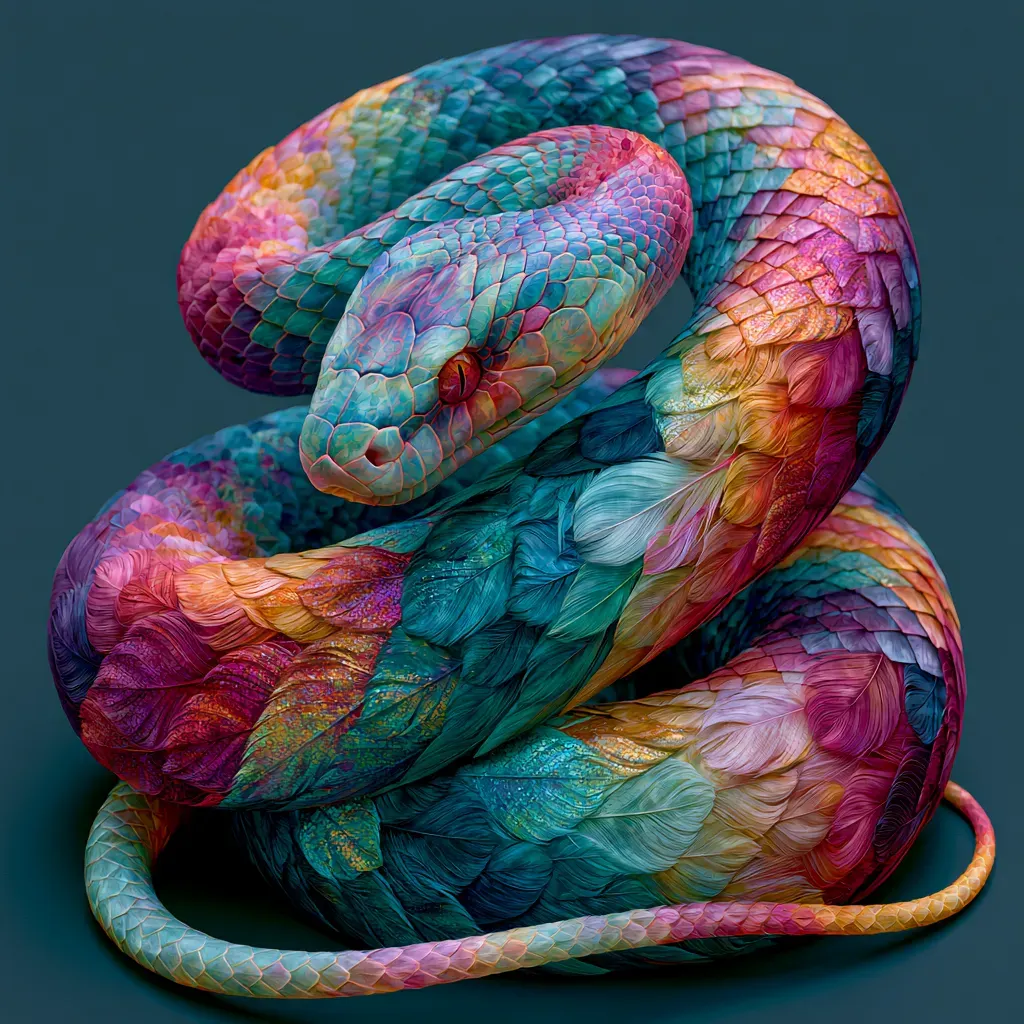
Apophatic doesn't mean the teacher refrains from pointing out the dangers on the path with a mysterious silence. Early Buddhism exclaims, "This is a snake, beware!" Atman/Brahman is a danger; it's a many-colored snake, beautiful with luxurious shimmering feathers. It is the one that keeps the gates to the deathless closed because it's very, very, very pleasant to be with. Deep, still concentration in which time stops, in which the push-pull of craving and aversion temporarily suspends, is very seductive. To become deeply accomplished in this area, going further and further into it, is to encounter the Brahma realm. The kilesas fight the newcomer to the practice vociferously, injecting every kind of negative thought and scraping at every emotional sore, to keep one off the cushion. When some skill in letting them wear themselves out arises, it only means new encounters, in which they become more elegant, a little quieter, a little less energetic, but even more convincing. This state of peaceful equipoise is my true nature, my real self emerging from underneath the crud of childhood trauma...
"If only I could experience this blessed peace for myself all the time, every moment, world without end, amen!"
In Genesis, the snake was in the garden, but in Buddhism, the Atman snake guards the gate to paradise, assuming the role of the cherubim with the flaming sword. The snake in this rendering is pleasant and is, in fact, a portal to heaven, with no sword in sight. Anyone who reaches Atman, who dwells in his embrace, is far along the spiritual path and will find himself in a heavenly realm. But it's not what the Buddha wanted for his followers. Heaven is old hat. The whole mass of suffering, if it is to be broken, if the mountain of skulls is to be smashed and the oceans of tears drained, then Atman is just another fabrication that must be pierced. It was what the proto-Hindus of the Buddha's day held as the final destination of spiritual life.
People who genuinely aspire to discover, realize, or unite with Atman are not being criticized here. Some venerable schools state this as a goal, and the path they lay out cultivates merit and wholesome qualities. So this is not a dig at those non-Buddhist traditions, or a critique of others' beliefs, which often have great wisdom, depth, and compassion.
In surveying the various Buddhist lineages, however, the Atman is alive and well. In the Thai Forest tradition, it's the undying citta, the steel ball that rolls on from lifetime to lifetime. In the Tibetan school, it's the luminous, shining "true nature." The same is found in Zen.
Modern Thai Forest luminaries speak of the "luminous mind," identifying the few passages in the Pali canon that speak of pure consciousness/pure awareness. Mahayana has its Buddha-nature, an unrealized actuality that is already found in every creature, from cockroaches to angels. You are already the Buddha; you have the same nature as everything else that is living; you just haven't realized and seen it for yourself yet. The language of Shaivism and Advaita Vedanta may vary, but their truth is the same. All these schools and lineages are now more closely connected because of modern communication and travel.
Some Vedantins have taken recent Thai Forest postulations in this area as independent verification of their own findings. There is a kind of ecumenical breakthrough now in the various Eastern traditions; the Western Yahwist schools lag, having the concept of an eternal hell in which there is separation of wheat and chaff lasting for all eternity. The humans in hell have immortal souls, are still in the image of Yahweh (i.e., have a Buddha-nature to borrow from the Mahayana), but are always separate, never again able to exist in a position where the deathless is attainable. This is to say, the Atman/Brahman finds expression in the "fullness of being," the ground of being, and so on, but the Buddha-nature of the soul means it is destined – pre-ordained – to know only eternal suffering and torment out of finite choices made in time and space. This concept of anything being eternal is alien to early Buddhism. There is nothing permanent in the cosmos – including the cosmos. Universes are born, age, wither, and die.
So the Protestant Buddhist looking at all of this sees the clear discrepancy between the text, the commentaries, and the lived teachings of the schools. It is confusing to say, I can read the Brahmajala and see the Buddha say as plain as day that X is not Y, but the present-day sangha will say, 'No worries, we've cracked the code!' and not even refer to the text. Worse, they will translate the texts to imply an Atman doctrine. One writer translates a passage from the text as, "consciousness with no surface." Consciousness is a khanda, and using adjectives like "pure," or analogies like this, provides no clarification and, worse, blends with the language of the consciousness-is-fundamental movement in the West. A monotheist in one of the Yahweh schools can suddenly feel that pure consciousness is simply another way of referring to God. Buddhism is just an obscurantist take on the godhead.
Pure consciousness then is the chromatic serpent I spoke of earlier. It appeals to everyone. To Westerners disaffected by pure materialism, but uncomfortable with the eternalism of the Yahwist traditions, it stands as a soothing, reasonable middle way. It accords with the meditative experiences of many traditions and answers a real gap in the human need for transcendence.
But what is the point of meditation in early Buddhism? The Buddha answers this in SN 22:5:
Develop concentration, monks. A concentrated monk understands things as they really are. And what does he understand as it really is? The arising and passing away of form, of feeling, of perception, of fabrications, of consciousness.
The delusional mind will then read into this, if I see the coming-to-be and falling away of phenomena, then I will see something else, the ground of being, or purified essence, shimmering before me in the field of the divine eye. Perception refined means I can, like a Zen master, see my true self! The ego fills in the spaces, but here, the text identifies the wrong turn of the Zen or Thai Forest master, or the Mahayana devotee.
The cultivated mind can break the links of becoming by seeing that any mental state, any jhanic state, no matter how refined, is but another link in the chain of becoming. Lust is abandoned. When this is abandoned, then vipassana is developed; when vipassana is developed, then discernment arises, and once discernment appears on the scene, ignorance ceases.
Ignorance is the first link in the chain of dependent origination, but also the last fetter that, when broken, ends the cycle of becoming for the arahant. The stream enterer sees ignorance and discovers the truth of self-identity, but then spends up to seven more lifetimes uprooting the habit of being a me. One sees the falsity of a self briefly, but does not thereby encounter a ground of all being. Even the language here is hackneyed because – strictly speaking – there is no one who sees at the point of stream entry.
To mistake the jhanic state or other states of deep concentration – which are attended by a superlative state of well-being, agreeable abiding, etc. – is to land squarely in the snake's lap. If it had one. Nothing about jhana is uniquely Buddhist, but what is unique is the founder's insistence that it too is a fabrication, not free of the three marks of existence.
Is the mind brightened by jhana, does it carry over into daily life, make one more pleasant, agreeable, compassionate, generous? Rather, the more salient question for our particular discussion is, does it end the cycle of suffering, leaving "no-thing" behind as a residue to crave, to objectify, to mistake for the real?
If the end of deep meditation leaves room for error because meditation absent right view is no exit, then maybe doctrine needs to marry back into living practice. This is in the text, at the very core of the Buddha's account of his own spiritual development. Ramaputta and Alara did not see their attainments as having the three marks; they did find bliss and contentment, and it was enough: the silken handcuffs of becoming. I've heard Theravada commentators on YouTube discuss monks who are scholars, or monks who focus more on meditation as a specialty of their vocation; but the truth is that both activities must develop and grow in tandem.
Right View, Right Concentration, and the other branches of the Noble Path must be developed together. The accomplished meditator will always be at risk of falling into wrong view – adopting some Atman variant (and there are many) – if he is not fenced in by the doctrine laid out in the Pali Nikayas.
The ecumenical group hug of the various traditions celebrates their manifestations of supreme conscious awareness because they are pleasant, even sublime. They are the beautiful states which provide peace, tranquility, and even a temporary cessation of defilement. And they are not the end. On the third watch, in the early dawn, in the moment leading to his awakening, the Buddha cut the roots of the kilesas and, in doing so, guaranteed no future returns to samsara. In samadhi, we only temporarily suppress the defilements with effort, both in the sit and outside, in our regular lives. To cut them at the root completely is to end them in every state and in no state.
The age of ecumenism means the Atman's ascension. I'm doubtful whether any lineages really care for the dhamma of the Buddha in areas that are especially recondite, hard to fathom, hard to see. Here, I don't claim any insight beyond "the text says this," yet these schools all say the exact opposite about the very point that separates the Buddha from every other religious figure on the planet. Jesus had/was the Atman – he lives in the hearts of the believer, and they, by theosis, become him. Mohammad had the Atman; the Jews, the Hindus, the Sikhs, the Zoroastrians, and on it goes.
Practitioners, having taken for themselves the experiential outcomes of meditative practices and the teachings of spiritual figures as the living expression of the suttas, can find themselves reifying an invisible light, awareness, or consciousness that seems unbounded and universal. Many good-natured people find the ethical precepts, calm communities, and positive messages of spiritual teachers a wholesome way to live.
People who find a living connection with real people living with purpose, with a desire to be wholesome and compassionate, can silence the voice of the cold, dead text. Here, I'm not speaking of dry commentaries, but the Pali texts. In the hands of the scholar-monk, even these can mutate into the gospel of the Atman, robed in the unique language of via negativa. The local people – the living people you know in positive faith communities – are on the human scale, and stand in contrast to the hyper-reality of techno-culture. Modern humans are addicted to general, universal problems, even though nature designed us to engage actively with tangible ones.
The emphasis on positivity and personal development doesn't have to be great to pull one away from the Buddha's path. For over a thousand years, the sangha has had a kind of resigned, even fatalistic view that the gates to the deathless have been closed. Going back to the original texts has given brief flashes of possibility for keeping it at least cracked open for a few more years, but the writing is on the wall. People today still discuss plan B since plan A looks less appealing: Rebirth in a better realm where the dhamma is taught and lived. There, I can really practice and reach stream entry or better. I've wondered whether this despondency was a recognition that Atman is the natural place where the human mind goes, and that a buddha is rare because sentient thinking creatures just cannot get past the final boss.
Gods and goddesses make sense to humans, and the Atman, while significantly different from the Virgin Mary, Tara, Jesus, Yahweh, Zeus, Allah, and Indra, is still a comfy mental space to rest in because it has no hard edges. Nibbana in its language is extinction; Buddhism denies annihilationism, but then adopts a language that makes it sound like the vehicle for exactly that. Modern Westerners are not the first to levy this charge since it can also be found in the early centuries, where rival schools accused the sons of the Sakyan of being crypto-believers in nothingness. Talk of extinguishment of the burning flame means no energy remains, and coolness arises in place of heat. Is this permanent death? The extinguishment analogy doesn't put the mind at ease the way an hour of breath meditation does.
The enthusiastic revival, the charge that the gates to the deathless are in fact quite open, ready to accept weary travelers, no sooner launches than it staggers under the weight of a new Atman, a being who somehow sneaks into the revival tent by an unwatched flap. The Thai Forest tradition began as a positive reform movement that sought to reclaim the soteriology presented by the texts, but then found – via meditation – new Atmans, new "pure awareness," "witnesses," "observers," "consciousness[es] without surface," "undying cittas," etc. Laity were told that the body wears out and when it does, you get a new one, just like you do when your old Honda Civic konks out.
Mahayana's Pure Land Buddhism starts to make sense even if it's wrongheaded. Cast your burdens on Amitabha Buddha; go to a buddha-field when you die. Things will work out. Just keep your head down, be nice, pay your taxes, and don't stress about working three jobs to survive and having nothing left over for a sit. Cast your worries and fears on Amitabha, and he will take care of you in the next life.
Evolutionary psychology suggests that agents are the basis for religious experience since in humanity's early days, the ability to intuit, guess, surmise, or detect agentic patterns in nature provided a survival advantage. For hunter-gatherers, inferring a predator from nearby evidence meant signs were vital clues: paw prints there, hoof marks over here gave the perceptive a bias toward causality, prediction, and future planning. It also meant cultivating the abstract power of agent detection over many generations, with invisible powers known only by signs at the end of the process. Tigers and lions were seen directly and inferred from their physical traces, but the power fully unleashed traced its way back to an invisible force – the Atman – who sits at the center of it all. We humans are drawn cognitively to seek out the unknown force for ultimate safety and rest. "Man was made to know, love and serve God," say the old catechisms. God is in our hearts, but the God spoken of here is a highly refined survival trait honed and shaped by millions of years of natural selection.
In practiced meditation, the biological machinery operates, guided toward a supreme consciousness by nimitta, the Pali word for signs. This is the flaw, the danger of the evolved mind falling back to its natural resting place. An evolutionary pathway in the brain draws the seasoned practitioner back to the ancient deduction of the invisible artificer in creation. Science has not uprooted this habit either, since it appeals to invisible laws, abstract theories, and recondite chains of causality which imply a Nature. "Nature abhors a vacuum." Sayings like this imply that the invisible center is still there, hidden. Shamans are still needed to reach it. The idea that nothing is there is horrific, and the human consciousness recoils, adapts, and overcomes. This was what it was "made for": the sussing out of unseen dangers before they manifest as barred teeth and swinging claws.