A Solitary Life


I am a hermit. A very lucky hermit. I've (mostly) always wanted to be a hermit.
The Universe favored me with an opportunity to have a secluded home on an area of modest acreage, covered in trees. I have a very long drive way, can't see the road and can only barely make out one neighbor's house in the winter, when the trees are bare.
Several years ago, I decided that city life had never suited me. The City is a pretty lonely place in fact unless you have roots there or are an alum of a local university. Plenty of people network with college friends and acquaintances after graduation to establish a social network, which can mean meet ups at pubs on Saturday afternoons to root for the team while talking about work-related stuff.
I thought being self-sufficient explained my social isolation. My mom before her death, when she was still in her right mind, said, "Heedless, I raised you so that you could take care of yourself." Like all moms who have sons, she thought I was cute and should be married with kids. She asked a sibling if I knew how to dress properly. "Have you checked his wardrobe? You know, looked to see if he has decent clothes?" How could I have a good job, live in The City, look like a famous actor from Star Gate and not have a woman.
In The City, the only people I knew were from work or those I met through very limited social activities that required fees. For instance, I took a foreign language class over a couple of years and got to meet other professionals, go out for dinners and drinks. I also studied music with a few teachers. The activities felt like I was paying money to get a service that included a side of social interaction. What happened to just going out to dinner with people? I even tried one or two sessions of Jungian depth psychology and realized quickly that paying someone to talk about luminous dreams was sad.
I finished my degree over a couple of years by taking in person evening classes and on the weekends. Paid a lot of money to meet new people and then disconnected as they moved on, got married, joined the clergy, etc.
The Internet also had meet up groups. Some of these were pretty fun, but the groups invariably dissolved over traffic and scheduling issues. Usually traffic. "I can't make it anymore to these meet ups because I live in Darwin Park and you know how it's murder getting on the downtown connector at 5:30 to be here by... "
Post Covid, Post Everything with polarization everywhere, I cannot imagine that it has gotten any easier to connect. I don't play that game anymore.
By the time I left The City, it was taking 35 minutes to drive eight blocks to grocery shop. Each way.
Over the years, I would ask folks what they did on the weekends, who they hung out with. Turns out, after about 30, urban isolation becomes the norm. People lose any interest in weekend activities because of the traffic. Why sit in a car for another two hours when you do that all week anyway? There's always house chores to do and those inevitably involve trips to a big box store for supplies and guidance from an aproned elder.
When I asked The City Dwellers, "Do you like living in The City?", they would reply, "No, but there's work here and I've a family to support..."
People with kids have their social lives ordered around them. One friend of mine enjoyed carting his daughter and her friends to various athletic events in their beat up family van. For him and his wife, it was no sacrifice to spend the day acting as chauffeur for a gaggle of giggling teenage soccer girls.
Eventually, urban life began to wear on me and I went into the office one day and told my boss, "Hey, I can do this job from home. Have you been satisfied with the work I'm doing?"
"No complaints!"
My home in midtown was 14.2 miles to the office. It was an hour or more each way each day to get there. Some colleagues would get out of bed every day at 4:00 AM, be on the road by 5 in order to be at their desk by 6.
Negotiating my way to WFH was easy peasy. I moved away to the country to be with my aging mom and life got better. My productivity was good and my attitude more positive. Closing shop at the end of the day meant going outside and riding on a lawn mower or working in the garden, pure bliss for a guy used to staring at urban scowls and bumpers for an hour twice a day.
I raised tomatoes and other vegetables like watermelons along with herbs – very poorly. Without any irrigation, even a small garden turns into a time consuming job of running water to raised beds, but I didn't care because it was pleasant exercise. Thunderstorms meant extra free time to work on other projects. My Mom's orange tomcat and I became dear friends and he took on the role of trusty garden gnome.
Every night there was chicken, steak or pork chops on the grill. Meals were home cooked because there were no fast food restaurants to speak of nearby. My mom finally had someone to talk to about life, politics, religion and shared family memories. Her appetite was good most days and I enjoyed her company. She had lived on Hot Pockets and coffee for years. I was glad to be able to cook for her, a repayment for all the delicious meals she fed me.
I eventually moved into a new house close by that I bought while rates were still affordable. I still do a little gardening, but the trees make it hard to do much more than herbs. Birds have been my thing for the past few years. With so many trees, it's easy to build a community of finches, cardinals, tit mice, hawks, woodpeckers.
Hummingbirds are of course divine. I usually set up enough feeders to get 2-3 dozen buzzing around at once. A GoPro has let me capture some videos of their antics, slow them down and savor the beauty of shimmering colors in flight. I love their happy squeaks. Birds figure out quickly that you are responsible for loading up their food huts and will chirp excitedly when they see me coming. Hummingbirds just have a joyful squeak that speaks to a fascination with the whole show of life.
During the colder months, watching the hummingbirds – The Boys and Girls of Summer – is a pleasant way to stay connected to them. I know they're down in Central America right now, on the beaches getting trashed on margaritas. They will come to my woods soon and fornicate. Life will go on.
There are no street lights where I live. I had the power company shut off the one security light that was in the yard years ago. It's pretty much pitch black when there is a new moon. I have a tin roof and in spring time, a thunder storm is a sonic treat.
WFH has been my thing for a decade. I thought it was going to become the norm for most IT shops when Covid was around, but alas it looks as though that way of life is going to remain an option only for a few lucky souls. The President at a SOTU address told his countrymen that he wanted to see them back in cars, commuting to and from bustling downtown city centers. Climate change is man-made donchaknow.
Recently a friend of mine, Steve, called to say he was let go from his job right before Christmas. At 60 with a host of health problems, he and several other people were given decent severances and then offered a generous bonus to stay on for another month and train their Indian replacements. Losing your job without warning is like a punch in the gut.
He said he had to train three of them to do his one job. I worked for a doctor who loved going to India to meet the offshore team. He kept hiring more and more (They're so cheap and so smart!) for a shop that didn't need 40 developers. I worked at another financial company that did the same, ended up with nearly 50 software developers checking in awful code at all hours of the day. The 12-15 permanent devs – Americans – onshore couldn't keep up with the garbage going into the repos.
One day, a peer in another business unit asked me, "So, what's up with your outfit that it requires 60 software developers? The rest of the businesses are functioning on 10-20 to build products & services." He had been called into assist when it was discovered that the software in escrow that was due to ship was so poorly written it couldn't scale at all.
It was a good question. See, capitalists treat software engineers and IT professionals more generally as fungible commodities. From their point of view, getting three young inexperienced Indians for one white male is a Great Deal. I explained to Steve that having watched capitalists do this before – destroy a business because they don't understand anything apart from bonuses – the same would happen at his old firm. He would get a call back in 6 months asking if he's interested in consulting work. He would then ask for a very high rate and get it.
When other people have a setback, it leads you to ponder your own spiritual and physical preparedness.
Years before, Steve told me about a couple of other businesses in his large office building that had replaced permanent long time staff with Indians. (The capitalists never replace you with a mix of Brazilians, Taiwanese, Angolans, etc. It's always groups of Indians and it's not just for IT positions.)
The capitalists running the outfit told those being replaced that they could only get a severance if they trained the new hires. These were mostly support personnel. Steve, who knew some of them from smoke breaks, said they as a group stood up and walked out of the building. No replacements were trained.
Steve and his colleagues had worked at the company for decades and some were like him, approaching retirement. In any white collar job, the skills needed to carry out tasks run neck-and-neck in importance with business domain knowledge. Becoming proficient as an IT professional requires you to know nearly as much about the business as a dedicated specialist. Steve knew a lot about equities and what he knew was scary. If he stays in IT, he will likely have to go relearn a whole new business domain.
Steve was someone who watched other businesses replace their workers wholesale. The blueprints of his termination were handed to him years before. All the signs his company aimed to replace him were there based on conversations we had over the years. He thought he could ride it out.
There is a fear that grips a lot of white collar knowledge workers especially as they age. You're 4th and goal from retirement or some other major life marker and boom – pink slip! In America, many employers rely on Indian H1-B holders to take over the tasks that Americans do now. Soon, AI will take over the jobs that anyone does and the snake will go on eating its tail.
In 2023, The President and his Indian counterpart met to figure out a way to increase the H1-B visa count (it is not reported this way, but read the fine print and it is there). The program has been heavily exploited by India over the years (73% of the more than 400K visa pool goes to them), but the move is especially puzzling given the emergence of ML and LLMs, led by ChatGPT, around the same time. Why would you increase the H1-B visa count when ML is already making in-roads into white collar jobs like journalism, graphics, advertising, etc.? Medicine and Law are not far behind; the professional system – a backward cartel – will crumble in the end.
Biden's deal with Modi is likely an effort to keep India on friendly terms with the West (ie, America). A BRICS+ nation on a growth track economically, India understands that America is terminal and is moving closer and closer to Russia, which now supplies a significant portion of her energy. The American response has been: Sacrifice American workers in order to keep India in our orbit for a few more years. American politicians always slaughter their own actually and figuratively. Democracy is about sacrifice.
All the Indians I know hold dual passports and when America crumbles, they will return to their home country.
Right now, the Governor of Texas is over in India working with staffing firms there, figuring out new ways to get more Indians over here on lower wages so that the capitalists can further cut "costs."
Homes, energy and all the other essential goods will continue to increase in price because the savings obtained from replacing Americans are never passed on to the consumer. Three decades of generous work visas, open borders, high legal immigration – we struggle in 2024 much more than we did in 1994. The youth have no future and it's no use telling them how homes used to be affordable and that a year of college at a good state school ran under $2K per annum, minus textbooks. This just depresses the shit out of them.
I can hear someone saying something like, "Well those goddamn $1400 iPhone and $6 lattes! Of course young people struggle!"
Aging is one of the parts of life that involves real suffering, not just anxiety or boredom. When I reached middle age, I felt good physically and mentally. Better than any time in the past 20 years. Still feel the same.
But while aging is thought to refer to the suffering caused by declining physical ability – maybe you don't perform so well doing yard work and need to go to bed earlier – the mental state caused by thoughtless habit is worse. Mind can find freedom and rest in a body that is growing tireder, but it has to declutter.
Steve could not mentally accept that capitalists replace people in our profession all the time with inshore and offshore labor even after watching it happen while working in the bowels of an equity fund. Like many workers, Steve and I are prime candidates for any chopping block. What have we done internally to prepare ourselves for the things that only happen to other people, like aging and replacement?
The brain is a steel marble rolling around the head, forming and deepening the grooves through repetitive motion. These channels make it difficult for us to see and do things differently. That is in many ways the real suffering – the weathered habits that cling to us and weigh us down throughout life. There is no freedom in dead habit.
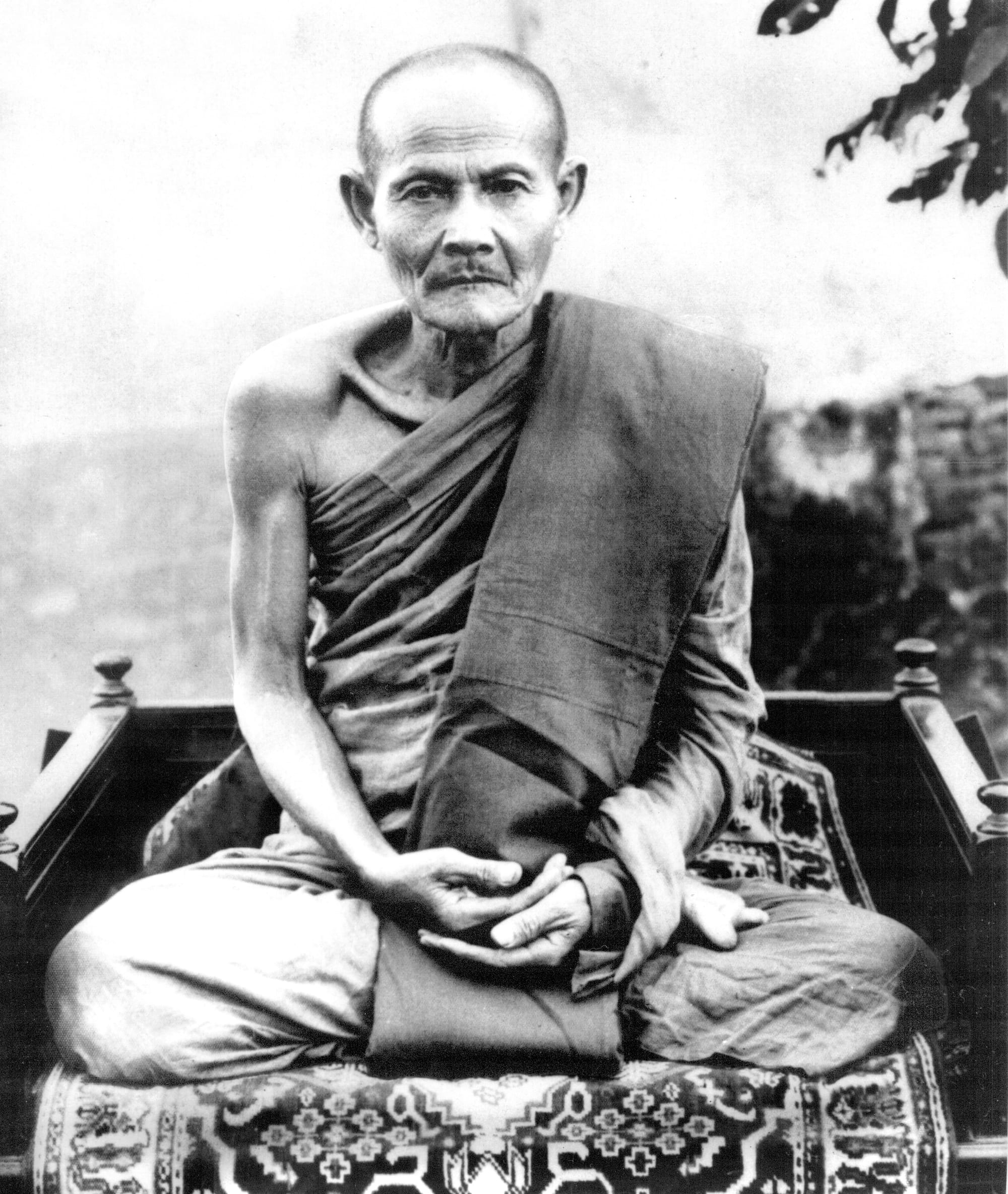
Awakening as told in some of the Zen tales probably involves a radical adjustment internally that is so profound that it shatters the grooves inside the skull physically; or maybe it just feels that way to the one who crosses over to the Far Shore. I don't know but I like to speculate about the two states that switch position in an instant, from deluded creature into arahant. Ajahn Chob reported being rocked by a loud explosion the moment Ajahn Mun saw into the Heart of Dhamma.
I've watched friends and former colleagues get laid off or replaced over the past few years. It's reminded me that I can make plans all day long about saving more for an early retirement, cutting back, becoming wiser about career choices, etc. Those are all concepts and strategies, psychological props to make a wobbly refuge seem steady.
In the past, layoffs and downturns were part of the business cycle, but in the last few decades, it has felt more like the whole system is organized for the sole purpose of feeding The Monad. It feels personal and the draconian measures and group think of the Covid-era have made the sinister a normal part of life now.
The prophecies concerning The Monad speak of an oligarch whose appetite will be so ravenous, so all-consuming that he manages to stuff all his opponents – in fact, the whole human race – into tiny cat food tins. He will consume these until the Universe winds down and all that is left are puffs of Hawking radiation. He will never run out of tins because he will never run out sentient beings to use up.
I am The Monad, cuckooocuchoo!
More and more wealth is siphoned off from labor and placed into the hands of people with more money than Croesus. It's been going on for decades with nary a reaction, not even a sigh from the broader population.
The foregoing is a narrative – my personal handcrafted narrative – and no matter how true it is, how much useless angst and anger it causes, it is a reminder that we attach to things and they in turn enkindle a heat within that can burn us alive. The resentment over being replaced at the whim of the wealthy is one of those things you can spend endless hours justifying. I've done it and will continue to because it's not fair!
Even scarier is that the negativity, the real fear based on seeing a close friend get ground up, is still largely fueled by imagination. People are sacrificed on the altar of democratically-elected oligarchy all the time. Many end up better in some way because of it. Fact is, Steve has some bad habits that his good income has been able to support to this point. I am reminded that if I were taking refuge in the Triple Gem, then I could roll with any punch.
"But my people built this country! They helped found it! They fought in its endless wars and paid its ever increasing taxes, both visible and invisible! I went to college, I pay my bills, I play by the rules..."
The counter to these plaints?
You are privileged.
You've no right to levy charges against your betters because everything you have was stolen! Unlike the oligarchs, who worked hard – HARDER THAN YOU! – to get what they have, you've slithered by on your LOWER MIDDLE CLASS WHITE TRASH HILLBILLY PRIVILEGE!
This response has actually worked. The wealth gap has grown prodigiously and the quality of life has declined such that people in the U.S. will die three years sooner, reversing a trend in longevity that's been around for generations.
The Universe doesn't care about my concerns. I haven't learned relinquishment.
Relinquishment is not something one develops to compensate for a loss moments after it happens. Then it's too late – the citta (heart/mind) is too fragile and doesn't handle life shocks very well unless it has been training for them. You can work on relinquishment right now, at this moment. Practice in a formal sit is practice you carry throughout the day and night. In other words, the meditative state, the clear mind, the grateful heart, the electrical waves that wash over the body are what you can and should have when walking, sitting, standing or lying down.
Life always gives way to death and you will relinquish eventually, just maybe not on terms you are ready to accept. When you are dying, you will grasp at mental objects in your head, or push away from those that are negative and thereby begin the process of creating a new body, a new life somewhere else.
All that is dear to me and everyone I love is of the nature to change. There is no way to escape being separated from them. – The 4th Remembrance
Relinquishment is the unclenching in your heart that begins as a conscious, strenuous effort and through practice, becomes more natural. Your home, your loved ones, your comfort and your position in life are worth preserving but not at the expense of losing your mind. It seems counterintuitive to say that having a certain dispassion towards reality makes a better support for those who are close to you.
In Buddhism, relinquishment and equanimity are hard but fun to practice. It's very easy to see relinquishment and equanimity as excuses for passive, inward resignation to the world. Samsara is going to do what samsara is going to do and let's just roll over and be equanimous, etc. This feeling becomes an easy default setting in a hyperreal world.
Apathy is the shadow side of equanimity and to counterbalance its pull, one needs energy. No matter how prosperous or poor, my human life is extremely precious. I don't know what I will be in the future nor should it be an object of attention, but I have to treat now as the best time to practice, to draw closer to what Ajahn Mun finally saw at the end of life. Many believe he is nowhere to be found in the cosmos now.
Dhamma practice is about looking at your heart in this moment and seeing where it is in relation to the world. In order to practice relinquishment well, you have to practice meditation. The mind that is forever busy in busy-ness, will find that things are taken away from it bit by bit, unaware.
In meditation, we establish mindfulness by focusing on the breath. Breathing in and out shows the pattern of all existence as a continuous coming and going movement. Focused on this, we attain a quietude that allows us to see a possible way of being for ourselves, where letting go of the breath is easy, natural. When the breath becomes so quiet, so still that we no longer even notice its existence, then is when spacious awareness is felt.