Psychic Energy Transfer


Cast your cares on the Lord
and he will sustain you;
he will never let
the righteous be shaken.
— Psalm 55:22
In the Theravada vinaya, the Buddha wisely laid out a way to address the hankering after titles, recognition, distinctions, and honors very simply: deference is given to those in the sangha who have been in the robes longer. That was it.
Your monastic "rank," if you want to call it that, meant you might get slightly better seating if you had longer standing than most of the others. When you go begging for food from the local villagers, you walk towards the head of the line, the lead beggar. Technically, alms-gathering and begging are different, but not by much. In the code, the bhikkhu is forbidden from asking for his day's rations. He lives on the kindness and generosity of others. In exchange, they receive the balm of dhamma and have daily contact with the sons of the Sakyan.

An abbot oversees building projects. If career ladder-climbing is in your blood and the thought of directing these projects appeals to you, you might have a place in the Theravada lineage. After many years, you might get a shot at laying the foundation of a new monastery. That is, your "honors" are a drab robe of cast-off cloth, whose precise dimensions were set long ago in a code written when Rome was not really a thing.
Someone once remarked that you don't have a real religion unless you have headgear. Catholics, Muslims, the Orthodox, Tibetans, Mahayanans, Jews all have head ornaments which come in various shapes and sizes. They can be associated by the prurient mind with penises, symbols of male power and direction.
The Protestant minister Kenneth Copeland is suspected of having attained billionaire status through many decades of ministry and owns one or more jets, but the low Protestant bodies, to their credit, abstain from headgear. Copeland is a bigwig without the wig. Democratic men look askance at elaborate head ornamentation, suspecting it of being uppity. Baseball caps are about as far as we bug men will go. Even tasteful summer fedoras, bowlers, and whatnot have given way to the universal ball cap.
In Catholicism and Orthodoxy, ecclesiastical ambition is recognized, accepted, and even encouraged. A first-level cleric with cure light wounds and bless as starting spells becomes a monsignor; a monsignor a bishop, and so on. Along the way, he collects various other titles, such as head of the marriage tribunal, lead exorcist, titular archbishop of Santa Maria di Spaghetti, papal confessor, abbot, provincial, archimandrite, patriarch, and schema monk. The more exalted the title, the finer your vestments and the greater the perks. "Your Excellency," "Your Eminence," "Your Holiness," etc.
Some of the larger metropolitan sees in the U.S. have very nice digs. These have at times been a cause of scandal, as palatial properties have been purchased and renovated on the faithful's dime. One German bishop under Pope Francis was actually removed from office for going really overboard with his lifestyle. The previous archbishop of Washington, D.C. (Donald Wuerl) had a very nice setup in a top-floor penthouse. Catholics in Atlanta protested the extravagant renovation of the archbishop's residence (Wilton Gregory, who incidentally succeeded Wuerl in the capital). The Patriarch of Moscow was photographed wearing a 30,000 USD Breguet, but only after it was determined it had been airbrushed out, leaving a telltale reflection behind. The scandal there was less about the watch and more about the efforts taken to conceal it.
It's a technicality: The properties don't really belong, in most cases, to an individual but are held in the trust of a legal entity. They are benefices that come with the office, loaned out to the holder whose brief life is, in the case of the pope, measured against millennia. The greater the burden of responsibility, the more communities allow creature comforts to offset the stress of caring for many souls. The theory in the old days was that the Church wanted to attract the best and brightest, many of whom had better options in the secular world. Ambition could be channeled to meet the need among religious bodies for good administrators, teachers, and spiritual leaders. The Church cherished bella figura, the duty to present physical, moral, and spiritual beauty to a world mired in ugly sin. It has also been used as a pretext to hide bad behavior.
Some Theravada monks also crave nice things, so we've had scandals involving jets and cars "loaned" or gifted by the wealthy to humble bhikkhus in Thailand. The merit-earning machine within Theravada means that lay gift-giving can create some worldly obstacles for the sangha.
Preacher Copeland has an ecumenical bond with at least a few Theravadan monks when it comes to appreciating the finer things. The difference is that the monks in question were called out and disciplined for causing scandal after accepting gifts of branded handbags and cars from the laity. Sen. Charles Grassley, to his credit, drew attention to the problem of Copeland's lavish lifestyle by reviewing his ministry's tax-exempt status in 2007. Copeland remained a very wealthy man despite Grassley's efforts. In America, you can use the bully pulpit to shame, but if you press for something with more teeth, you run afoul of church-state separation. In America, a minister is free to prosper without state oversight.
(Paula White, the evangelical pastor, was also singled out by Grassley for her ostentatious lifestyle. She is working for President Trump as a faith advisor in the current administration.)
For many Boomers who grew up Catholic or as high-church Episcopalians, the outward trappings of wealthier parishes stood in contrast to the new Jesus of the hippie era. This Jesus was simple, poor, a man of the people who never slept in the same place, or knew for certain where he and his disciples would dine.
In the Gospels, he took bread with the afflicted, the sinners and the forgotten, offering healing, encouragement, and teaching. Like the Buddha, he was of royal lineage, but was content to set it aside for the sake of others. Whereas these founders relinquished honors and wealth, their later followers were happy to overlook their example and, instead, set up a whole new hierarchy of ego-rewards on the grounds that, well, it's just hard to find good help and, besides, the laity want to earn merit/grace for their generosity. Who are we to deny them? In fact, religions can only do so much to temper libido dominandi.
The hippie Jesus constructed by the Boomers seemed a counter-cultural critique of the establishment version worshiped by older generations. Sometimes, however, the more relatable Jesus just wasn't enough, so some Boomers turned towards Tibetanism.
Crazy Wisdom: The Life & Times of Chogyam Trungpa Rinpoche (2011) explores the Boomer search for a new spiritual tradition to replace the musty Book of Common Prayer they associated with the unique smell of their fuddy-duddy grandmothers, a sensuous blend of Pond's Cold Cream and 2-Nonenal. American life was privilege built on generations of human misery and exploitation, where a passive church sat hidden in the background, giving tacit approval to the persecution of Negroes, Native Americans, and, at the time, the Viet Cong. Napalm was being dumped on little kids in Southeast Asia and, stateside, no one was saying anything much against it. They had a point and ran with it.
Granny's quiet, dignified Episcopalian lifestyle was thin spiritual gruel for some of the Boomers, who probably felt a little guilt about being the most blessed generation of humans to ever walk the face of the earth. Privilege, wealth, opportunity, and comfort don't remove dukkha.
Discontentment and rebellion among the 1960s Boomers have been overstated. A silent majority focused on the normal stuff: education, career building, military service, and family formation. The wild orgies, rock n' roll, drugs, alternative lifestyle experiments, and counter-cultural movements tend to get the attention because they are flashy, but whatever high-minded ends the vocal minority had gave way in the 1970s to sustained sexual liberation, the erasure of gender roles, rising divorce, and economic decline. The 1960s were sexual liberation's theory/prototype phase; the decade after was its general introduction to a much wider audience. The natural progression led to the 1980s, Reagan-era discovery of wealth acquisition, yuppieism, and cocaine.
Against this cultural backdrop, we turn to the film's subject, Chögyam Trungpa, a Tibetan lama who made his way to the UK on a grant and later to the US, where he established over 100 meditation centers. He is reckoned an early Buddhist missionary to America, and in Crazy Wisdom, one of his devotees compares him to the Buddha: "Wherever the Sakyan stepped, a lotus flower bloomed; so too with Trungpa: where he traveled, a meditation center sprang up." The Buddha, however, could walk in a straight line and touch the tip of his nose with either index finger.
Readers will know our position here at the Tangle: Tibetanism isn't really Buddhism, since it borrows quite heavily from Hindu and Bön beliefs while remaining a sub-genre within Mahayana. It is a syncretic blend, in other words, the product of causes and conditions located in time and space, just like every compounded thing in samsara.
I recommend Crazy Wisdom for this reason: anyone who has read the Pali Canon will find the Tibetan path presented to be a unique distortion of Buddhism that arrived 1,000 years after the Buddha. For the curious or Tibetanists in the audience, I suggest getting a copy of the Pali Nikayas. High-quality translations are also available for free online (here and here) by Ajahn Geoff and Bhikkhu Sujato. Reading these will help one understand the Buddha as he is known in the Lower Vehicle.
If your understanding of Buddhism comes from Tibetanism, then the documentary won't seem really, really odd in spots. A Theravadan will find levels of delusion over which to marvel, to serve as a warning and confirmation (or condemnation) of his own practice.
Trungpa first landed in the UK, where he started a meditation center and, within a short period of time, left the robes. This was around 1968. He quickly found a blond-haired, blue-eyed English teenager to marry (1970).
His wife, Diana Mukpo (née Pybus) (d. 2025), was, at the time of the documentary, at least publicly still infatuated with him on some level, even years after his death from (possible) cirrhosis at the age of 48. She has since passed on to her next life, but in addition to her interview in the documentary, she left behind glowing memorials, including a midlife book about her time with the Vidyadhara. The cover of the work shows her pecking ol' hubby on the lips. Trungpa was 14-years older than her.
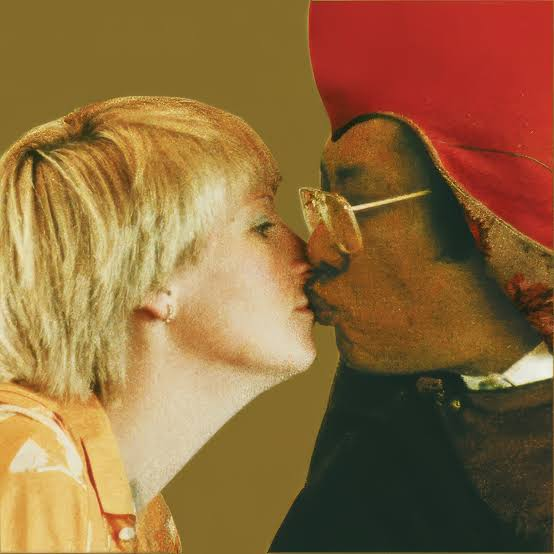
The couple had four children together, three of whom have been identified as reincarnated lamas (tulkus). The title Vidyadhara is used by Hindus and their Tibetan cousins to denote someone with great spiritual realization, preternatural ability, wisdom, and insight. This is how Diana identified her consort even after his death in 1987. Tibetans have an extensive hierarchy of titles, honorifics, and lineages and, more importantly, large ornate headgear. Diana became self-styled Lady Diana, consort to the dharma teacher. She was not a member of the formal English peerage.
Diana was born into a prominent English family which included barristers and was educated in private schools, attending classes with English and foreign noblewomen. Finding the upper-crust way of life stifling, she left school at 16 and met Trungpa, 30, shortly after his arrival in the UK.
Over the Christmas holidays, I went to St. George’s Hall to attend a rally for the liberation of Tibet, sponsored by the Buddhist Society. The program went on for several hours, with one speaker after another. I found it quite boring. One of the last speakers on the schedule was the author of Born in Tibet, Chögyam Trungpa Rinpoche, who appeared onstage in the maroon and saffron robes of a Tibetan monk. I looked up at him from the audience, and much to my amazement, I felt an immediate and intense connection. Before he could say anything, however, he collapsed and was carried offstage. We were told that Rinpoche had taken ill, but I imagine that alcohol may have been involved.
Like Diana, Trungpa found his station in life a burden and, by 1969, had fully transitioned to lay life. His official reason for doing so was that the robes and the monastic strictures placed a barrier between himself and the Westerners he wanted to reach. In fact, as Diana's quote indicates, he did what many Tibetans do when arriving in the West – discover drugs, alcohol, and exotic women. Trungpa's passing out on stage in front of a crowd did nothing to stop Diana from falling in love with the rascal.
Rinpoche had an auto accident in 1969 that left him partially paralyzed on his left side. He was flung out of the car, cut badly, and, when police arrived, determined that he had a female passenger. Diana demurely indicated intoxication as a possible cause, but the incident for a monk was not a good look. This is probably the deeper reason for dispensing with the distinctive clerical costume.
Her electric reaction to Trungpa was being felt similarly by her peers, who attended rock concerts, where the performers often played under the influence of drugs and alcohol; chemically-boosted male energy made a potent focus for female adulation. Trungpa's audience were much more restrained as a rule, but just as invested in the figure on stage, now wearing a business suit and tie. When in Rome, wear sandals and a toga.
In the film, Diana recounts Trungpa's early infidelity, the first revelation of which led her to an all-night cry on the bathroom floor. Her husband explained that he still very much loved her, his dharma consort, but that he was not like other men and had needs. When lamas leave the robes, they are still treated as clergy, from what I can tell, having received various lineage teachings. Thou art a priest forever in the order of Melchizedek. Rinpoche, as her memoir's cover shows, still donned headgear in public. Most of what we see in the film, however, is photos and footage of him wearing ordinary Western business clothing.
My impression of modern Tibetan Buddhism is that, in the West, it remains largely a Boomer preoccupation, with later generations less enthusiastic. I don't see Millennials and Zoomers filling in the gaps as the Boomers leave this world.
The interviewees in the film are almost all white and may have had sexual relations with Trungpa at one point or another, or at least knew it was happening.
The Barbieris, a married couple at the time, recounted their perspectives on life with Trungpa. Mrs. Barbieri was bedded by him, and the husband relates disappointment over his wife's infidelity, but seemed generally okay with being cucked since it was a distinguished rinpoche doing it, and the missus had spiritual needs. An older Mrs. Barbieri cries as she thinks back to her time with Trungpa, clearly still in pain from his premature passing. She and the other women positively glow as they reflect on his teachings, his example, and the lives they shared together as a community working to spread the dharma.
Tibetanism prior to the arrival of the Chinese army in the 1950s was a pure theocracy, where reincarnated lamas and deities ruled with an iron fist over a small, insular population of poor, illiterate mountain people. Its closest equivalent is the Vatican City State, a 110-acre spread in Rome ruled by unmarried clerics. Unlike in Tibet, however, the Latin priesthood's rule of celibacy was a firewall against the formation of ecclesiastical dynasties. Bastards of popes and bishops would, from time to time, finagle their way into offices, but the rule worked rather well. No blood dynasties oversee the Catholic religion.
In Tibet, this was not the case since attainment of lama status was ontological in nature, so one could move in and out of the robes, siring children in between who would themselves have honorifics, political power, and prestige. Once a lama, always a lama.
In Trungpa's case, three of his children have all been conveniently discovered to be reincarnated lamas, so they naturally have titles and identities courtesy of their father. Trungpa was of course a tulku himself. With the Chinese seizure of Tibet, the ability to divvy up lands and monasteries to keep the priestly aristocracy going has been eliminated. The West might be seen as a new frontier for reviving a more corporatist-style kingdom.
Trungpa found in the West a place to reestablish Tibet's old medieval system in a new guise. Shambhala centers, universities, and institutes were all founded by him, and these in turn became money-making operations, quasi-fiefdoms of minor spiritual influence with serfs running their day-to-day operations. Towards the end, the film recounts Rinpoche's creation of a "Buddhist army," a group of uniformed men and women who marched around looking imperial. Trungpa is shown wearing a uniform and riding a white horse, a kind of pacifist Buddhist warlord overseeing his territory, concubines, and enthralled followers.
Chuck Dederich founded Synanon, which quickly devolved into a cult of personality and, like his contemporary Trungpa, was an active alcoholic toward the end who built a private guard of uniformed men who stamped around doing drills. Late-stage alcoholism exacerbates psychosis and paranoia; the leaders of both movements became increasingly fixated on personal protection, military order, and discipline even as their own minds began to crumble into disarray. They built their own version of the papal Swiss Guards to protect against imaginary threats. A cult leader's addictions are not the cause of the servile devotion of followers, but are in fact an ever more vital shit test as he falls into disrepair.
No Tibetan Buddhist documentary produced in the West would be complete without an appearance by Robert Thurman. Thurman was of the liberal persuasion, not especially fond of Donald Trump or Republican politics, but seems unable, like the other interviewees, to see that Tibetanism is a medieval theocracy far out of step with liberal values. Diana and her cohort found the weak tea Christianity and class identity of the Anglo world to be too much, too stifling. They discovered something purer in Shambhala and Trungpa's teachings, but these are, in fact, authoritarian to the core. The Anglican chapel at school was stuffy, but carrying your passed-out guru off a stage (again) is fascinating, since he is god-like yet like us, too. A guru makes you feel good about your flaws because he has the same.
Thurman (who passed away last month) could only say something like, "Well, Trungpa could've done so much more if he had just gotten a handle on the drinking." A sober rinpoche would've, in fact, had the energy and steadiness to grasp even more property, more devotees, more women. Who knows? The mind quivers with the possibilities. The Kingdom of Shambhala, sighed over, may have extended further, becoming a possible exotic autocratic getaway for those tired of the indigenous kind detected in churches, politics, and society generally. It's odd to criticize MAGA while hanging with theocrats.
This is the story more generally woven from the statements made throughout the film: Trungpa was a spiritual leader, a builder of physical infrastructure who had concubines and scads of blind followers who procured alcohol and cocaine for him, who helped him to build a small private army of peaceful soldiers, and preached his message of an earthly society of enlightened beings.
Shambhala is a mythical kingdom revered by Hindus and Tibetans as a possible political order that could be established here on earth, right now. Pre-occupation Tibet is likened by one of the female devotees to a spiritual kingdom, where peace, wisdom, and compassion reigned before the commies ruined it. To say, pre-invasion Tibet was not Shambhala, but a rough blueprint for it. With the expulsion of the theocrats, it was up to the human race to pursue the dream by other means, in other lands. The particular isolated priestly nation could, in other words, find re-establishment in diaspora.
Contra Thurman, the booze and coke didn't undo Trungpa. The system of Tibetan clericalism did; the chemicals just made him less effective at being the autocrat the Boomers claimed to abhor.
Trungpa's successor was a bisexual who seduced men and women. On one occasion, he allegedly used Trungpa's guards to forcibly sodomize a follower:
As a former Vajradhatu member attested, "a chilling story had recently been reported by one of ... [the] teachers at the Buddhist private school [for the Vajradhatu community]. This straight, married male was pinned face-down across Rich's desk by the guards [the Dorje Kasung] while Rich forcibly raped him.
Thomas Frederick Rich, Jr. entered the Hindu spiritual tradition before finding his way to Trungpa's door. The Tibetan quickly decided that Rich would succeed him as the head of the Shambhala movement. The link includes a glowing endorsement of Rich, not as an enlightened being, but at least pretty far along the path, enough that he could be entrusted with the care of the community after Rinpoche's death. One suspects that active alcoholics are not good at gauging real spiritual qualities in those closest to them.
Rich evinced a psychotic cruelty towards others. Apart from the accusation of anal rape, he was known to be sexually promiscuous while infected with AIDS. In the late 1980s, the disease was a guaranteed miserable death since there were no effective treatments.
It was revealed in 1989 that Tendzin had contracted HIV and for nearly three years knew it, yet continued to have unprotected sex with his students without informing them. He transmitted it to a student who later died of AIDS. Others close to Tendzin, including Vajradhatu's board of directors, knew for two years that Tendzin was HIV-positive and sexually active but kept silent. As one student reported at the time:I was very distressed that he and his entourage had lied to us for so long, always saying he did not have AIDS. I was even more distressed over the stories of how the Regent used his position as a dharma teacher to induce "straight" students to have unprotected sex with him, while he claimed he had been tested for AIDS but the result was negative.
Even with the passing of Trungpa, the community was happy to let the lineage holder act out in destructive, distinctly non-Buddhist ways. Rich used his sexuality just like Trungpa to kill relationships (and at least one person), but did so while sober. Whereas Diana was willing to endure Trungpa's philandering and addiction, the larger community simply turned a blind eye to the grave harm caused by rinpoche's appointed successor. Rich's own training in Hindu yoga was from the Indian Swami Satchidananda Saraswati, himself accused of extensive sexual abuse of students:
In 1991, about a decade before his death, protesters accused Satchidananda of molesting his students, and carried signs outside a hotel where he was staying in Virginia that read "Stop the Abuse". Several former disciples claimed he used his spiritual authority to coerce them into sexual relationships. After those first allegations, several more women made similar allegations of sexual manipulation and abuse. Satchidananda denied all the alleged abuses but refused to be interviewed about them.
Imagine being so callous, so spiritually blind that you would not call out someone like Rich for abusing (and killing) other human beings because of his titles, lineages, and so on.
Lady Diana would, of course, soften the blow of Trungpa's bad decision to appoint Rich by claiming he expressed regret at the end. The guru still had his wife covering for him even in death. Being inebriated most of the time is not the best place from which to make long-term decisions; better yet, maybe one should not even be in that position at all. This is not a conclusion any of the film's subjects state openly, but knew nonetheless.
According to Diana Mukpo, Trungpa's wife and widow, he ultimately became disillusioned with Tendzin as his heir, and during his final illness called Tendzin "terrible" and "dreadful" and said he would have gotten rid of him had he had a suitable alternate candidate.
Did the abuse stop with Rich? Did the next successor improve things for Shambhala?
Nope.
Meet Sakyong Mipham, Trungpa's eldest son, the fruit of a union with a Tibetan nun sometime around or during the guru's escape from China. Even while ordained (but before discovering Western women), Trungpa still had a habit of breaking the code. Naturally, it was determined that Junior was the reincarnation of the great 19th-century lama scholastic, Jamgön Ju Mipham Gyatso.
While in his previous life Mipham seemed more intent on writing "Buddhist" treatises in the Nyingma school style, in his new role as third pope of the Shambhala lineage, he focused on, uh, other activities. In 2018, he stepped back from the position after being accused by followers of sexual harm. He appears in Crazy Wisdom towards the end, wearing golden silk robes, several years before his resignation. He apparently didn't detect any irony in talking about his father, the unfaithful husband, while holding the same title and having dalliances on the side. His Wiki lists him as the father of three children.
Third time is the charm, as they say; or, the machinery which keeps producing sex hounds seems to do so, almost by design. As if an engineer intended the titles, the adulation and posturing to be emblems of the widgets coming off the assembly line, stamped out with mechanical regularity and consistency.
Tibetan lamas and spiritual adepts are, when gussied up, comparable to peacocks. Male peacocks are brightly colored as a mating strategy, with their colors and shapes drawing the attention of reproductive-age females. One can make the same charge against the high church Christians, but in the case of the Catholics, the clergy has earned a reputation for being mostly gay. Besides, their vestments took a big hit after Vatican II.
The Boomers found the Christian religion to be highly imperfect, an empty vessel that their parents paid lip service to only. These spiritual seekers found new vessels, more exotic ones, in which to pour their psychic energy. In the Boomer mind, Christianity was associated with sexual restraint and modesty, and these were, at core, repressive dungeons of the soul. Many felt that a significant part of themselves was caged in by an oppressive, outdated Western system which knew prosperity, but nothing about spirituality.
Cults offer a perverted, unstated practice of anatta which divests members of moral, practical, and spiritual insight, transferring one's own well-being to another unstable ego who is only too happy to carry their responsibilities. Cult leaders tell their followers whom to marry, what to wear, when to sleep and to eat, what to say and think. The burden of being an incarnated suffering animal provides a temporary relief from existing when it is bundled up and handed to a guru.
Interviewees in Crazy insist that Trungpa's dharma awakened a desire to live humanely, compassionately, and with higher purpose. Sexuality and its exploration fueled growth. In truth, they were slaves to the sexual revolutionary spirit, more than happy to give up their autonomy as the primary agents in their own liberation to men who were neither particularly charismatic nor wise; they were, in fact, abusive, even willing to kill (cf. Rich) to satisfy their appetites.
One may safely assume their leader's behavior encouraged an unhindered life in imitation of a great teacher. It was the Buddha's path, and a principled rebellion against their parents and the Christian norms governing sexuality. Have sex with other devotees, break your marriage vows, do whatever is necessary to obtain the secrets to enlightenment. Liberation requires an antinomian willingness to go beyond, to practice "crazy wisdom." Rejecting moral norms erases the moral burden of should/should not.
On one level, getting laid is payment for any cult member's loyalty. Men join cults for the chance to get the guru's cast-offs. On another level, and this is probably more important, gaining access to sacred technology means the ego can fully ripen into a self-concocted spiritual delusion of the highest order. The fake anatta mentioned earlier is just a phase of realization, gradually replaced by the awakening of a true self. The true self is just beyond, with the guru acting as the doorway.
The moment of orgasm is, for many, the closest they will ever get to an instant in which self/identity recedes and the hindrances disappear. One French writer called it the "little death," but in fact, it is a kind of cessation when viewed through an Eastern lens. Whatever brain chemical it releases that causes the abatement of the full weight of self can and does turn into a source of craving. As mammals, we are wired to seek it out, especially in youth.
The Buddha of the Pali Canon is not the Hindu-inflected Buddha of Tibet; the former taught with an open hand, holding back nothing necessary for the cessation of suffering. Boomer Tibetan Buddha is about celebrity, human living, wisdom, exploration, appreciation, ecology, titles, sexual experimentation, armed guards who (might) help spiritual masters sodomize married students. Humanism includes the good, the bad, and the ugly aspects that go with, well, being human.
It is not surprising that Trungpa's Naropa University, the first Buddhist center for higher learning in America (Boulder, Colorado, to be exact), featured speakers and faculty members like William S. Burroughs and Allen Ginsberg. The Wiki for Trungpa lists many distinguished associates and speakers, including singer-songwriter Joni Mitchell.
Celebrity and Tibetanism in the West go hand in hand. Ginsberg was accused of having been a pedophile (and was an open supporter of NAMBLA), while Burroughs was his own hot mess of gay bathhouses, wife-killing, poor parenting, and opium addiction.
This is to say that the sexual revolutionary spirit of the Boomer era had a spiritual materialism and ego vanity which will take generations to repair.
Today, young people throughout the West face little chance of homeownership or family formation. Sex as a potent energy is best directed not at "self-realization," but in the creation of new humans who can encounter the dhamma from loving parents of steady mind. The Boomers made sure that this would be put out of reach of youngsters who might be tempted to backslide into the old ways. The young will carry the financial and social burden of their elders' choices for the rest of their lives.
The word "meditation" is so often used in cult documentaries that the average outsider, the skeptical Westerner, automatically raises guard at its mention. Meditation, it seems, is the path that opens one up to guru manipulation and moral corruption.
"Jenny was a sweet girl, you know, but then she started wearing tight yoga pants, shopping at Whole Foods, doing weird stretches and meditation. Now she's living in a trailer in Arizona stoned out of her goddamned mind most days..."
In inexperienced hands, meditation – a neutral technology – breeds destructive behaviors. It seems to be a deep well from which bad people draw dark energies. Unleashed, it puffs up the ego and then tears it to pieces. Absent doctrine and good instruction, it can in fact turn into Saruman's Tower, where the ego sits in confusion and plots.
We invariably are treated in cult documentaries to mostly white women doing yoga postures or sitting on meditation cushions – and the depiction oozes a self-important conceit, an ick that makes meditation off-putting for the very people it could help. A weekend of binge-watching these on Netflix confirms the impression.
In most cult documentaries featuring an Eastern guru of whatever stripe, women are the movement's subtle energy. The guru seeks access to their bodies, and they, being enthusiastic, more organized, and more "spiritual," gladly give in and do the day-to-day work of growing and administering the organization. Exact numbers are hard to come by, but what we have indicates that women in meditation-based cults account for most of the membership. These cults are linked to gurus who want access to youthful sexuality.
A man in a meditation-based cult is likely there because his wife is (Barbieri), in which case he will eventually be cucked or have his marriage terminated by the leader (Dederich, Synanon); or because he is single and hoping for group sex or hand-me-downs from the guru and his inner circle. Sometimes a brother can scrounge a sympathy lay from a sister who is still working her way into the guru's harem, maybe as a way of signaling her openness. Women are handed out by cult leaders as prizes for loyalty and good behavior, providing the guru with control over young restless males. He portions out women's bodies like a liege lord would give land to vassals. This produces a kind of sexual feudal system.
Lower-ranking men will seek access to a guru in order to obtain a wider variety of sexual partners – all conveniently nearby – without having to work as hard by visiting bars, concerts, and the like. Shared spiritual pursuits make the men seem more relatable, giving them an aura of depth and wisdom which contrasts with the shallow skirt chasers at large. Sex between groupies is cement for cults, but a solvent on the surrounding normies, who use it instead to form families, communities, and societies. The solvent effect invariably appears inside of the cult.
I recall one group in Oregon led by a Hindu guru from India. Eventually, the feds showed up, and when they pulled onto the property, an FBI agent recounted seeing a couple going at it standing on the bridge. This lawman was like, "OK, so that's how it's gonna be..." The profligate public sex between cult members had been a source of complaint from local neighbors and townspeople. A private religious association became a hindrance to the surrounding community's well-being, necessitating intervention by authorities. In the pre-Boomer era, private religious association was the bedrock of a healthy society, but today, in light of the Catholic priestly abuse cases and guru sex cults, even these are viewed with suspicion.
So the cult men are there for the women, and the women are there for sex with the guru. Remove women from the equation, and the number of cult documentaries drops to almost zero.
Apple's Twisted Yoga series shows white women in pursuit of sexual initiation with a tantric master, with one dude acting as a kind of diversity token to make it seem like these operations target men as well, although it's generally not the case. The Romanian guru Gregorian Bivolaru depicted here was exclusively heterosexual, but affiliated Atman and other yoga groups did accept male students for the lower-level tantra classes. The lads did not progress, however, to initiation rituals with the leader since his object was younger women. The training presented yoga as an outlet for both sexes. In Bivolaru's case, the male yoga enthusiasts served as camouflage or unwitting recruiters of women. All of these associations have, of course, denied funneling women to Bivolaru, some of whom ended up working as webcam girls in houses run by his minions.
I single out white women because that's what I generally see when watching cult documentaries centered on guru-based, Eastern meditation traditions. Black sisters, to their credit, seem to be immune to involvement. Or it's more likely the case that there is a strong socio-economic/Stuff-White-People-Like vibe to meditation gurus from the East which doesn't appeal to black and other minority women.
An objection to the sketch of female participation given here goes along these lines: Women are much more likely to be drawn to spiritual pursuits (as judged by attendance) and thus, rate higher in active participation in both cults and mainstream religion. Therefore, the charge that they are more easily brainwashed by gurus is inaccurate, even sexist. They are a self-selected group who are targeted at a far higher frequency by cult leaders because of their naturally higher interest in spiritual development. If you are a tantric sex guru, you will of course be drawn to their demographic group – young, into wellness, with above-average intelligence and often educated. They will not only provide their bodies to a guru, but will handle the low-level activities required to keep the cult going.
That women do menial, low-level work running parishes, ashrams, mosques, temples, and so on (with no pay) overlooks one important point: Men are, by and large, the source of money for religious bodies. So while men are less likely to help through day-to-day involvement, they usually work longer hours and, from their earnings, donate the lion's share of the funds needed to maintain a faith community. Men are providers not only for their immediate family, but also, to a lesser extent, for the tribe. Religious groups are a kind of tribe that work on a hunter-gatherer social networking system. Traces of evolutionary psychology did not disappear with the advent of the TV set.
Another objection is that, if meditation, spiritual development and personal growth were the draw for women, then they should be inclined, having seen the wreckage caused by male gurus, to form their own communities. But this is not what we see, with female cult leaders being much rarer even in light of the scandals over the past several decades. There seems to be a glass ceiling in the world of cults and secret societies.
It's worth pointing out that traditional societies segregate men and women for precisely the reason that mixing them up just leads to harem formation, broken marriages, jealousy, and wasted energy. Female psychology being what it is, hypergamy kicks in when a male hierarchy forms, and before you know it, elderly women are sobbing publicly over the extramarital affairs they had with alcoholic Tibetan lamas from decades ago. Modern beta males are left confused. What did he have that I don't? The women are still so smitten that they don't even care what the tears over a past dead lover do to their reputation, children, current spouse, or extended family. The individual's happiness is all that matters.
Some years ago, female employees of an archdiocese reminded me of the lay male's religious role. With insider knowledge, they noted that most of the money taken in through collections came from the well-to-do, and that these were generally successful businessmen, doctors, and other professionals in fields where men tend to dominate. Women give time and attention at a micro level, the men do so at the macro. This behavior jibes with the economics of family life, so there are no digs here on either gender. Women tend to be demonstrably compassionate on a tactical level, whether it's hosting the coffee hour or organizing youth activities. Men attain greater social status by donating generously from the fruits of their labor.
The religious woman who is working hard for the local Presbyterian church is likely also married with children. Single women today are pursuing careers or enjoying the single life. The married woman's role in the parish is then an extension, an augmentation of what she already does around the home; and the pastor's purpose is not to provide her with an avenue to connect with her inner Shakti. Boundaries are clear, and the clergy is expected to honor their vows and those of their flock. Affairs do happen, but they are condemned side effects, not advertised pathways to divine bliss. For the meditation groups, sex is the magnet, or at least a major component since it leads to initiation. The initiator always charges a high fee.
A woman's thankless devotion of the boring kind is much rarer now, as capitalism has made stay-at-home wives and mothers financially impossible. Women are conscripted to work outside of the home since the military-industrial complex requires a broad tax base to fund the debt used to buy weapons and ammunition. These, in turn, are used by high-status males to carry out wars in places where women and children are hit hardest. Society therefore places a diminished value on traditional couples and the division of labor, so we end up with women who've little in the way of provider husbands who are reliable and yes, a little boring. This is fertile ground for meditation-based sex cults and tantric magic.
In recent decades, the state has adopted the guru's hoovering of female energy and talent to help fund, in the case of the United States, forever wars abroad. Traditional female labor has been repriced by the state to zero, making it necessary for wives and mothers to abandon the micro activities which made social well-being possible, even normal. They produce fewer children, have no protective husbands and extended families, and fewer associations with social and charitable organizations. They are, in other words, like the victims of the guru cults – left with very little after the exchange is complete. The guru was at least a tangible presence in a female devotee's life.
The Tibetan lama, removed to the West, is the same autocrat, extracting labor and sex from the "parish" women while men continue to provide more macro-intensive effort aimed at broadening his reach. Everything – labor, sexuality, and capital – flows up to a single figure, and when he dies, the movement withers.
In the Christian model, the benefits are distributed, and boundaries are maintained. Smith's wife is Smith's wife and sleeps only with him, even while actively engaged in church life. Smith's faith in the established system means he will put in the long hours and make the smart investments that create endowments, gifts, and trusts that guarantee the congregation's future. These are legal realities as well, which exist outside the grasping hands of autocrats, drunken gurus, and sex pests.
This is notable about the Eastern cults embraced by the Boomers: They usually last a few years and leave behind nothing but bad memories, delusions, and material for documentaries.
Today, there are churches throughout America that were built by men from a century or two ago. In one episode of The Sopranos, Tony directs his daughter Meadow's attention to the parish church founded by Italian immigrants:
Your great-grandfather and his brother Frank... they built this place. Stone and marble workers. They came over here from Italy, and they built this place... They didn't design it... but they knew how to build it. Go out now and find me two guys that can put decent granite in your bathtub.
These Italian men were of course married to women who ran the altar guilds, the charitable societies; they oversaw the education, feeding, clothing, care, and well-being of the new arrivals from Europe. In other words, the men and women together built living congregations that lasted for generations with the help and inspiration of the clergy. There is a richness to the pre-Boomer world, where corporate action was directed at making lasting goods – ones beautiful, functional, and socially meaningful. This was the period of social capital accumulation.
Tony is a Boomer in mid-life who is haunted by the thought that he arrived at the tail end of the good times, or as he says to Dr. Melfi in their first session: "Lately I'm getting the feeling that I came in at the end. The best is over."
A fictional TV character, he reflects a Boomer dis-ease with the present and an inkling that the future will only be worse. His own string of infidelities, violent behavior, and disregard for basic virtue drives his psychological disintegration.
People in the old days, they had it better, you know?
Everything related to Tony's position as pater familias is about managing the decline, not building something lasting like his forefathers. Tony is somewhere between the guru and the patriarch, having the former's vices but a nagging feeling that the latter's way is better. We don't know if great-grandpa and his brother Frank were members of organized crime, but it seems unlikely for stonemasons who built churches and other buildings for a living.

Diana, Mrs. Barbieri, and the countless other women who had sexual contact with a guru via non-traditional Western religions that came to the West in the 1960s were not interested in the stuffy constraints of Christian society, however weak those were by the time they came of age. Strange to say, but even after being discarded by their spiritual leaders, they still harbored feelings of love and devotion despite the loneliness, abandonment, and despondency that came along with it. Gurus are not faithful, not partners in long-term relationships well suited for children. They are not, in other words, future-oriented, despite being publicly concerned with eternal verities.
Had these women pursued the boring married life of their parents – who were more averse to divorce – they might have been a little more content. Most cult documentaries show women still confused by their experiences: On the one hand, they were exciting and memorable, but on the other, also a cause of considerable pain and suffering. Drama seems to win, although the women in Twisted Yoga do show considerable regret, but for different reasons.
These much younger, more recent devotees wore no engagement rings or wedding bands. High-quality men are likely to take a hard pass on a Twisted Yoga sister who spent years studying tantric sex in yoga school for the purpose of sexual initiation with an elderly, unattractive, secretive guru hunted by the police. Even the thirstiest lad will have second thoughts on these women as long-term marriage prospects. The subjects were all attractive, especially in their prime when the events were taking place, and could've had the attention of any number of men.
In the case of the Tibetan sex rings, the lamas never make any pretense about keeping the Five Precepts. For Trungpa specifically, it's safe to say he broke all of these, save the First, with regularity.
The cult members were probably unaware that authentic Buddhism places the highest premium on ethical conduct, both inwardly and outwardly. Lust, greed, anger, sloth, alcohol use, and so on are impassable barriers to progress in meditation. Ajahn Geoff gently remarks in one of his books that the path will be difficult if one's life is chaotic or is filled with vicious living. Jhana is a self-given gift, but it comes with the price of keeping, at a minimum, these Five Precepts. Ajahn is himself a Boomer, one of many who have made quiet, lasting positive contributions to easing suffering by spreading authentic dhamma in the West.
In the Pali Nikayas, jhana is characterized by the fruition of viraga (dispassion) and nibbida (disenchantment) – the exact opposite of the egoic boosting practices of the Eastern guru cult. The irony of lower jhana is that it is attended by intense pleasure (piti) and emotional joy (sukha) which, for many, far surpasses the intensity of orgasm. But it arises through the discipline of sense restraint, ethical living, seclusion, and dispassion, the very things the meditation-cults eschew. Staring at the body of a young woman in skin-tight yoga pants with her ass in the air, in other words, is not the kind of sense guarding which leads one to the rapture of jhana. The mind can fabricate sexual fantasies, but jhana is the cultivation of non-harmful pleasure that supports insight. It costs no one their dignity.
The late Robert Thurman's last book, The Magical Adventures of the Sixth Dalai Lama: His Life and Loves (2025), is described as "the amazing story of his [the current Dalai Lama's] predecessor as a magical youth who embodied the paradox of earthly passion and spiritual awakening." Passion, magic, and love poetry are not viraga and nibbida; they are, in fact, antithetical to them. These are not what draws one closer to dhamma.
The kilesas operate non-stop to keep one from meditation because it is there that you begin to see them objectively and analytically. There, they are temporarily weakened and, in more advanced practitioners, suspended. If they have free rein in daily life outside of practice, they will be all the more formidable when faced in silence. They cannot abide examination by someone trying to live mindfully. If the skilled mediator persists, they adopt subtler, more pernicious disguises.
If your goal is the satiation of sexual appetite under the rubric of spiritual development, your sits will be empty, frustrating, and will eventually fall away. No matter how many pictures there are of you seated peacefully atop a cushion, your inner turmoil will rage unabated. You may eventually look to the rites, rituals, and esoteric doctrines of the Tibetan lamas for your salvation, since the inner world is unorganizable in the face of life's intrinsic noise. You may, in other words, cast your burdens their way.
I suspect most of the so-called Buddhist literature produced in the various schools was the product of bored practitioners who found watching the breath too onerous. I sympathize with them because it can be hard.
The documentary's subjects treated Buddhism like a cultural weapon against a fading Christianity in the West, accepting the medieval authoritarianism of Tibet in exchange for ego-feeding esoteric teachings and sexual license. They surrendered the better part of themselves and the opportunity for a human life to practice in exchange for spiritual orgasms.