It was the spring of 2021...
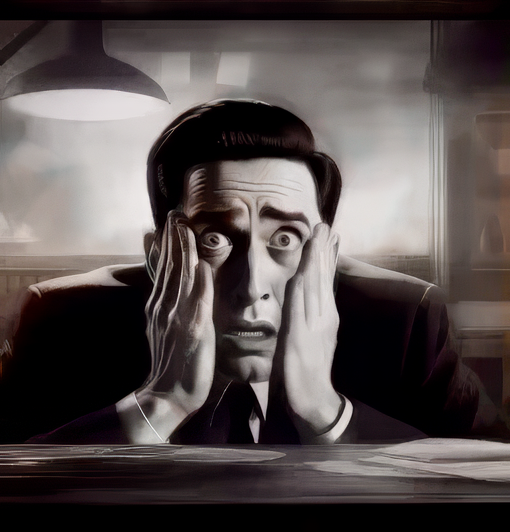
I had just left an IT consulting position with a Big Dumb Company after six weeks and was between gigs. It had looked good on paper, but as with most consulting-related things, it did not match the advertisement.
The client was a very large corporation, and the software I was working on was responsible for the supply chain of a multi-billion dollar business unit. The code base was super bad, and the client had no interest in fixing it, just keeping it band-aided until 2027, when a complete replacement was planned.
On a team chat one day, I asked the other consultants, "Hey, were you told this was a modernization gig?"
"Yup."
"Is that what we've been doing for the past month?"
"Nope. But the pay is good."
I was assigned bugs that were caused by a "framework" written around 2003. The lone designer had since retired. No one used his software apart from the client. No one.
Previous generations of devs just added logic to swallow errors, hiding the problems of a system responsible for billions in assets.
As a consultant who was supposed to fix the bugs without replacing, updating or touching the "framework" code written 18 years before... this caused some stress. The framework was Preciousssss! Being told you can't cure the disease means there's no point in you being there except to collect a big check every two weeks. I'm not that guy.
The company had lost so many developers over the years to Precious that the repository was a graveyard of spaghetti code sprinkled with the parmesan of dev names long passed from the company roster. The client had burned through the local talent pool as well and was forced to hire outside consultants for what amounted to a very expensive staff augmentation.
End users complained of mysterious gurgling noises in the bowels of Precious and of failures that led to costly mistakes. The client's management staff were left kind of dead inside from having to support it. Two or three managers had transferred out in the short time I was there. One consultant had quit after the first week, confessing he had no intention of feeding Precious any of his psychic energy.
From the source code history, you could see what the staff devs were working on, what broke them and made them split. I remember looking at this data-loading process that was so convoluted I felt pity for the dev who had inherited it. LinkedIn told me she was still in the field at another company in another state. I sometimes think of her and hope she got the help she needed.
I've seen so much bad code. I've written some of it myself. Comes with the job. It creates a level of mental fatigue that can be as bad as PTSD. Spending eight hours a day in a struggle session with gnarly code, you begin to grasp just how confused, how adrift the human mind is as a general rule.
This explains much of the gig hopping that goes on in the IT industry.
For those who stay in one spot, there is a keen interest in "career advancement," an escape from having to stare into the maw of twisted code for the more relaxed pace of endless, pointless meetings. Boring meetings and full-time office politics are their own kind of hurt.
When people talk about "opportunities for advancement" and moving into "leadership," they generally are looking for a way out of the trenches. It's the equivalent in some cases of the shellshocked front-line grunt who wants to get in the rear with the gear. Not every shop is like this.
The problem with technical careers is that most people don't want to spend more than a few years trying to stay on top of the torrent of change. Middle management seems easier because you can hire younger, fresher people to handle the vexing lower-level details and, well, manage them. Plus, the career path looks pretty much the same decade over decade. You can get married, raise kids, and have a normal life instead of trying to stay up to date on the latest thing in IT. These are human, not machine values.
Switching jobs can be a stressful event since you pass from the known to the unknown and your whole material existence seems to hang over a void. You lie around at night thinking, "What if the new company goes out of business? What if they find out about the upper decker I launched in the 3rd grade and rescind the offer letter?" Even after you start the new job, you have to establish your value, get settled, build new relationships, learn new processes, etc. It's all discomfiting.
My driver for career switches has been the pursuit of the ideal Good Workplace, where things click, and colleagues are really good friends. The shop builds cool stuff, and one feels as though there is a purpose to life.
Inevitably, ideals fail. You find new Good Things, new Bad Things with each change. The balance between these two forces can vary, and often patience and endurance can bring about détente. I've never worked in a shop where the software developed really matched the way things Are Supposed To Be Done.
If you want a Good Job, you have to be in a place where you can make it better by improving the tools and the processes so that things flow smoothly. The Good Job is making it from scratch with the ingredients and tools you find in the kitchen. This can take time, and there is much inconsistency and stress involved because many people Do Not Like Change.
Soft skills for senior technical people are crucial. Convincing the right people that you and your teammates are interested in improving things for everyone, especially the customers, involves the ability to act as a diplomat, a browbeater, a savior, and a reliable technical advisor at the right time. So much of IT work is about being a matchmaker for technology solutions that align with the emotional and intellectual capacities of a particular group of people.
Sitting on the couch waiting for another job to start with the consulting gig in the rearview mirror, I realized that I needed a better way to handle stress caused by work. I was getting less and less positive feedback from it, and it had been going in this direction for years. Projects I thought would be fulfilling were not.
My refuge had been my work because it's creative, requires mental engagement and dedication. It affords a comfortable middle-class lifestyle free of want and provides the kind of meaning that men naturally crave.
GenX founded an economy based on building stuff. We tended to be engaged in that to the detriment of any great social cause or mass reform movement. We saw our parents' broken marriages and looked elsewhere for value. Build a business instead of a marriage. We don't want to change the world.
Builder-type personalities relish going to work in a world where most people find little to no job satisfaction. Construction workers and software developers: We build stuff that people must have, and we get the tingles when Nothing Becomes Something.
As I grew older, I was finding that work was a very creaky, leaky shelter that did nothing to stop the Flood of internal chatter. There is a committee of voices operating in the noggin all day long, and focused work on tasks requiring precision helps mute them, but they always come back. Absorption in work is like alcohol dependency in that it gives you a false sense of freedom from frenetic thinking. Work is mental clarity.
In the 1980s, I took BASIC programming as an 8th grader riding in an Apple IIe. Computers were going to provide good jobs and be stable, better quality-of-life substitutes for the monotonous factory jobs in my hometown. Information management was always going to be needed. Life could only get better, and America would become more leisurely, less stressed out in the Information Age.
We were entering the future outlined by the Jetsons. George's collapsible briefcase, which folded in on itself to become a wallet, was the basic sequence of desktop-to-laptop-to-smartphone from 1980 to now.
With the rapid dissolution of the Soviet Union in the late 80s, it seemed the future was going to be peaceful, prosperous, and innovative. There were no more monsters left to stand opposed to the American Way. Saddam Hussein's army was decimated in a matter of weeks in the Gulf War. Francis Fukuyama announced the end of history (he didn't), and all that was left was to enjoy the peace dividend.
Things turned out a little differently.
It is unlikely that a large swath of IT workers will still be in the field in 5 years. AI threatens to upend society, and one of the last redoubts for a middle-class American lifestyle, the professional software developer, will give way shortly.
Leaky, creaky that work thing. Right now, AI is a useful helper at work, but I can see its potential to automate so many of the things humans do.
Even if this is wrong, C-levels are anxious to capitalize on the massive profits to be made by letting go of workers. AI promises to be NAFTA raised to the 100th power.
Having de-industrialized the West to the point where it can no longer even manufacture basic essential goods like medicine, the managerial elite have turned their attention to eliminating the white-collar class. Capitalism devours itself, creating, in the process, a small inner group that continues the cycle indefinitely before finally giving way to The Monad.
The Monad will be an oligarch's brain in a pickle jar, hooked up to a machine the size of a planet. All alone, forever Top Dog, his would-be competitors ground into dust and made into GPUs. Will it be Musk? Bezos?
It is very difficult to explain to a capitalist, who thinks in terms of days and weeks, that the unemployed and desperate do not buy tennis shoes, shitty EVs, blow torches, patio furniture, and chicken sandwiches – and AI is not going to fill that gap in the economy built for humans. It is not apparent that the run-of-the-mill executive understands this, although it seems likely that the Davos folks do.
But back to meditation...
Off and on, I used the family remedy of alcohol to get peace and quiet after a long day. A few glasses of wine in the evenings + Netflix... LaLa Land. This is now the practice for millions of Westerners. In America, the wine and beer aisle at the grocery store has blossomed into a collection of poisonous potions from all over the world.
"Drinking in, I know that I am taking a long swig; swallowing, I know that I'm getting high..."
Sales of alcohol and its spread throughout the social classes have been epic over the past few decades. The decline in wine prices has led to a society that treats wine aunts as a normal part of life's decor. Wine makes white middle-class people feel more sophisticated. It is actually the anesthetic you take when the personal and social are all in a late state of decomposition.
Alcohol consumption creates a tolerance that can only be overcome by... more alcohol. For someone with alcohol dependency, the din of internal chatter during the sober hours is still there, just in a body which is nauseous and aches. Intoxication and hangovers are no respite, no refuge from the Flood.
Drinking usually starts as a palliative for the problem of existence before turning into a physical need. "Wine gladdens the heart..." says the Psalmist. It actually poisons the body and pollutes the mind. I will have more to say about the heart in the future.
Alcohol use and abuse are, from my experience and from observing others, a way of muting the incessant inner dialog, of blunting anxieties about the future and past regrets. We do not know what we are, and the body, its thoughts and sensations don't tell us. In fact, they mislead us without malice, even if they appear malicious.
While we fear physical injury and death with a terror born of billions of years of biological programming, we live constantly with a mind that is shaped and obsessed at every moment by rewards and punishments.
Mind is the forerunner of all actions.
So begins the Dhammapada.
All suffering is mental because at each moment, our mind is weighing the environment, assessing dangers, calculating the odds of obtaining a small morsel of pleasure to make up for the inconstancy of life. When we have what we want, we fear losing it or become bored with it. When we are in a state of want, we are agitated. There is no center of rest to be found.
I had given up drinking and other bad habits like nicotine before turning to meditation in 2021. I would never recommend anyone with a reliance on alcohol or drugs pick up meditation as a cure or therapeutic, at least until they've been off the sauce for several months. Caffeine is an addictive psychotropic drug as well. Try going without caffeine and sugar for four days, then eat a slice of cake with a cup o' joe. What is it like?
I had a dependency on alcohol, but dropped it one day after seeing that my blood pressure was in the parlous range. As someone with a family history of hypertension, I knew what a stroke could look like.
For alcoholics, cold turkey is almost impossible. Addiction, in whatever stage, is an important lesson in how karma works if you can get sober long enough to see it. What you do by your volition, you become and what you become, takes away your choice to do anything other than, whether wholesome or not.
In the beginning, meditation practice was sitting on the couch, feet flat on the floor, body mostly erect and holding some prayer beads. As I went through each bead with forefinger and thumb, I would breathe in and breathe out. 108 beads meant 108 breaths. Doing it slowly and carefully, it could take several minutes. Over time, I would take longer and longer with each bead or repeat the cycle a few times. If my mind wandered, it was back to the breath. If you step aside a little bit, the breath can get very slow and relaxed.
All of this was information easily picked up from secular mindfulness instructions. I was very secular and not interested in gods, devas, and nagas. I just wanted to slow my mind down because it was making me very unhappy.
Some people find a small tactile focus helpful for establishing awareness. The average modern person lives disconnected from the body and its simple sensations. The mind pushes them into the background in order to prioritize the Flood of voices, memories, images, likes/dislikes. Mental activity is an addiction more powerful than any substance.
At your last meal, did you really process all the actions involved? The selecting, the picking up, the chewing, the tasting, the swallowing? Did you witness the disgusting chewed-up goo in your mouth pass down your esophagus and into your stomach, where it would undergo further processing in an acid bath?
Up until this point, I had not studied any dhamma books or listened to dhamma talks. I knew from light reading years ago that Buddhism believed in gods and that the Dalai Lama claimed to be an incarnation of a local Tibetan deity. As a Westerner, I don't have much use for gods and goddesses and sort of tuned out what Buddhism had to say. His Holiness lost me at "I'm a god!"
In hindsight, it's the greatest regret of my life that I did not take the time to understand other schools of Buddhism, especially Theravada. Maybe you, dear reader, are searching and put off by the same thing – don't give up on the dhamma!
I am not a dhamma teacher and have no aspirations to be one.
The monks are an essential part of the practice – one of the great gems that the Buddha gave us – but many Westerners might be wondering what people outside of the sangha, in a lay state, do to get going. There's plenty of suffering to go around, but not everyone must ordain to find at least a little relief.
What I've shared in the foregoing was about the refuge of work I had cobbled together over the years and which is unsuited to freedom. I hope to share my experience of the practice of dhamma as someone like this. People find refuge in work, relationships, wealth, status, physical sport... they are no shelters at all and will vanish.
No one who reads this blog should think I have Right View or that I claim to. In my life, I've changed my opinions several times on Big Ticket Items because I felt they were wrong, even harmful. The mind is more adaptive than we may believe, even as we age.
There is a False View that I had (and still have) that says that, as an ordinary person, I must give up all views, all desires, all everything to make spiritual progress. I cannot think of anyone who has the luxury of completely giving up views, since they are tied to our well-being. Views help us relate to and navigate a world which is confusing and anxiety-inducing. They are also very perishable, very ad hoc.
Look back to the Covid pandemic. There were strongly held views at the time held by all Right Thinking People. How did those fare? How did views about Science instead of Science do empirically?
Recognizing that views are ephemeral, unreliable, and even deceptive is a healthier way to hold them than either the extremes of "no-views-equals-liberation" or "my-views-are-the-right-views". Eventually, you won't need these at all, at least as I understand certain spiritual teachers. The Buddha himself said that his dhamma was a raft to be discarded once the Flood is crossed. Our conventional views about everything are transient. They are a foothold – or an addiction – and not an end in themselves.
This is all by way of saying my views are just views, and I try not to cling to most of them too tightly because they are ultimately unsatisfactory. They are not me.