Flickering images
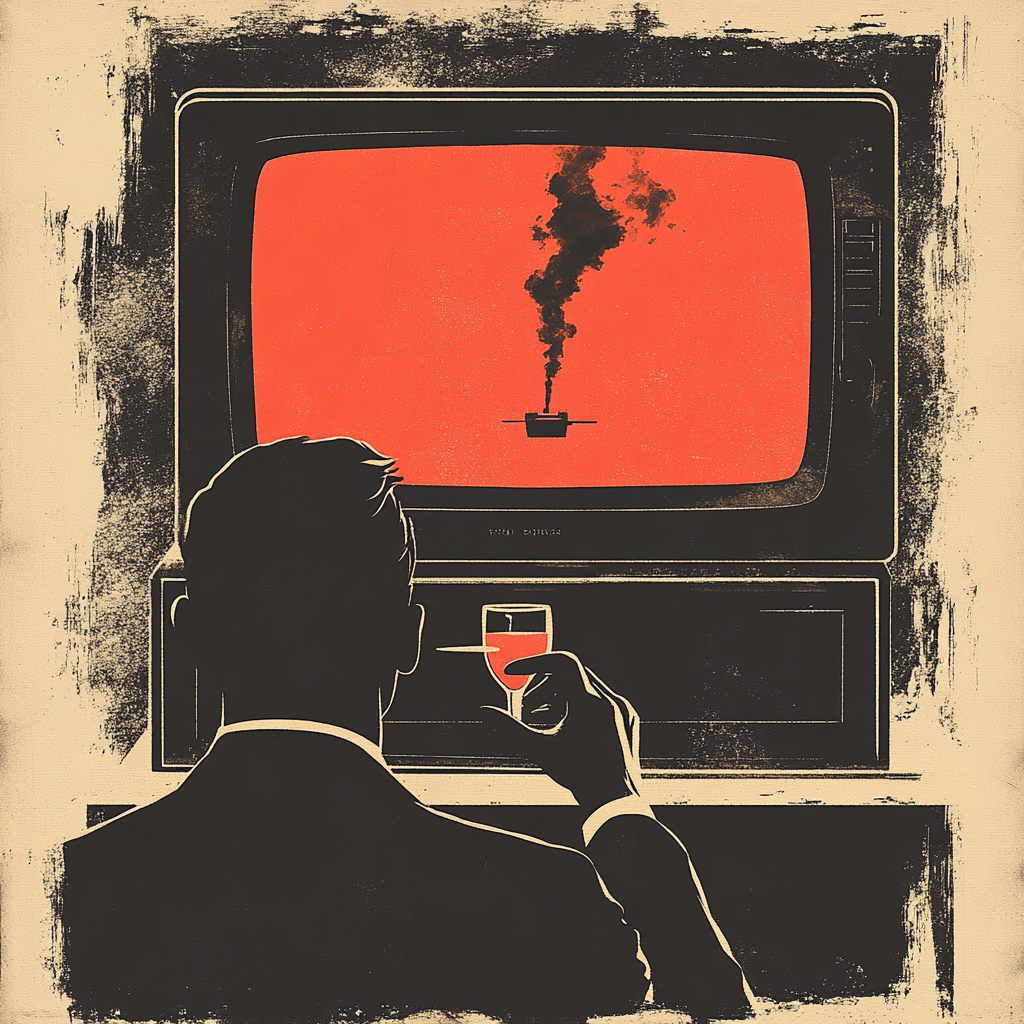
For the past several years, I've been a TV addict. I have a nice large TV with bright, vibrant colors, and it streams all sorts of stuff. My primary use has been YouTube because it, of all Mara's devices, is the most interesting to me. It's a never-ending buffet of opinions, ideas, views, useful information, practical instructions... It's staggering to think of the many thousands of people who have produced and uploaded content. More hours of content than I could ever watch, and I should know, since I've tried.
One of the drawbacks to living alone (if there is any) is that YouTube can become a substitute for the normal interactions which once defined daily life. The topic of loneliness is pervasive now, but this is distinct from aloneness. Both are negative states, but the latter has special use cases in certain forms of asceticism that lead to enlightenment.
A YouTuber made the case that living alone is healthier than being in a relationship with others, since it gives us a long stretch of time when the grind of getting along with others is absent. This negative pull is removed, and life is more pleasant. In a technological society, magical devices seem to put a deep strain on the quality of human interactions. We can dismiss someone and move on to something we care about because technology affords a level of independence, autonomy, and anonymity that fosters an illusion of self-sufficiency.
Marriage is all about grinding. Talk to any couple, and they'll mention things like putting in work, compromising, sacrificing, and accepting. None of it sounds fun. Or, it sounds like a continuation of the workplace because work is, for most of us, about satisfying a boss, so why would I or anyone rational want to come home and do a second shift for another boss? At work, you have to take classes to upgrade your skills. In marriage, you have to take classes and/or go to therapy. You always need to be working on yourself because marriage is so hard and everyone has such big expectations and demands. Underperformance in either work or marriage leads to termination. In the case of the latter, you have to pay to exit the relationship and then, if you are a man, pay some more for child support and/or alimony. If your employer lays you off, they usually give you a severance plus paid vacation time you've accrued.
People write books, essays, and articles trying to suss out the secrets to happy marriages, good friendships, and outstanding business relationships. In other words, hell is other people. The manuals are there to teach you how to handle them because they can be ornery, rear up, and stomp you in the face. They are the most dangerous animals of all when riled up.
That's how I've felt about marriage and romantic relationships in general: that they were a grind. I've never looked at an acquaintance's marriage and said, "Boy, I wish I could have that for myself!" We want something for ourselves because we think there is some good to be had and that it will fill a hole, leave us content, peaceful, and secure. Safety and comfort are what every creature seeks. To humans, add the need to be valued by others. In all my time watching animals, I've noticed cats and dogs like to be praised and talked to as intimates. Birds and squirrels don't seem to put any stock in social approval.
While I was briefly married, it was for the sake of children, knowing that most marriages are doomed to failure. That attitude, of course, validated itself, and, thankfully, there were no children from the union's brevity, so nothing to deal with during the divorce. I was aimless at the time, with only work to provide meaning in life, when meaning was, to me, an essential pillar of identity and purpose. The idea of "let things be as they are and just observe them" was pretty alien. It sounds passive, but what it meant is that even while being engaged in activity, there has to be a reserve space where the mind can calmly see things as they are. Not more, not less. The life of experience and the experience of life are shaped by the reserved space that runs in quiet parallel and asks, "what's going on here?"
Anyway, a remarkably short marriage with an easy exit. After that, my interest in women remained purely sexual even though I didn't act on it. Going on dates after 30 isn't fun, and the few times I did only confirmed my bachelorhood.
Men age, and the febrile madness of being perpetually horny gives way to a less potent, although still debilitating, form of lust. For courting purposes though, you can spend enough time with a woman – anywhere from an hour to several dates – to size her up quickly. I've never felt a need to feign interest in a woman just to get inside her. Humans have extended their lifespans to such decades. Nature schemes with the subtlest arts and stratagems to perpetuate the species, and in reflecting on the younger me, I see how much I devoted to fabricating an entire life with a romantic crush.
Really sad stuff, but that is how the mind works. It seeks out, craves, fabricates, builds parallel universes in the blink of an eye. Romantic daydreaming when you're young is nature's connivance to ensure the replication of more life. Even when we think there's a me who has unique daydreams that are mine, they really aren't. They are processes so deeply hardwired into the biological forms that we mistake them for a real self. They can certainly feel real in a moment but, then, woosh! They are gone. These powerful but ephemeral feelings give us a kind of kinship with others who experience the same. Most of the things we suffer can, with a little work and introspection, be turned into a foundation for compassion for others. It's a secret power of suffering: it can lead you to lose moments of egocentric being and share in another's condition.
As you age, though, the few social contacts you have drift away. I saw this too among co-workers. People in their late 30s and up just don't have any social capital for the most part. Their spouses and children become their lives, and even immediate family seemed like distant contacts, people they might see a couple of times per year. Now, there are usually articles and advice given out to help people navigate the suffering caused by getting together with family members. Don't talk about this, avoid this, focus on this, don't drink too much alcohol at gatherings, don't bring up the past...
People used to talk about their friends, but they usually meant coworkers. I've liked the phrase "people I know," but it's hard to use correctly in a conversation despite its fidelity to reality. People at work are not your friends, and it's rare for one to morph into this special category. Usually, adults are so wrapped up in taking care of their own children that friendship becomes a luxury. I hear fewer references to "friends" among adults now, but I don't get out much. "People I know" is just honest. Acquaintances.
And that's how we end up with adults in middle age and later glued to screens. In the old days, there was always so much work to do that one remained in a perpetual state of motion. I remember my grandmother was a great lover of work and in old age, because she and my grandfather were penniless, would work taking care of other people's yards and houses. Granny was a green thumb, and her life had purpose when it was devoted to creating and maintaining her flowers and vegetables. People would drive by her home, look over, pull into the driveway during the summer, and exclaim at all the flowers. She would give them a tour and explain what all the flowers were. She kept a clean house, was very organized, and was into canning and pickling, cooking, making quilts, grooming her cats, tending her birds, sewing dresses, playing piano, and reading the paper. She was around 5'2", although her sons and grandsons were generally pretty tall. Probably didn't weigh more than 105 lbs, sopping wet.
In those days, electronic devices meant the radio and TV, and they were not widely used. At least at first. Once Granny went off to the care home, my grandfather would sit and listen to Christian programming at night as his social circle closed up. Fewer people dropped by to seek his counsel, and he had more time to stop, look back over the decades, and reflect.
Electronic media now is all-consuming. We talk about how much control it exerts on our lives, and even dear Granny had a taste for afternoon soaps. In those days, the programming was pretty scandalous, and Papa hated it and would raise his voice and storm out of the room whenever Bob and Beverly would have an intimate moment on screen. Granny was also big into the evening soaps like Dallas and Knots Landing, which were in some respects even more outrageous, if only because of the constant presence of highball glasses. To this day, it's very normal to see TV series where the characters are also drinking alcohol of some kind. They seem to move through life with a drink in one hand.
YouTube is, as the title says, about you. Whatever interests and habits you have, you can further cement by watching shows selected for you by an intelligent computer algorithm. Do you like depressing news stories about the imminent collapse of the economy? Do you like vlogs of people talking about how depressing it is to be unemployed? Maybe you want something lighter and more cheerful, like a channel that covers the latest violent video games on the market.
When people discuss the "epidemic of loneliness," of the death of community, strong personal relationships that are maintained by conscious effort, they speak about Covid, as if the phenomenon was something that happened around 2020. This is of course not true according to my memory. I had come up with "The Great Cocooning" in the early aughts as I noticed the proliferation of bigger TVs and larger cable packages, faster computers with more immersive video games. People retreated from the conventional world into the (relatively) newfangled online worlds. Hardcore streaming porn was available, but it was not as cheap or as plentiful as it is now. By "cheap," I mean free with the insinuation that it is subsidized by bad people, the types who see Brave New World as a blueprint for the future. I'm not sure whether the author viewed his own work as a cautionary tale, a warning, or simply a prediction.
The shift towards a service economy meant that cities became more crowded as the young were forced to move away from smaller towns. Moving to a new city to pursue work means, especially for older adults, giving up old social networks and commitments. American cities are not designed (in most cases) to encourage casual, low-intensity mingling in open areas. I get the impression that New York City is an exception to the rule, with some of the established neighborhoods being more conducive to this, but I could be wrong.