Dukkha junkie

There's a saying that goes, "We're all junkies for suffering." This has been on my mind a lot lately, having become a counter-focus for negative thoughts and feelings that have popped up more in the last several days. It's been very helpful to reframe a negative emotion or thought that keeps resurfacing as me going back for a hit of my favorite drug. We relish new pain and old wounds, and if we are not careful, we will give them free rein over our hearts.
I come from a family of addicts: nicotine, caffeine, and alcohol have all had a grip on the men in my family, usually from an early age, with alcohol dependency worsening with the approach of the middle period of life. Having kicked all three to the curb – I think of myself as a Mormon on this point – and having known what it's like to be addicted to multiple substances at the same time, I still fail to link my internal dialogue on imaginary and real slights to its addictive qualities. Or any painful memory or current irritation, for that matter.
Suffering is the ultimate addiction, and it's one that every human has and regularly indulges. The addiction is dispensed in different ways, and most of it in life is self-imposed. Physical pain can defy consciousness, so completely drowning out everything that it becomes the only thing. Fortunately, I've not known it personally but have seen people who lived with chronic, acute pain on a daily basis. Accounts show it can even shut down the sense of self, causing a kind of ego death in which the person dissolves into a cloud of agony while hanging onto life. Orgasms are another way to experience a tiny moment where Self suspends. What's in the gap?
Yet it's daily psychic pain that wears most of us down with physical pain piling on as we grow older. The psychic pain, if dealt with through liberation, cancels out the physical pain – or maybe just mutes it. We have in the suttas Moggallana, one of the Buddha's two chief disciples who, at the ripe age of 84, was attacked by a rival sect and severely beaten. The accounts vary as to the who, what, and when, but we know generally that he was mauled pretty severely. In some accounts, he managed to make it back to the Buddha, broken bones, wounds and all, before leaving his last body and samsara behind. One variant holds that he had, in a previous life, murdered his parents at the behest of his wife, who had grown tired of them. His husk was called up to pay the last penny for the misdeed. In Matthew 5:26, Jesus warns that the last penny of debt will be repaid, and from this passage the medieval Church developed a theory of purgation that, in some ways, sounds a little Buddhist.
Moggallana owed a debt even after liberation, and it was paid with his brutal death at the hands of men who saw him as an implacable enemy to whatever view or opinion they held. No question his leftover – his remainder – took a beating and did its biological job of transmitting pain signals, but there was no one left to experience any pain. The lesson here is that even physical pain is tied to our sense of self. This is my interpretation of the matter and isn't spelled out clearly in the Internet sources.
Think about that for a moment: humans are animals who kill over ideas. Things that cannot be seen, measured, or isolated in a test tube can compel the taking of life as though the idea itself was something immortal, eternal, worth killing and dying over. Even if no murder is carried out, the heart is so poisoned by the thought of killing someone with a different idea that the damage is done. The intent has already taken hold and left karmic seeds behind.
We think of pain usually as physical because, as evolved biological machines, we are programmed to focus on our physical well-being first and foremost. No body, no self. When basic needs like shelter, safety, and food are met, we move on to higher preoccupations and, in the process, become more entangled in mental and emotional pain. These are more abstract. Physical pain in modern developed countries can become a distant secondary concern if we take care of ourselves, avoid dangerous neighborhoods, and avoid running with scissors. For someone suffering in pain because of a disease or congenital condition, it's hardly imaginable that someone could live day-to-day with intense physical pain, a theoretical possibility held in the imagination only. Healthy people, lots of them, will just add to the emotional pain.
Psychic pain of the kind rooted in, say, jealousy, is concocted. Having paranoid ideas about other people is another fabricated kind of pain which may or may not have any basis in reality. We have sayings in the West about overthinking things or looking for the worst in a person or situation which show the link between mental proliferation and suffering. Lust is another kind of suffering, alongside greed for wealth or material goods. All of them bring more suffering than pleasure, but we still pursue them. For every moment spent pining for some luxury or erotic experience, if you ever get it, you discover it only lasts briefly. You may spend hours on end plotting to get into someone's pants and may exert all sorts of energy and money toward this end, but the result is a few minutes of pleasure. Once you have used someone or something enough times, the novelty wears off, be it your spouse or new sports car. The mind may savor the memory of some experience, but memory is faulty, unable to replicate the exact sensory experience obtained from this sex act, or this taste of a delicious dish.
The pain-to-joy ratio is almost always screwed up such that the effort directed towards the object of desire involved is just a bad deal. In other words, we get a mountain of psychic pain in exchange for maybe a morsel of pleasure. Maybe. Even worse are painful mental states in which there is no promise whatsoever of a moment of satiation (however temporary). Humans seek pleasurable experiences that delight the senses while avoiding those that cause pain. The Buddha talks a lot – a lot – about the senses and the power they have over us. They drive us from one thing to the next. The whole world is on fire, said the Blessed One, in reference to the constant grasping of senses.
Jealousy is the negative feeling that someone else is using their senses to experience something you aren't getting. Maybe they are dating someone very attractive, or have lots of money and don't need to work. Maybe they get recognition and deference from others that defies your own social standing calculations. The heart crafts a scene in which someone else is having top-notch sensory experiences, and they're pristine, perfect. It doesn't know about the tumor growing in the person who is the source of jealousy, or what hardships they've had up to that point that nearly broke them.
You could even be jealous of someone who seems like an accomplished meditator. This would be a desire to experience conscious experiences as they have, the kind that open doors and unblock exits from suffering. In day-to-day life, this would be extraordinarily rare, though, probably something more frequently seen in monasteries or retreats.
Humans are about senses. If successful urbanites hear about a new restaurant run by a world-class chef, they will be excited to make reservations and experience the physical act of meeting, greeting, and eating at a highly sought-after destination. This will be a new, unique experience, one you can store in long-term memory and call up when a comparison is needed, or when you want to make someone else jealous of the experience you enjoyed.
I did this once with a new restaurant that opened a few blocks from where I was living. The chef had been on a big TV show and had become a celebrity chef, the herald of the demise of any civilization. I picked a weeknight, made it in after standing in line for 30 minutes, gulped down my food, and left. It was a bucket-list thing for me, since the vibe was just all wrong the night I went in for dinner. That's the other thing with seeking out new sensual pleasures – they can end up being a bust. The mind seems to think that one day there will be a sensual experience that reveals everything and causes a profound ontological change, elevating it to divinity. Ayahuasca, LSD, and mushrooms are favorites for today's modern thrill seeker. Some people look elsewhere in promiscuous sex or overeating.
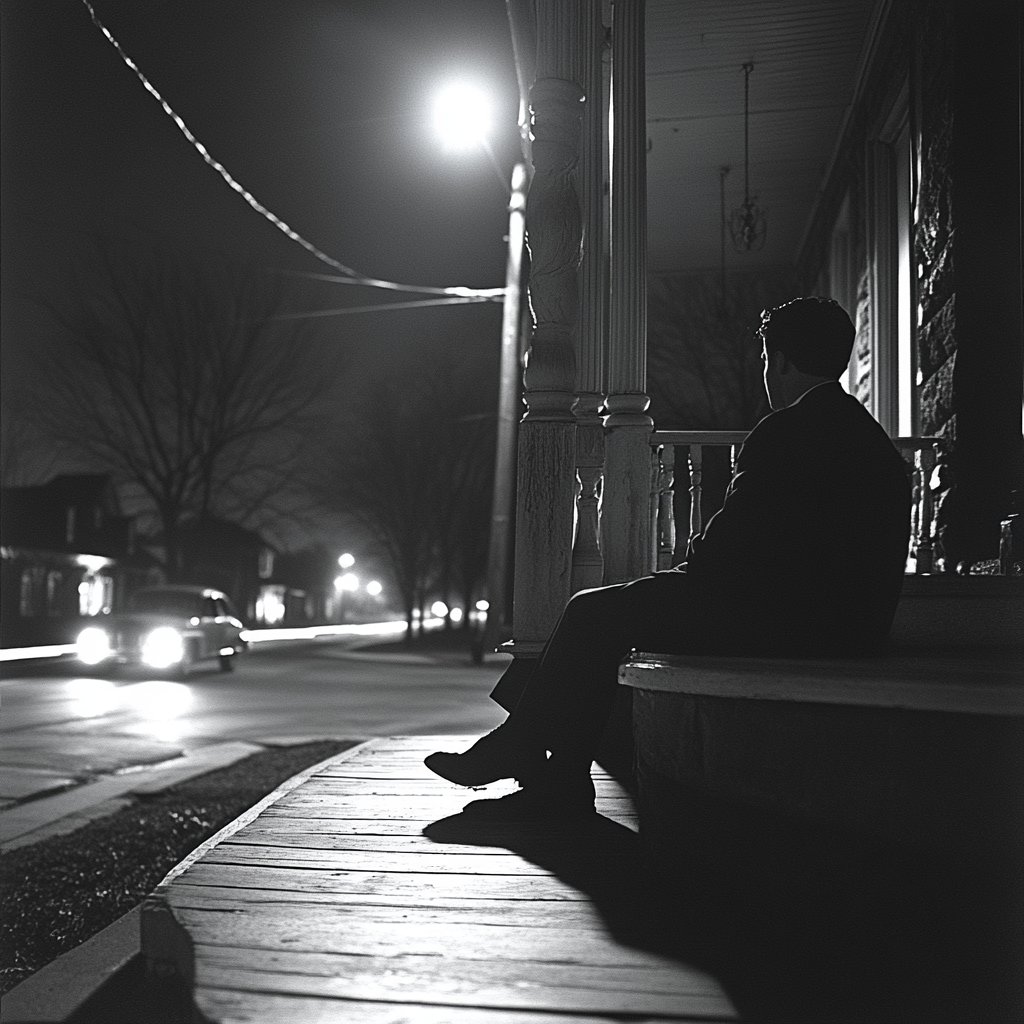
Sense experience and thoughts come and go all the time. It's surprising that we see them as permanent, or give them an ultra-solidity that they've never had and never will. They are so ephemeral but, in the heat of the moment, can become Absolutes. Nothing Else Matters When They ARISE!!! Then they are gone and forgotten within ten minutes. Or they just keep cruising around the neighborhood at different speeds, driving past our front porch as we sit, watching life go by, trying to enjoy the cool spring evening air. There they go again...
No matter how many times we reflect on this, it seems we are destined to fall into the trap again. This is where awareness comes in handy, and it is cultivated in meditation. I reflected today that meditation is the practice – the gym where we train to perceive and see our thoughts as they arise and disappear. It's formal, clinical, and empirical. My breath is like this: it's long, it's cool, and it's relaxed... and the mind sees this in quietude and isolation from the world. The same ability to focus can be carried into regular daily activities, but instead of breath, we see thoughts and feelings (and our breath remains a foundation, a touchstone we come back to frequently). The practice of meditation leads to its skillful use in life, and life, in turn, feeds back into practice. It sets up a nice feedback loop that reduces dukkha by filtering out noise, helping the citta see things as they really are. This is not a mystical thing either, just plain old habit through the practice of concentration.
Dukkha is a poison nectar we feed on because it solidifies and reinforces the sense of a permanent self. There is enchantment and enthrallment in sensory experience, but also suffering. Both forces are used to form an identity.
Of late, people on YouTube talk about their trauma and its effects on life. The frequency and reification of this trauma concept serves to establish identity while possibly excusing the need to reform. Have you met someone who seems to define themselves by negative experiences? We all do it to some degree. There is recognition of certain negative facts about our existence; in my case, like the fact that my family is mostly alcoholics and addicts, and these can be used skillfully to look for a better path. It's also pretty easy to fall back on these to create a kind of karma that is permanent, immovable, and a barrier to reform. Buddhism is positive since it maintains, by example, that men and women have turned course and found liberation in the here and now.