Disenchantment & Disillusionment

The suttas of the Pali Canon are repetitive. If you approach them as something with a grand story arc with detailed breakdowns of the crucial mechanics of Awakening, you'll be disappointed. On the other hand, reading the suttas slowly and working through the repetition is highly beneficial. I can't stress the value of slowing down when you read the text.
The suttas have generated much commentary, with later dhamma students seeking to fill in gaps and silences.
Variants of monotheism all have holy books regarded as instruction manuals for life. All of the answers are to be found between their covers. The suttas have answers too, but the Path is about doing. There is no substitute for seeing an important truth in your own practice.
The repetition of the suttas is thought to be a side effect of the oral recitation tradition used for two or three centuries after the Buddha's death, until they were finally committed to paper. I've memorized a little bit of the texts, and they are easier to recall, in my opinion, than more prosaic works. The repetitive passages are islands that the mind can land on and check bearings before resuming the journey.
Theravada is simpler, more relatable to someone with my temperament. I just want to know what the Lord Buddha taught and said to his followers. It's my inner WASP guiding me, no doubt.
This is not to say I haven't wandered in Tibetan fields. Longchenpa caught my dhamma ear sometime ago, and I've been enjoying his work, but I still want to stay in the Pali orbit. I find the Mahayana to be rich in reflections, but it quickly becomes ornate, even baroque.
When I read the EBTs, I can feel the Blessed One talking to me. Many Christians have this same feeling when they sit quietly and read the Gospels. The Buddha asks that I test his words against what I know, see, and observe. I am invited to verify.
When I say "simpler," I'm not talking about intellectual stuff. Dhamma presented in the Early Buddhist Texts (EBT) has a way of burrowing into one's thoughts; in the last two years, I've been thinking mostly about dhamma teachings or reflections I've read, finding in them so much depth that is clear, pristine, like spring water coming from a pure, cool mountain source. Dhamma addresses the core issues of existence such that other mental objects tend to lose their luster in comparison. It stays concrete and doesn't ask for faith in concepts, systems, and theories about the origins of suffering or the purpose of human life.
I read someone recently say that you can learn everything about Buddhist doctrine in about an hour.
That may be true, but you will spend lifetimes exploring and coming to understand its full import. Or maybe you are positioned to do a lot with dhamma now, and your progress will go fast. In the suttas, the Blessed One had a way of gently pushing his listeners into Awakening. In any event, the Path itself is a joy.
One of the recurring lines in the suttas links disenchantment to dispassion. This is something I've been thinking about a lot lately when reflecting on dhamma.
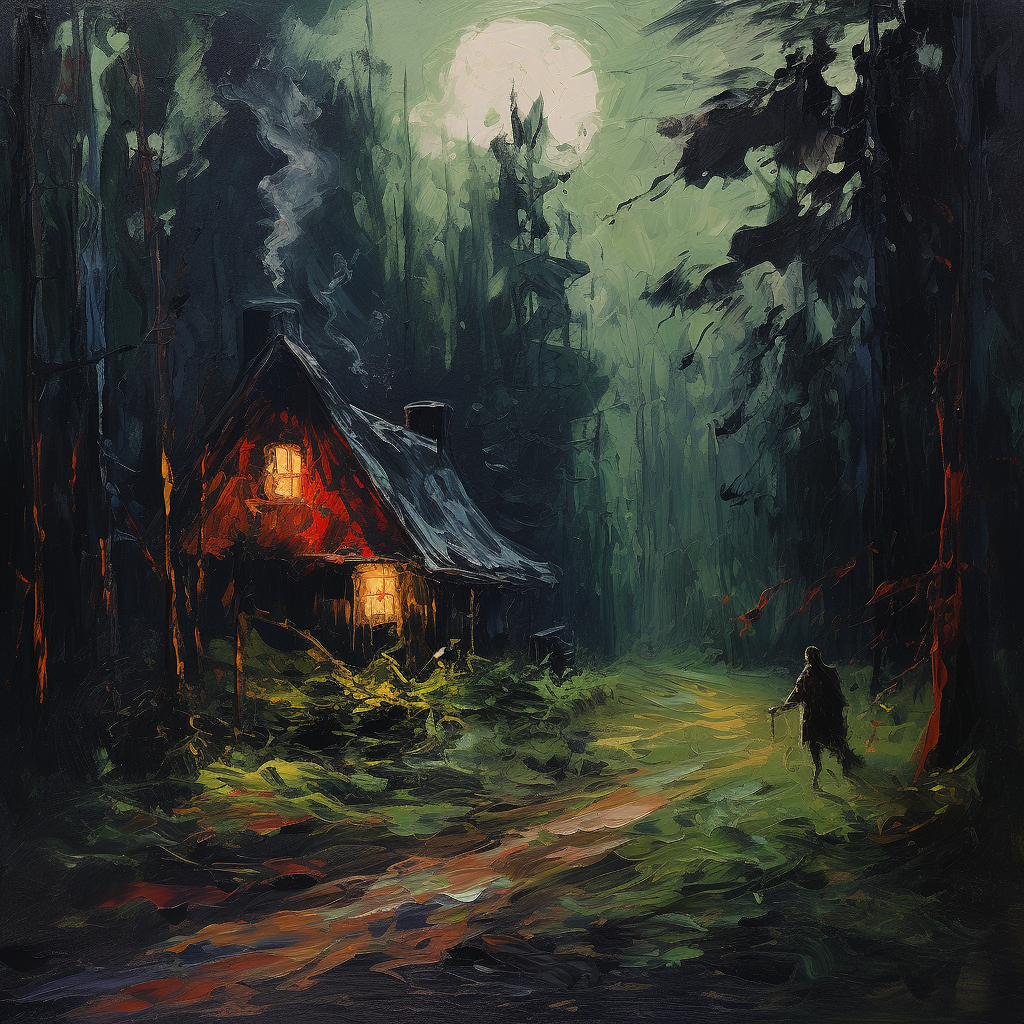
Disenchantment is the English rendering of the Pali nibbida, and in my imagination, it implies that the world is an enchanted forest which draws us into cool, quiet glens where deer move like whispers over moss-covered stones. There are magical wonders to see and experience if we only continue deeper along inviting paths, across the ruins of ancient peoples.
In other words, we are enthralled by the vast expanse of the dark forest and are being led deeper into it by its charms and mystery. There is so much potential, both good and bad. We are being led to
A witch's hut.
The hag who lives there will kill us, boil our remains in a pot, and when only our bones are left, she will crack them open and suck the marrow out.
Then, we will be revived and placed at the edge of the expanse to begin the trek all over again, oblivious to all of our sad past adventures.
On the next go-around, we might detect the pleasant odor of fresh-baked chocolate brownies sitting on an open windowsill of a brightly colored cottage and feel drawn to them.
But the brownies are illusions, the cottage a sorcerous deception concealing a rotting log with a slimy hole the witch uses to come and go. We are ensnared in a hunter's mesh this time, dragged by the witch to a spit and roasted alive. Nothing is real, including the forest. We collaborate with the witch, in a sense, in our deaths.
In fact, we are the witch. We decide our own fate. We are willing to take death because we are charmed by a bauble.
This is my imaginative take on the sutta's line on disenchantment, dispassion. Life begins with the enthrallment of the senses, which then leads to a wandering through wilderness in search of pleasurable delights.
Enchantment leads to passion...
This is the opposite phrasing.
Our enchantment – the initial enticement of possibility for something greater – leads to pleasure! Maybe we will stumble upon a hidden feast held by knights, dwarves and elves. Maybe we will stumble upon sex-starved young elven maidens who are only too happy to see us! Passion leads us on! Tally ho!
It's passion that drives innovation, progress, and a future of comfort and plenty. Don't you want to be surrounded by people who are passionate about what they do?
The Latin verb patior means to suffer, to bear, to endure. Suffering drives innovations like water purification systems, which remove toxins that kill us. Suffering leads to great symphonic music and beautiful paintings because life is very hard, and it needs something to temporarily alleviate our pain and boredom.
As we are being lowered into the witch's boiling pot for the millionth time, our craving for something is still there. This is why we come back to her forest, because there are tasty morsels to be had, and maybe next time, we will escape her clever traps and live happily ever after.
There is some tantalizing promise for this. Not every path leads to death: Sometimes it takes us into something pleasant. Maybe we do get the plate of brownies, or we get an elven maiden and have half-elven children who have 60 ft of darkvision.
But the witch will always win, and the brownies, our elven wife, and children will all vanish. They are not real, and neither are we.
Thanissaro Bhikkhu has a valuable reflection on nibbida and its role in guiding us on the Path.
The Pali word for disenchantment, nibbida, actually means a sense you don’t want to feed anymore. You’ve been hoodwinked into believing that the food is good. Then you suddenly see that what you’ve been feeding on involves a lot of suffering.
The dhamma makes a strong claim, one that seems arrogant and at odds with our deepest convictions about reality: Suffering is optional. No other religious founder had the audacity to make such a claim. They have ways of explaining its origin, benefits, purpose, and drawbacks. People work to make sense of suffering, seeking high and low for a power that can transmute it into lasting good.
The Third Noble Truth: There is a cessation of suffering. It is the fruit of the Path, the Island we are rowing towards off in the distance. It sounds like you have to wait until death to experience it, but for those who practice conscientiously now, the suffering begins to cease now. My life has dukkha, but it has lessened as I've looked closer at it through the prism of dhamma.
This is one of the ways of looking at suffering that really pulls people back into samsara: the idea that the more you suffer, the more sensitive you are, the higher level you are as a human being. The more spiritual. In a religion where the symbol at the front of the chapel is always somebody suffering, it’s easy to think in those ways.
Here are two claims:
I don't want to suffer, but do so against my will, and there's a hidden purpose behind it that will become clear one day, in the light of eternity.
I suffer because I choose to, and it serves no purpose whatsoever.
Only one of these is true.