Contra Music
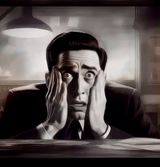

This week, I've applied my energy to observing states, mental and physical. Video and audio were canceled on my devices, so there was just Noble Silence. Time for practice, reading, and doing chores. I was feeling under the weather and ended up taking a half day from work.
It's Friday night, and I'm indulging in YouTube. Getting caught up on AI news, podcasts, etc. I can't say I missed it much. One uncomfortable conclusion from this week's exercise in Noble Silence is that music is evil.
I kid. It's more of an obstacle, depending on what you want to do. No one ever says they hate music or prefer silence, even if they don't listen to it. In society, it's not acceptable to say, "Music is bad for you."
I have loved music my whole life, developing a taste for styles from classical and sacred choral to punk and alternative. Having built a sizable collection of CDs—and having converted and uploaded them to the cloud, where they are always available to me on a smart device—I realized this week that music has been a source of misery. It's also been a source of joy, but one problem is that even the joy becomes a kind of nuisance.
Music really has become for me an emblem of the path, of what spiritual warfare looks like. We cling to and crave it. When we get it, these cranial echoes can haunt us for years.
I'm one of those people who gets a guitar lick, a clever line, or a melody stuck in his head, and it can stay there for hours, drowning out the inner Noble Silence. I didn't get anything like brief periods of interior silence until I started practicing, and after several months of daily sits and walks, I found myself with a quiet space during normal daily activities. Now, with a little achievement under my belt, I can see external sights and sounds a little better, and see how they flow from the outside into the body via sensation and end up lodged in consciousness. Written this way, that's what a lot of the practice is about: preparing to see phenomena as they come and go, but doing so through the medium of you as a kind of pool. To be precise, a bio-pool of blood, water, bone, tissue...
One particular affliction manifested during my first year or so of practice. I went through a period of three, four, maybe longer, weeks with this Fleetwood Mac guitar line in my head. This particular bout of earworm was intense, as in, my brain/heart/mind was under constant assault by Lindsey Buckingham and his guitar. Now, I can't remember the tune or the line, but the intensity of this inner song made meditation difficult; it made conscious living more cumbersome. I would sit down on the couch with a nice cup of tea and lo, here'd come Lindsey, and it felt like everything was drowned out. At times, I believed it could ascend to the level of auditory hallucination, but it never did.
I can think of nothing so energetic, so willful as this worm. Like all things, it passed. I remember watching it retreat from my life, like getting over a cold, where your sniffles give way, a few days of congestion break up, and your body is mostly restored. Things have an energy to them, and they can seem so immediate and real, yet disappear just as quickly as they came. The Lindsey worm was like this: one day, a sort of mental health concern; the next, gone. I honestly cannot even remember the song, the album, or the melody/lick that set me off.
Still, Lindsey's earworm didn't keep me from listening to music. I decided, however, to cut back to Sundays, when I would drive to pick up food and run errands. The problem was that the blaring music – only experienced for an hour or two – would stick with me for the rest of the week.
Noble Silence this week has been watching various songs emerge, unbidden, from the depths of consciousness. Stupid songs, more stupid songs, and then some really stupid songs. Pop rock, folk songs, commercial jingles. I'm impressed with my own ability to remember jing-a-lings for products from decades ago, when I was a kid. I still sing them aloud because nothing says "I love you, useless capitalist commercial jingle" like keeping it alive in your mind and giving it voice.
Songs have a distinctive quality that endears some to us more than others. We hear one that just makes us go crazy, so we play it over and over again. Some might say, obsessively. Not a few songs, however, were so ubiquitous between the 60s and the Aughts that you were guaranteed to hear them a million times before your death. Larger stores are sure to have music playing, a kind of white noise that you can sing along to as you shop. My grocery store does this, playing classic rock songs. I fucking hate classic rock, but I will, like a trained seal, find myself humming or singing along to whatever is playing. I don't think I ever bought an Eagles album or cared that much about their music, but their tunes pop into my head.
The breakdown of a more integral American society into vibrancy, diversity, and smart devices means there is no common body of shared music. Technology creates hyper-fragmentation: it brings people from one part of the globe to another, wipes out local flora and fauna, and reduces survivors in both the source and target to personalized virtual prisons. When a relative called me yesterday and mentioned the "liberation of the Iranian people," it was evident we were living in two very different newsrooms. Custom-tailored realities, that.
Back in the old days, rockers still knew and appreciated at least a few country artists and their works. They could sing along with them even if it wasn't their first choice. Today, there isn't really any artist who has broad appeal. Taylor Swift gets kind of close. The rise of AI, however, means music will become, well, enshittified. In a multicultural society, you lose a prevailing culture and end up with an enshittified stream of cultural detritus emanating from the aether. It feels like even the capitalists sometimes have lost control.
People complain about the end of human creative endeavor as AI takes over film, music, writing, and basically anything else once done by talented individuals. But let's stop and recall that over the last 20 years, films have grown tiresome, rock has died, and all that is left is pop music and hip hop. Marvel movies were largely generated by special effects devised and rendered on expensive computer software by humans. Yet, every comic-book-based movie just felt like something we'd already seen a million times (Nolan's Batman series excluded). Everything was already feeling prefabricated, artificial, and inhuman before ChatGPT rolled out because of the prevalence of technology and the multicultural decline, typical of late-period empires that are spent in every sense of the word.
Is AI just finishing a process that was started years ago? I say, "Yes." In 2055, we will still be watching comic book movies, and the graphics won't be that much improved.
I've written before about humans' obsolescence. The gradual transfer of artistic creation to AI, in order to further strengthen our oligarchs, means another avenue of escape has been cut off. No community, no family, no homes, no jobs, no creative outlets and endeavors... The concern now is whether there will be any incentive at all to noodle on a piano or guitar since it's easier to just ask AI to make something on the spot. The new future of film is humans using AI to "create" – request – a film with this actor, this plot, and this type of dialogue and setting. They will watch this on their own or upload it to the entire world. All or one.
I discovered Cocteau Twins in the last six months or so. How I made it this long without ever giving them a close listen escapes me.
Oh, did I go crazy with those tunes, playing them incessantly while at work! "Heaven or Las Vegas" is easily one of the greatest spiritual assaults I've ever undergone, but lower than Lindsey Buckingham's spiritual wracking with that meddlesome guitar lick. Elizabeth Fraser's voice and, at least in her early career, her creation of lyrics from non-words she invented on the basis of sound (not meaning) – glossolalia – create a harder nut to crack for someone like me, who enjoys internalizing songs so that they live with him forever and ever, disturbing his inner tranquility to no end. Cocteau Twins songs are harder to remember because the mental entries are harder to grasp, so it takes several listens. Internalizing a Cocteau Twins song is like trying to ride a bike with handlebars drenched in dish soap: hard to steer or control, but the ride is fun. Then one day, you're there! Haunted by yet another set of sounds. You may recall them at will, or they may just appear, unbidden in your mind. Eventually, you will hear them played softly on the speakers at your dentist's office.
With demonic possession, there is some part of the victim who has to accede before the demon can enter and take control. Or maybe I'm mixing this up with vampires, who can't enter a home without an invitation. Anyway, audiophiles are people who enjoy sampling various types of music, looking for some new sound or lyric that will induce a new feeling and mental tone. They invite music into themselves, where it can live rent-free indefinitely.
When listeners change (they will), the songs they loved become alien, but still lodge in consciousness as another fabrication.
This is what drives people like me in their exploration of music, the hunt for that feeling tone that doesn't fit anywhere on the happy/sad/bored spectrum. It's so inexpressible when you hear it that you cannot relate it to others because there are no words. Still, music reviewers back in the day would write columns in which they tried to capture some of it, to help other listeners suss out whether this new voice, this novel music arrangement, would provide them with that special sensation, the felicitous union of the outer and the inner into a heart sensation that was beyond ordinary experience. If you meet a fan of the same song or artist, you can knowingly look at each other and say, "Yes, yes, you get it. Yes, yes, yes..." This seldom happens. Maybe at a concert or something, but then it's just a bunch of strangers.
When we find these special songs, they eventually end up on the overhead music speakers at the grocery store, loud enough to be heard distinctly as "oh, this song X...".
The great songs that got you excited, or left you feeling wistful, pensive, or cautiously hopeful about that cute girl in band? Yeah, its energy will wear out, but its ghost will haunt you to your death. When you are mowing the lawn or washing dishes, it will creep up on you. It'll just be an echo, a distracting nuisance, a mental fragment that left an impression. Capitalists have scientifically studied the right volume to play in-store music, ensuring it's understandable lyrically but low enough that the song is drained of its vitality. The point of capitalism is to keep you distracted, mindless, in a herd state.
One accumulates a large collection of songs if they love music. They can easily fill your awareness by replaying old music in your mind. Where do these songs come from? Who is picking the tunes?
These types of questions came to me throughout the week, if they popped up. And they do pop up, but part of Noble Silence is reading and writing in addition to sitting. Music doesn't stand a chance against me in 2026. Ha! Still, the arising and passing away of internal music has been a helpful point for practice. The DJ is me, obviously, and the songs are all the ones stuck in my sense organs, in my consciousness. I don't care about their meaning or why any one particular song shows up, because it's all noise. As I wrote about in my recent blog on dreams, they are almost always the chatter of the monkey mind, having no value whatsoever. The same goes with many of our waking thoughts. Why did this show up, not that? Who cares? Watch it arise and then cease. Don't grasp it, don't hang onto it.
One of the tricks of music is that we can get so lost in a particular song that we don't realize we are being made. Our mind so delights in what ear consciousness is transmitting that the heart – because of these poignant feeling tones – comes to experience itself as a reality. Music can make reality feel, uh, real, particularly in the context of a grand symphony hall or great cathedral. That's one of its greatest dangers, if not its greatest. Eating is, for other people, the sense experience that makes one feel whole, complete, a reality unto itself. But in the West, music is given far greater honor as a spiritual practice. Eating isn't, even though Western bodies would suggest otherwise.
Great artists and composers want to infect you with their earworms, to inseminate you with something they whipped out on the keyboard or guitar one night after getting stoned. They may feel that there is a god or goddess – a muse – who drives them to produce sensual works which elevate the soul, or provide a healing balm, or let it share in anger and rage...
Or in the case of J.S. Bach, who was probably very moderate in his drinking: he may have written a lot of beautiful music because he felt inspired, felt a calling to produce beautiful sounds to lift people's hearts.
"The aim and final end of all music should be none other than the glory of God and the refreshment of the soul. Where this is not observed, there will be no real music but only a devilish hubbub."
We've lots of devilish hubbub today.
Music can powerfully boost mental states. We all know how it is used in commercials, movies, gatherings, religious and secular, to essentially manipulate us. We go along with it because we feel it lifts and shifts us from the ordinary. When this music becomes too familiar, we may seek something new. The nature of dukkha includes getting what we want, only to find it becomes threadbare. This includes music and all artistic efforts. They become dull, humdrum, without much charm. They hold us, entrance us perhaps if they are of good quality, but eventually, they fade and are forgotten.
What does not fade? What does not lose its luster? What is calm, peaceful, unified, at rest, unperturbed, neither lacking nor overabundant? Very few of us ever get to that question. It never comes up.
Ear consciousness transmits music to the consciousness proper, and no matter the music, it can become a pest. Silence is golden, both out there and in here. The world becomes calmer when we remove distractions like music, barking dogs, and honking horns. And let's be candid here: Music is very much a distraction, something we put on in the background while we do chores or drive. We're forced to listen to it in public, either because of sound systems or because someone is blaring it from their car with the windows down on a warm summer day.
We go to a festive outdoor gathering, and we hear music. Most of us will tolerate the tinny sound of music piped through a PA into the open air at a street fair or carnival. We won't like the music when we're older because it might be aimed at kids. We may walk away with no memory of what was played, or maybe with an earworm from hell nestled at the core of our brain.
Very seldom do we listen attentively to music for its own sake, as a kind of mindfulness exercise. The danger is that while one can, from a place of awareness, watch the life of the song and its notes and just observe, not ponder, the effects as they strike our ear, enter our central nervous system, and give rise to thoughts and feelings, like, "this is pleasant, but this more still," we come away from the experience with a sensory experience that will come back to us later, uninvited. When the mind has a spare moment, a nice big pause, it will go back to the closet, fish the record out, and put it on the turntable.
It seems this whole process of experiencing music, seeing it as a desired thing that changes into a nuisance, has the promise of making it less enchanting. Finding the unsatisfactoriness in all things sounds like a fault-finding mission, a way of complaining incessantly about life, stripping its few charms and leaving us with just dukkha. Complaining, however, isn't what we do if we are wise. We see the costs paid for indulging in sensual living.
We've all heard someone say, "Oh, man, I spend hours listening to music... it's the only thing that keeps me sane... life would be meaningless without music..."
Music is life for some people. It can give focus and expression to the inexpressible. The way it pleases the ear, and the feeling tones it generates, provide a sense of permanence and truth in a way other sense organs do not. We may delude ourselves into believing that there is truth in this song, piece, ballad. A song can have effects that last for years, remaining buried in our consciousness and bubbling up from time to time for reasons we may not know. Emotional triggers can resurface a long-hidden tune.
One thing about a really enjoyable song, like a rock song with good lyrics, intensity, and drive, is that it can take over everything in the moment. You can get wrapped up in it, lose yourself, and forget all your cares. Some people, to better achieve this mental state, will play it at a high volume. Many artists will make faces, contort their bodies, shut their eyes, seemingly lost to another dimension during a performance.
Music is best when it causes us to forget ourselves and our problems – our kilesas – for a moment. This is the intended purpose of religious ritual: to shut down the normal frenetic mental activity and grant a reprieve from the screeching and howling of our inner primate.
On the other hand, we hate when someone starts playing music that every sane man knows is pure crap.
"Turn that shit off!"
Even music we normally like can become an irritant when we are not in the mood for it, or when it reminds us of a recent failed relationship. On one level, music is just sound waves, but because we are complex animals, it can strike us as perfect one day and bleh a week later, depending on factors we may not even notice. Even later, we may come to detest the song while praising music generally, its beauty, its essentiality. If life is to have any meaning at all, we must have music and art and wine... but not this music, not this painting and not that wine!
Reflecting on a life of listening to music, it's been much less enchanting of late. Listening to it means enduring its effects, and overlooking that many songs out there are deficient in various ways. That means they can be pleasant now and irritating tomorrow. Someone is suffering right now from the song "Wet Ass Pussy," which took the world by storm a few years ago.
Music can overbear the senses depending on context and usage, keeping the mind in a state of heedlessness. Music is, by nature, meant to elicit an emotional response: emotional manipulation par excellence. Test your own experiences with how music is used on you, from patriotic parades to Christmas Eve carols.
Then ask yourself whether it is a true refuge, a place of quiet that is cool, calm, and collected.