A Caustic Sprawling Essay in Defense of Leisure

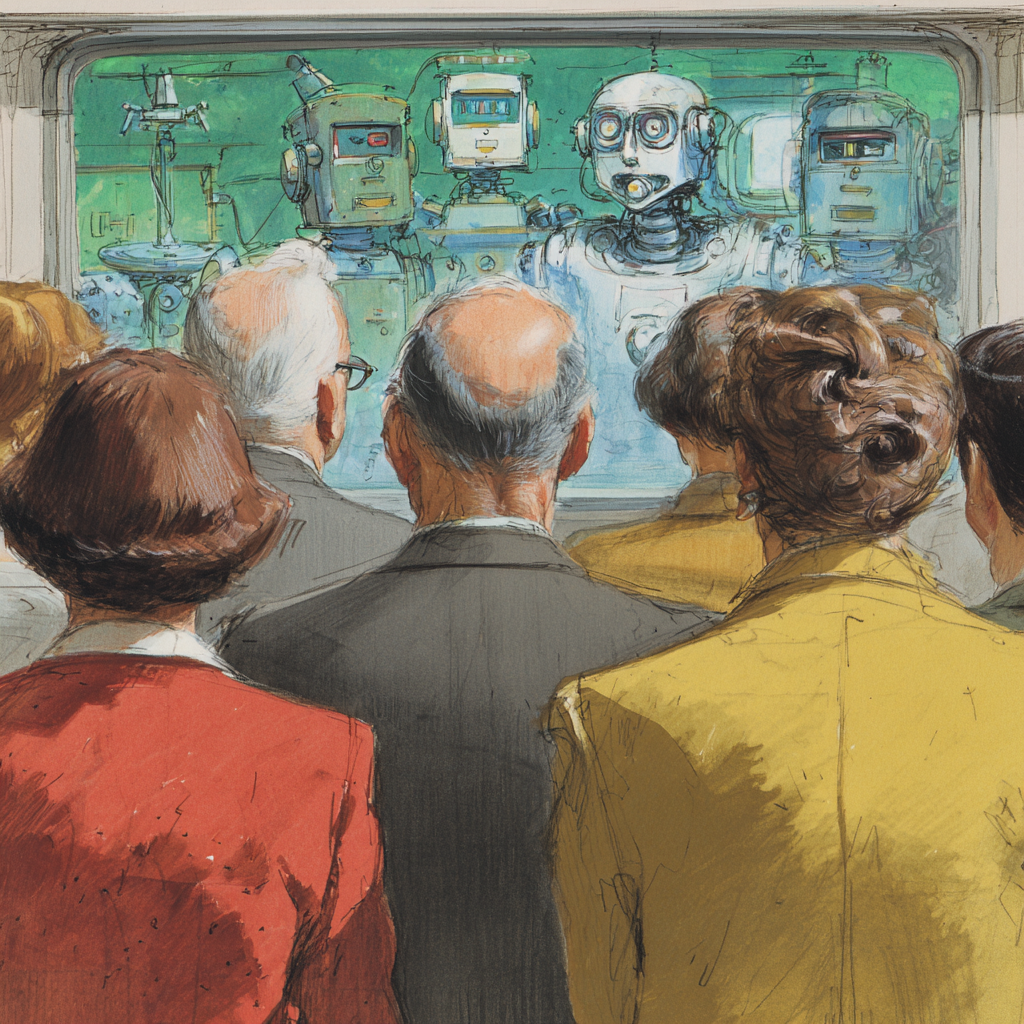
Several days ago, I opened some code at work and saw a constructor with 32 parameters. For non-techies, this is a cry for help: the developers who were working in the area over the years violated a basic rule of object-oriented programming. Think of it as butchering the English language and making yourself incomprehensible. When you make yourself hard to understand, your listeners struggle to follow your line of thinking, becoming sideline spectators as they watch you thrash about, clutched in the jaws of whatever invisible problem grips your mind.
Computer programming languages are like this: You can make yourself understood, but in different ways. Some ways are concise and low friction. Other ways are verbose and ponderous, adding cognitive load. Think of the slow kid in the class who holds the other children back. As a part of a team who makes, supports, and extends software, you are only as good as your slowest members. Slow members who are committed to staying in their lane and never progressing are not unusual; they are the norm. Sometimes, I'm the slow guy.
When I started programming several decades ago, I routinely opened source code files with methods that used 30, 40, or 50 parameters. I felt, as I looked at this code file the other day, that I had come full circle. It was the Current Year, and here I was decades later, looking at the same retarded code. Nothing had changed cognitively for the average programmer.
Humans plateaued a long time ago, and computer science hasn't advanced much, or so it feels. When I was younger, I would greedily read books and journals on software design and development before realizing my peers weren't doing this. A company's culture is the fundament of good practices established by passionate employees. There are not many good companies out there because most of us work to do other things. Work is not a vocation, but a mixture of duty, passion, and drive.
Yes, there are leading-edge shops where very sharp people rigorously screen job candidates for solid engineering talent, but the vast – I mean the vast – majority do not. I've worked in Fortune 100 companies (private and public), start-ups, consultancies, and software companies. It's the same cultural mindset throughout the industry.
When I still talked shop with peers before Covid, it was the same story at their businesses. So I don't talk shop with people anymore. There are far better things to discuss. I've noticed a continuing decline in passion for software as a vocation over the last five or ten years. It's just a job, a stepping stone to middle management, endless meetings, and slide decks. This was always the case, but just much more noticeable now. It's an aspiration. Girl bosses, women in tech, transgendered techies, etc. I feel like that sergeant in Full Metal Jacket:
"WHAT HAVE YOU DONE TO MY BELOVED CORPS, PRIVATE PYLE??!"
What have you done to my beloved profession, you social media junkies?
Around 2018 or so, my profession became of intense interest to the mentally ill, the tainted by-products of social media and scrolling devices.
There was a pocket of (rapidly dwindling) white males making good salaries, relatively speaking. It was an old boys' network, the Augusta National, an all-male clubhouse of our time, a hangout of unreconstructed Confederates, hillbillies, and so on. This was, of course, not true, since by this time the industry was heavily dominated by men of various ethnicities. But there was still a perception in the wake of Gamer Gate that there were too many men working together, creating male spaces where women, single mothers, lesbians, obese and trans women were excluded. Software development was exclusionary and was a purely social construct. In the age of science, everything is a social construct and evolutionary biology has nothing to do with anything. At all. Unless it helps a left-wing social cause. Maybe.
In other words, my field, which was already suffering from the weight of cognitive and cultural issues from decades of shitty software ejected from the Singularity at the Big Bang of the Internet in the 1990s, now had to deal with an onslaught of social activists who just had no idea what a mentally grueling and dull profession IT can be. Most of the work is shoveling someone else's shit.
I reflected for the umpteenth time on how, in decades, programming is still just as bad as it was when I began my career. The proliferation of professionally produced videos, detailed paid courseware, documentation, and now, AI, has had very little effect on the mindset of most developers. Codebases still show the same awful patterns and practices that make software and IT projects expensive, cumbersome, and (in many cases) hard to improve. Development teams are extremely reluctant to touch, much less pay down tech debt. The trembling house of cards could tumble, so engineers dodge it, poke at it, and hope it lasts long enough for them to escape, get promoted, or retire.
Most software developers are lazy, stupid, don't like their jobs, and just want a paycheck. In other words, they are like most humans. Or maybe they are geniuses who see creating bad code as a kind of job security.
I doubt this, but leave it open as a possibility. Non-techies have advised me that this is the real motive: basically, making oneself indispensable by creating mountains and mountains of slop, making a layoff or termination especially painful for the employer. It's a kind of dead man's switch. Everyone, however, is expendable and replaceable.
The problem here is that the slop eventually bites the slop-maker in the ass. You can forget quite a lot in a few weeks, so going back to read your own slop and fix it causes stress and dissatisfaction. No man is an island, so your slop mentality means your coworkers are over there producing their own slop. It's a culture of slop. It adds stress when it causes production outages, late-night phone calls, hour-long fix-it-now sessions, etc.
I briefly worked on a contracting gig for a Fortune 100 company. The codebase was so bad that every developer except one had quit. (The sole survivor believed himself totally immune from cancellation, so he became a real estate agent who might or might not show up to work. Two gigs, bro, double the pay.) They couldn't find anyone to hire on a permanent basis because they just couldn't support the garbage; hence the turn to contractors and consultants. Code-slop-as-job-guarantor doesn't work. Garbage code eventually turns on its maker, eats him alive. Everyone is expendable, replaceable. Software development can be rewarding, but people just burn out on it quickly.
So billions of dollars spent over decades improving education, courseware, outreach and literature on good software practices and methodologies, all for naught. I will inject a NAxALT again here: there are a few good shops where there is a conscientious effort to treat software as a craft. These are vanishingly rare in my experience.
I am lazy, and I hate repetition and ceremony. I am the good lazy, the guy who will actively look for solutions that do not lead to the late-night phone calls, the stress-inducing support issues, and so on. In fact, for the past several years, I've been blissfully removed from day-to-day coding tasks on existing slop bases. The code I write is more task-based. Ergo, it's smaller-scoped, more enjoyable, and more satisfying because I don't have to work with teams of low-energy, low-input, low-effort types.
Reading software code written in the average corporation teaches one just how cluttered, confused, and clouded the average mind is. This sounds snooty, condescending. It's also a self-reflection since every good developer will tell you, without fake humility, that they've written stuff they aren't proud of because they were under a deadline, stressed out, or just not in the groove. When that becomes the habitual frame, however, it ossifies into a way of life that is disastrous for organizations and the company ethos. The cost of improving grows exponentially until it stops because nothing more can be done. People become terrified of any further alteration lest it all tip over. This is one key level in the Fear-based Software Development methodology.
The sloppy coder eventually burns out on his own slop and begins the move into middle management. This layer in the corporate cake is about wrangling the spaghetti ball at a meta level. "My colleagues and I created the spaghetti ball; now, we step back and manage the very same. We are meta-spaghetti ball now!"
There is always a middle manager who can answer questions about the garbage pile you work on because, well, he helped build it. Maybe he even designed it. I worked at one well-known company that had been nursing the same shitty scheduling app for TV programming for 8 years. One developer had been on that project for almost the entire time and still couldn't answer basic questions about it. "You have one job, and it's been the same for 8 years... and you don't know how the scheduler handles this promo type..."
When AI agents were announced in 2025 by Altman's OpenAI – we were getting PhD-level co-workers who never sleep, never eat, never need a vacay or a piss break – I was a little intrigued, but also frightened. I could see then (and still see) massive layoffs in the immediate future, followed by dislocation, homelessness, desperation for people for whom only a few years were the last vestiges of a middle class.
Recall that in America, the oligarchy doesn't worry about the effects of war, inflation, forced vaccinations, and spiraling debt on the vast majority, the 99%. AI has been the same way, with zero planning or public discourse about what comes next when mortgages go into default and the tax base collapses. I still feel the reason for this is that a pandemic or other incredible calamity will be unleashed to deal with the, uh, problem of too many eaters. I could be wrong, and we could switch over to CBDC and a full-on control grid rather quickly. That is still two or three years away in my estimation, if it happens at all. Nothing goes as planned. We were supposed to have vaccine passports by now, but they haven't materialized yet.
I've taken the 2030 date bandied about by the UN and WEF as a goal, a deadline at this point. Things will take shape very quickly, and most people, even in tech, do not really understand the momentum in AI.
My current shop is blissfully unaware of agentic powers. Er, were (see below). I only exaggerate a little.
While I do presentations and talk it up a lot, the organization is so petrified in bureaucracy that no one paid attention to the pronouncements and predictions, the roadmaps, as they say, for enterprise AI. It can take months or years to get a bug fix for a serious issue in such a place. If I write it up, it has to go through various layers of management before reaching a committee of directors, who then negotiate over whose peons will do what. The system is so comical in light of the tsunami of AI sweeping over the horizon, towards red-taped beaches.
Managers are playing catch-up, and I keep stirring the pot. The writing is on the wall, and I've no doubt that in the coming days I will hear about a new, innovative idea for an agent adoption project to address a real-world problem. It will sound suspiciously like a proposal I just made.
It won't be me, since I don't fit the right demographic. Am I upset, maybe having a little wounded pride? Yes, but again, I'm measuring the wind-down of most white-collar jobs in the next two to three years. Getting bunched up over work politics at this point is like getting upset that someone got a promotion for work you did while you are three months from retirement. Most of us are looking at a forced retirement at this point. This is the basis for much quiet quitting and mental checking out. People sense that there is little reason to invest oneself emotionally in a job. Do the bare minimum, get the fuck out.
So don't sweat it, kids. The county doesn't have enough sheriffs and deputies to evict all of us from our homes. I don't wish violence at all, but I can see a lot of unpleasantness in the near future for the po-po, would-be evicters.
Still, as an avid user of AI – noodling with OpenClaw has become a new hobby – I would like to implement an agentic project at work and have been giving suggestions and proposals for it. As someone who can build useful stuff now via agent ¡rapido!, I understand its power and possibilities. Agents will replace me and millions. I say, "Bring it on, bitches!"
Most of us figure out eventually that swapping our labor and freedom for a wage from a capitalist corporation is a deal with the devil, inked in hell. Would I take a massive pay cut to become a self-owning entity with my own business, my own schedule? Yes, and that is an attainable goal I work on every day. There is light at the end of the tunnel, and in my next profession, the only person who will control my destiny is... me. Not even "the market." Me. Business has been good lately, and it is getting better.
Trading teaches you one thing if you are to be successful: The market isn't a problem or an obstacle standing in the way of success. It's a referendum on you.
If futures trading ends, we will have entered an epochal shift for which preparation will have mattered. Being a plumber, electrician, or RN is not going to be the silver bullet for paying your bills if futures trading on the CME disappears or is restricted. Yes, pipes will be broken, sick people will need care, but the whole question of exchange will be in serious flux; no one will know for sure where their next meal is coming from.
Recall, though, that futures are a kind of insurance, a powerful hedging tool essential to a modern functioning economy, and if and when this market collapses or exchanges become very restrictive in their margin extensions to retailers, it means society as a whole is facing a very serious crisis. The GFC will look sweet in comparison. The thought that the market can chug along without retail traders, with only non-human bots and AI agents doing all the buying and selling, is not a view I hold. Ordinary human greed and anxiety are required vaginal lubricants for a market to work. Then again, no prognostication is future-proof. Technology has made millions of years of evolutionary processes moot, irrelevant, pointless.
I see a lot of professional software developers pushing back against AI on YouTube. This is predictable, and I feel like we are watching different movies. In their view, AI produces bad code, costly errors, maintenance headaches, and considerably slows the development process. In my view, humans have produced mountains of bad code, enormous cost overruns, and failed projects for decades. Their shoddy code has gone on for years, bleeding out companies that have to maintain, support, and deal with all the side effects.
In day-to-day use, AI produces reliable code that is better than the human-crafted variety I have to support. When my agent spits out JavaScript, Python, or whatever, I can read it and make sense of it quickly because it is pretty solid. I ask for refactors and point out areas, but this is becoming less and less the case as the newer models get better and better. If I open the existing, artisan-crafted code produced by humans, it's a massive cognitive drain. I have to deal with the confused ramblings of the monkey mind.
I've been reading, writing, and supporting code for decades, and today's AI-generated code is almost always preferable to the human-made spaghetti and meatballs lurking in Git repos in corporate environments. Maybe you are a superstar working in a shop filled with rock stars – good on you, and I mean that. Out here in the wilds, though, things are different. IT professionals are only slightly smarter than the average bear, all things being equal.
The people complaining about AI coding are, sadly, not doing it right or purposefully misleading people about the state of the technology. There are some real dinosaurs out there on the Internet, rambling on about AI hallucinations, unreliability, cost overruns, etc. Much of this is fear-based: discredit AI, sell a counter-narrative, keep my good-paying job with benefits so I can make it to retirement.
Again, retirement is right around the corner, whether you are 35 or 65. You will no longer be deciding the date. Accept it; learn another skill on the side if you are that worried. Study plumbing, welding, or whatever job you think is going to save you after your current job goes bye-bye. Having lived in capitalism's bubble economy for decades, I can tell you that the mob thinks the same way about every problem and is always, always wrong. Whether flipping houses or piling in on Internet stocks, they are always wrong by the time the idea is widespread and talked about by your neighbors at their barbecues.
Unit testing? I've been a stickler for unit testing for well over twenty years, and it has made my career far less enjoyable because I am in the tiny minority. It's extremely rare for me to open a codebase and see working (or even any) unit tests. For most of the code I personally write, there are unit tests. I do not fuss over one-off scripting jobs.
I recently spent a weekend going through a poorly written codebase, causing the company to incur much higher infrastructure costs than it should. As I worked with an agent to hammer out the areas, the precise problems, and then build fixes, I realized all the expensive issues boiled down to a refusal to design testable software and to write any tests at all. Many problems would've been identified within minutes instead of sitting in production for years, chewing up computing resources and causing outages and panic attacks. It's impossible to calculate the damage caused by software developers' refusal to adopt and use testing.
In the age of agents, however, unit tests are non-negotiable, and developers who keep submitting PRs without them will have absolutely no excuse. Of course, they will have an excuse, but it won't work. It will fade around the same time they get their buy-out or severance package. The IDE Cursor.ai even has a button to run a code review before committing changes to the repo. 99% of software developers will not use it, remaining indifferent to the problems they create. "These are problems for my future self," as Homer Simpson would say.
Last week, a small modification I made led automatically to the agent updating the unit tests a colleague had put together, adding new ones to cover the work I was doing. If humans were doing the work, they likely wouldn't generate unit tests.
Developers universally despise unit testing even though, if used properly, it would make their day-to-day job much more enjoyable and less stressful. But to unit test, you need to be willing to ruthlessly design and refactor. One thing that causes stress is caring, and caring about anything work-related or not is generally reserved for lower sensual pleasures. "I care about food, I care about the quality of blow jobs Becky gives," etc. Work is work and the bare minimum; the psychological checking out is widespread, often called "quiet quitting." But the phenomenon has always been there.
Unit testing isn't a perfect solution for code quality, but it is the first and most critical gate. All debates about software are moot at this point since they will be handled by agents. Whether to unit test is a moot point. Agents will be writing the code in another year or two. Your philosophical opposition to dodging unit testing is irrelevant, just like you.
In recent weeks, Microsoft has announced enhanced agents to assist in transforming legacy codebases. Its Foundry offering on Azure is continually maintained, with newer ChatGPT models being rolled out to support migrating outdated, problematic codebases into newer frameworks and software/solution architectures. This is not a mere "lift-and-shift," as the kids say, but rather fundamental refactorings that significantly improve code quality and hosting options.
A recent large, household-name company has reportedly decided to can a significant chunk of its corporate workforce, sending the jobs overseas to (where else?) India. This same company has reportedly embraced AI automation throughout its enterprise. The truly beautiful capitalist move now is: continue to offshore, but instead of hiring a village in India, hire one or two who can talk to the AI! BAM! Profit! Pay them peanuts, keep headcount down, don't even bother opening a campus in Mumbai since you don't need it!
Why offshore now?
On online comment boards, one thing I saw referenced was the corporate culture, where work had bogged down so much that the company was struggling to get basic tasks done.
In corporations, empire-building is real, with middle managers vying for budget dollars to build personal fiefdoms staffed by flunkies. Eventually, though, all the little empires square off in a deadlock, and things grind to a halt. Simple tasks become protracted maneuverings between middle managers as they take direction from directors and senior directors. The beautiful choreography of human egos expending vast sums of money to posture over this thing – which causes mounting costs because, well, there are other priorities, you know? – seems like it can go on forever here in the petro-dollar world. That kind of shit gets disappeared all the time, however. Money is still finite even in imperial America. To this point, offshoring was often used to address the middle-management problem created by IBM in the 1980s.
Corporations are grossly and needlessly overstaffed in the name of managers' personal aspirations for greater power and ego recognition. I've pointed out before, with Musk's X and the later mass termination of 250,000 federal employees in 2025 under DOGE, that human labor is increasingly unnecessary. At all. There are lots and lots of bullshit jobs out there whose only purpose is to feed the human need for dominance hierarchies while perpetuating the consumer economy. The system we have now, however, cannot bear lowering retirement ages or creating more flexible work schedules that reduce the 40-hour workweek. This is despite the eye-watering productivity gains of the last few decades. Think for a moment about what a worker can do in comparison to an equivalent of 30 years ago. Night and day, assuming the role even existed back then. Many jobs exist now that did not exist that long ago.
As biological machines with a hardwired set of instructions rooted in evolution and karmic tendencies, we are looking into an abyss of black waters under a starless sky. No chart guides us in overcoming and transcending our human need to dominate and be dominated; to recognize and be recognized. Very few of us have a talent or skill that makes us stand out, or good looks, charm, or personality. Grinding on a middle-management track to get a sliver of recognition is the only ego-food some have a shot at.
AI will not kill humans, but humans may use it to do so. Powerful people have a deep-rooted fear that a world of independent actors functioning without direct control is a horrifying prospect. I see it on display every day.
Surveillance, scanning, and tracking are AI's primary use cases now (along with the elimination of white-collar jobs), not "cancer cures, improvements in quality of life, cheap, limitless energy," etc. Ordinary Americans who spend any time thinking about AI only feel unease. Theirs is a culture of dis-ease, anxiety, and social fragmentation.
I spent time with OpenClaw setting up a voice-based agent, one I could chat with on casual topics. I came up with a decent version of a voice from one of the Alien movies and, with a little work, had a much, much better version of Siri or Alexa.
Siri has barely improved in the many years it's been around, built on static, hand-maintained data. While out driving, if I want Siri to locate and play a song, I can't because the "personal assistant" doesn't even recognize the app I use for playback. It says it doesn't exist, even though its library is displayed on my vehicle's dashboard. So the iPhone car software sees and interacts with it – or rather, lets me interact with it – but Siri doesn't know anything about it. Dumb bitch.
The voiced agent is a different beast altogether. It can fake emotion and interest, and follow along with you in conversation, although it lags because the voice API has to parse responses. The ability for people to generate characters with audible voices to back an intelligent-sounding AI agent means we are now entering into a new phase of mental health problems. The virtual space that emerged in the 1990s means that millions, maybe billions, of humans now have a more powerful tool for creating an isolated cocoon. Voices in the head? Soon, we will all have a personal digital assistant who speaks intelligently. No more of this Siri shit. We will all be schizophrenic on a whole new level.
Social media made it possible for humans to reframe one another as extremely expendable, disposable objects for the slightest reason. The collapse of social engagement can be laid at the feet of technological devices, which have enabled people to carve out alternative realities fed by alternative sources of information. The ego can fabricate on a whole new level. Cheap energy means food, transportation, gadgets, and so on are plentiful for those with no interest in personal development and social networking.
You don't have to be sociable, likable, or develop any of the normal human skills necessary for survival. We all have the ability to survive as assholes because of the largesse produced by petroleum. Take away petrol, civilization looks very different. Complain all you want about immigration, or losing your job to Indians, Mexicans, whatever – but it was the European peoples who dug up the oil and used it in cars, trains and airplanes. The pleasant state of existence afforded by cheap energy sedated a whole civilization and made it completely indifferent to the future. Give an animal plenty, it will never risk its neck to give up what is here and now to stave off future calamities.
Paranoia is one result of the modern human confronted by oceans of "information." Presented with too many things sounding true, plausible, or only possible, the mind, guided by its own tastes, will pick and choose what to believe. In the absence of a prevailing culture in which men and women wear clothing that distinguishes them, and in which a single language and religion are shared as part of a larger body of social knowledge and wisdom, capitalist consumers are left to piece together their own alternate worlds in chat rooms, e-commerce, and social media sites. The apparent "choice" of the market – really an endless warehouse of slop – feeds the mind with a love of choice, a craving for novelty, a habituation to it even when it just increases dissatisfaction.
This mental frame is not held together by any tradition or history. Multiculturalism is a natural tendency among consumers who want broader choices and options forever. New avenues to explore, from food to sex. The craving that lies at the root of rebirth and suffering expands into new areas. Our grandfathers could only dream of eating authentic tandoori chicken with a side of saffron rice and curry chutney, then banging an Asian girl at a massage parlor. But now we moderns have escaped the drab era when options were very limited. Many heroes died in war so we could have these nice things.
We are afforded the luxury of developing into weirdos because the takeout delivery service will drop off bean burritos at 11 AM if you use the app and the digital coupon. You can lock yourself in your apartment for days on end in social isolation. A shocking number of adults do it now. And while it may seem quite dreary, this life of takeout tins and Netflix bingeing, it's still preferable to the hell that is other people.
Too much information, running through my brain
Too much information, driving me insane
When The Police wrote this song, the dawn of the PC had just arrived in the late 1970s. No one knew of the Internet or anticipated the proliferation of "information" that one would someday stream into the hands of users holding powerful supercomputers.
All day long we can drown in podcasts on every conceivable subject. It's an endless buffet of opinion, of talking and verbalizing. Are we happier for having subjected ourselves to another set of opinions on a topic? There's a lot to be said for listening to raindrops or cat purrs if you need some background noise. The verbalizing can stop, or at least slow down, by shutting off the chatter. We are chatter addicts, and the chatter leads to paranoia. All this information, but individually or collectively, are we better off now with the Internet and its children, the smart devices? This is the kind of question I ask myself as a GenXer looking back over the Internet revolution.
But back to AI.
It is the lunar project of our time, the next frontier, the Big Thing. It's way beyond Eisenhower's highway system, which was pretty expensive. It's beyond the Dotcom Era. AI is the end of labor. It's post-labor. You may be killed, starved, or imprisoned by our tech overlords, or maybe given a small stipend to live on. Or maybe you will get the abundance package that Elon Musk spoke of recently. We don't know. It's the biggest disruptor of civilization ever devised and, with the end of the need for human participation in essential cognitive matters, it leads to a proliferation of fear, anxiety, and greed. Maybe for some of us, a sense of hope. Maybe life will be better in an age of super-abundance, and the paranoid chatter will go away as scarcity gives way to plenty.
As I've written about, libido dominandi is a real thing, however, and it doesn't care about lofty goals or heavenly destinations in the here and now. Every day can be an Uber Eats and Netflix binge day, but a dominance hierarchy will still exist. We all answer to someone, and this chain can never, ever be broken. It can, however, be made firmer, tighter, more secure. Even in the heavenly realms of all human literary traditions, there is a pecking order. The god sitting at the top may believe himself to be the Supreme Artificer of the Cosmos, but he still answers to a higher power: impermanence, dissolution, decay.
The Buddha was the teacher of gods, devas, and men. This bold claim piqued my interest in dhamma. It's one I've been reflecting on frequently of late. Every god has to have at the back of his mind, "This can't go on forever."
Some men get the itch to go out, find a wife, and start a family. Some men get the itch to go out and dominate. And they do. They aren't charming, handsome, or charismatic, but they end up in powerful positions that let them shape the destinies of societies for generations afterward. Perhaps they've surprised themselves at the alacrity with which they've ascended the social ladder, or found themselves in a powerful office with all sorts of levers and switches within hand's reach.
When I look at politicians now, I'm always struck by how mediocre, so substandard they are in every respect save craving. They crave better than I do, and it leads them to work tirelessly to get power.
You may not believe in karma, but you see and feel it every day in real life. Why did this man become president? Why did this mediocrity become her boss? Why did this person become a powerful doctor running a powerful bureaucracy with no checks or balances on his decision-making over the lives of millions?
Office vibe changes will be a major theme of 2026 year-in-review type reflections going into January 2027. We will hear a lot of commentary about how the tension, energy, and climate of corporate workplaces have changed into something seldom experienced before, if ever.
I'm seeing this now, with the dawning realization that agents are already radically reshaping the perception of the pace, precision, scale, and value of human work. There's doubt, confusion, and dread.
Me? I am thoroughly enjoying it. Middle managers disappear now for days on end, probably in meetings trying to figure out a Strategy for The Future. Managers are especially exposed and vulnerable, since most have no real skills beyond "MANAGING PEOPLE."
Steve Jobs was correct that higher-quality employees don't need to be managed; they need to be allowed to act in their companies' best interests. That's why Apple is still Apple, and most other companies are not. Most humans are drones shaped to be drones by a mass education system that treats the human mind as something to be fabricated using a factory-line methodology. Obedience, hierarchy, low trust, and other such skills were used for many decades to shape, in the name of "education," a population reluctant to question leaders. You get the same politicians election after election. When you look at your coworkers, is it any wonder? Do they speak up in the workplace? No?
My company has weekly checklists, forms, and reports on how we spend our time. We are not allowed to report that we spend time building reports on what we did for the last five days. It's a mentality of mediocrity, waste, higher prices, lower quality. And it describes most large organizations, where the middle manager is the conduit between a stack of reports, the people who do the work, and the people in more senior management who take credit for the work despite doing little to facilitate its completion. Will I be sad to see that whole system collapse?
Still, I'm seeing black boxes disintegrate under the light of AI, and processes that were arcane can suddenly be done by anyone with the ability to prompt.
That ability to prompt seems really easy, doesn't it? Just ask a simple question, get a good answer.
In fact, it's the sticking point for many workers, who've become addicted to images and sounds instead of text. As literacy has gone into full retreat, we are now left with people who find even basic AI answers challenging to grok. Reading and writing are habits you pick up early in life and run with, or they become difficult tasks that later weed out the cognitively incapable. Yes, agents can and will perform tasks in the background, but in determining what is being done, what needs to be done, and what doesn't need to be done, a whole superstructure of literacy is assumed.
Yuval Noah Harari is an Israeli historian who became the court intellectual of the oligarchs. People who need to use three names publicly to identify themselves are generally assholes.
I've read two of Harari's books and discussed them on the blog in passing before. Here, I want to note a couple of things: he's largely vanished from my feeds, and his dismal, grim assessment of the AI future is probably inexorably linked to that first observation.
I will only focus on a very particular prediction he had, namely that humans would become brain-dead, video-game-playing zombies in the future. There is a lot of anthropology to unpack in this statement, and I've no intention of doing it. As an avid video gamer, my first thought for the post-labor economy is not to barricade myself in the house and play PS5 all day. As said, Harari holds a very dismal outlook on human life.
Many people like me would do more worthwhile things with no work schedule and an abundance-wealth package. I personally would like to be a foster parent to cats and dogs; start a serious-ass herb garden to supply local restaurants with organic, fresh, high-quality basil, rosemary, etc. Anyone reading this can probably think of many enriching things to do that they always thought would be fun, but couldn't pursue because of their slave labor existence in capitalist America. Multiple gig jobs, delivering food to the White House when you are 70 or whatever, the type of stuff that oligarchs like Harari assume humans are only fit to do, being too unimaginative, too unmotivated to live differently if placed in an ecosystem of plenty. Even if oligarchs and capitalists wanted us to keep going like this, they can't. When the robots show up here in the U.S., it's definitely no longer a world of human Uber drivers and Toyota factory workers.
It was this dismal aspect of Harari, who is a citizen of a country carrying out a mass genocide of the elderly, women, and children, that has made him a public nuisance rather than a public intellectual. No one really wants to listen to him anymore because his themes were about shortage, misery, decline, the horrific lives of factory farm animals, climate change, etc.
In the past few weeks, a UN body released a document admitting that the grim forecasts and dire immediate future of climate change were "impossible." As in, climate change is dead, and AI killed it. Look at your news feeds, and it's completely evaporated. AI caught the oligarchy off guard.
In Europe, climate change hangs on, of course, because the zero-carbon goals are another way in which parasites tax the already poor slobs of that unhappy continent. How much longer will zero-carbon goals and the extortion rackets they back last? The cat is out of the bag, says a future foster cat parent in the post-labor economy. Europe is quite technologically regressive, and I can fully see them continuing with windmills, with little local AI innovation, etc. Same as they've done with the whole computing revolution basically.
No doubt Harari is still getting speaking engagements and consultations from some rich Boomers, but as a fixture, he's no more, having exited the public square moments before the collapse of climate change and the environmental doom movement. He was creepy, grim, and a perfect exponent of Israel, oligarchy, and Western decline in its literary intellectual form. He's also not what people see as meshing with AI. Understandably, he was quite hysterical about the threats posed by it when it first became a concern in the public sphere, and he no doubt continues on these themes as an eternal gloomer, a citizen of a genocidal ethno-state. No one is listening to him, though.
I've never heard him speak out against his country's brutality against the indigenous people of Palestine. He did, in late 2024, refer to the charge as "anti-Semitism."
The fellow who advises the oligarchy and spills much ink writing very dreary books on suffering is himself unable to raise his voice against the suffering caused in his own backyard. What is plain as day to billions who've seen the images, videos, read the reports – gets a pass from him.
I pick on Harari here because his dim view is shared by those who rule us. He is a proxy, having been entertained, feted, and praised by them. If Harari didn't exist, we would've had to invent him.
At work, I tell people we should all be thinking about what hobbies we will throw ourselves at once the pink slips come down. They will come of course.
I may as well be saying, "I want to rape your mother on the kitchen floor."
Meaning, the suggestion that we should all be looking forward to lives of leisure is unthinkable, unmentionable. It's shocking, provocative, not something you should ever voice to anyone besides your inner self.
In fact, the Happy Greeks defined the aspiration of human life as the life of leisure. This was elusive, enjoyed by very few, owing to the limitations of economy and technology. The truly happy life was based on abundance, on low stress. Citizenship was a pleasure, something to do for the benefit of self and others. The pursuit of pleasant activity suitable to human nature (i.e., the rational animal) was commended. Reasoning, creating, participating, communicating.
The rich, aristocrats, monks, and powerful leaders were not exemplars of the Greek ideal of leisure. In most cases, they were slaves to their offices and duties. The price of wealth and fame is the loss of freedom, the kind that serves as the basis for leisure.
Ours is not a Greek civilization. The reason people are horrified by speaking openly of the desire for a life of leisure is that it is a servile culture. Its servility comes from the philo-Semitism of America's Puritan founders, who defined work as a consequence of sin, something we do as payment for the Original Sin of our First Parents. Yahweh is about covenants, duties, pedantic laws, ritual purity, calendars with fixed dates, ceremonies, rites, rituals, observances, treaties. The rediscovery of these in the Old Testament during the Reformation profoundly reshaped the northern European mind. The Torah's iconoclasm was a strategic lever against the Catholic order, but it brought other consequences in its train.
The Greeks of Leisure are not about any of this. Tennis on the lawn and then a nice relaxing lunch talking to notable scholars and artists, or just plain old friends, is. "Work," producing spaghetti code that will cause cognitive drain and heavy expenses for a business for years, is not; that's Yahwism. Sweat of thy brow, all that jazz. Somewhere, there is a conviction that the Age of Leisure will be the Age of the Anti-Christ.
The rebirth of leisure began in the Renaissance, when wealth grew, and access to ancient Greek and Roman literature inspired people to think differently about their world and what they did in it. What is the good life, and how is it obtained? The Greeks were back.
You playing video games all day, smoking pot, is how Yahwism views the human condition in a world of abundance, where choices become available, but cannot be picked because "the heart of man inclines towards evil from its youth." If this is your view of human nature, then hysterically warning of the dangers of a post-labor economy, of people playing Call of Duty for hours on end without having to stress out about a rent payment, is very upsetting. I get upset even writing these words. It's my inner WASP talking.
Ora et labora! Pray and work!
But when belief dissipates, there's just work. That is modern capitalism in light of massive productivity gains. The promise of a 15-hour work week is an invitation to secular damnation.
The oligarchs and capitalists are to be pitied in large part because they don't really own themselves. They may confuse the ability to indulge in sense experience with having attained something very valuable. In fact, they owe everyone something: shareholders, investors, employees, business partners, governments, rivals, etc. Elon Musk uses ketamine to keep it all together.
If anyone should want the Age of Abundance, it would be the capitalists. But again, that's not how libido dominandi works. I think about how many meetings these guys have to go through, how much maneuvering they do for their "causes," and how much machination. They are slaves to their own egos. To this day, Gates has spent countless hours on vaccines and getting people injected with them in Africa and India. He's caused countless harm and probably doesn't care. If he could be happy on his own, he probably would've taken up leisure and learned how to paint, speak a foreign language, or cook Italian cuisine. Not pizzas and spaghetti, but more esoteric dishes from recipes written on cards, stored in country kitchens.
Libido dominandi is a deep existential itch which cannot be scratched by learning wet-on-wet Bob Ross painting technique over many relaxing afternoons. Nope, the movie Eyes Wide Shut told us that there will always be a monkey who needs a bit more to make it all worthwhile; and there will be no end to the number of people who will gladly help him get what he wants, forming a chain of links tied to his will. There can be no libido dominandi without the corollary, the deep need to be thoroughly dominated by someone else. SFAIK, St. Augustine didn't address this vital part of the binary. It's all so depressing, so much a cause for despair if someone's hopes for a "liberation" are pinned to non-spiritual, materialistic themes.
We learned from the Epstein files that great wealth and influence are not enough to satisfy. Once obtained, new ventures into the darkest recesses of the human psyche are required in order to feel anything. Sensual life, in its highest form, leaves behind boredom and anhedonia. This is why a few of us see the growing power of AI as a cause of dread. Imagine fathers bartering their young daughters to oligarchs because they are jobless, facing life on the street. Selling little Sarah to spare the others may seem like an acceptable deal.
This is why the Age of Abundance is so radical, so upending. Once entered, it can not be revoked short of a cataclysm that negates the power of AI.
A solar burst, maybe?